

A 7-day cortisol-balancing meal plan for stressed women wasn’t something I was searching for a few years ago. Honestly, I didn’t even know what cortisol really was — not in any meaningful way. I thought stress was just… stress. Something you pushed through. Something you managed with a planner, a glass of wine, or another podcast about productivity.
Then I hit a wall.
Not dramatically. Not in a “breakdown moment” kind of way. It was more like a slow dimming. I was tired all the time — the kind of tired that made eight hours of sleep feel pointless. I’d gained weight around my stomach that hadn’t been there before, and it wouldn’t budge no matter what I did. My period was all over the place. I’d forgotten what it felt like to wake up and not immediately feel behind. And the anxiety — low-grade, constant, like a hum underneath everything — had become so normal I stopped noticing it.
My regular doctor said my bloodwork was fine. And technically, it was.
It wasn’t until I started actually researching what chronic stress does to the female body — physiologically, hormonally — that I understood what was happening. My cortisol had been running at a low roar for so long that my whole system had reorganized itself around it.
If any part of that sounds familiar, keep reading. Because what I learned — and what this meal plan is built around — genuinely changed how I feel daily. Not a supplement. Not a detox. Just food, chosen deliberately, for a body that’s been through a lot.
Table of Contents
What Is Cortisol and Why Stressed Women Need to Pay Attention
Cortisol is the hormone your adrenal glands release when your brain perceives a threat. In an acute situation — a car cutting you off, a work crisis, a sick kid — it’s incredibly useful. It sharpens focus, releases glucose for fast energy, suppresses digestion, and basically puts every system on high alert so you can handle whatever’s in front of you.
The problem isn’t cortisol. The problem is when the switch never fully turns off.
Modern stress — the kind most women are navigating — doesn’t come in discrete, solvable bursts. It’s layered, relentless, and often invisible: financial pressure, caretaking responsibilities, overloaded schedules, poor sleep, the ambient noise of just being alive right now. And the body doesn’t really distinguish between “I’m being chased by a lion” and “I have 47 unread emails and a school pickup in 20 minutes.” To your adrenal glands, stress is stress.
What makes this especially complicated for women is that cortisol doesn’t operate in isolation. It’s deeply tangled up with every other hormone in the female body. When cortisol stays elevated:
- It competes with progesterone, which is your calming, sleep-supportive hormone — and progesterone loses
- It throws off thyroid function, slowing metabolism in ways that are maddening to deal with
- It disrupts the rhythm of estrogen, sometimes driving it too high, sometimes suppressing it
- It destabilizes blood sugar, which creates cravings, mood swings, and energy crashes that feel almost impossible to control
- It raises inflammation, which makes everything from joint pain to skin issues worse
The research on this is not fringe stuff. It’s mainstream endocrinology. And the dietary piece — meaning, how specifically what you eat influences cortisol production and clearance — is one of the most underutilized levers in women’s health.
Signs Your Cortisol Might Be Chronically Elevated
Most women I’ve talked to who were dealing with cortisol issues had normalized the symptoms so completely that they weren’t even on their radar anymore. See if any of these feel familiar:
- Waking up tired even after a full night’s sleep — that “unrefreshed” feeling that doesn’t make sense on paper
- Weight gain around the midsection specifically, even when your overall diet hasn’t changed
- Afternoon energy crashes, usually between 2pm and 4pm, followed by a strange second wind at night
- Lying awake between 1am and 4am — this is actually a cortisol thing, not just “insomnia”
- Craving salty or sweet foods intensely, especially when stressed
- Feeling emotionally reactive in ways that surprise you — more tears, more irritability, less buffer
- Getting sick more often than you used to
- Irregular periods, worse PMS, or cycles that have changed without an obvious reason
- Digestive issues that seem stress-related but you’ve never fully connected the dots
None of these symptoms alone proves high cortisol. But if you’re stacking several of them, and you’ve been running on stress fumes for a while, your HPA axis is worth paying attention to.
Foods That Actually Help Lower Cortisol
Before we get to the full 7-day plan, here’s the nutritional logic behind it. These aren’t superfoods in the trendy sense — they’re nutrients that have actual research backing their role in adrenal function and stress hormone regulation.
Magnesium is the big one. The adrenal glands burn through magnesium rapidly under stress, and most women don’t get enough to begin with. Magnesium helps regulate the HPA axis, supports deeper sleep, and calms the nervous system in a very real, measurable way. You’ll find it in pumpkin seeds, dark leafy greens, dark chocolate, avocados, and black beans.
Vitamin C — the adrenal glands contain more vitamin C than almost any other tissue in the body. They need it to produce cortisol, and they need it to recover afterward. Bell peppers (especially red ones) are actually a far better source than oranges. Kiwi, strawberries, and broccoli are also excellent.
Omega-3 fatty acids from fatty fish, walnuts, and flaxseeds help reduce the neuroinflammation that chronic stress creates, and research shows they actually blunt the cortisol response to psychological stress. This is meaningful.
Complex carbohydrates — this one surprises people. Going very low-carb when you’re already stressed can worsen cortisol dysregulation, especially in women. Your brain needs glucose to feel safe. Sweet potatoes, oats, lentils, and quinoa provide slow, steady glucose that calms the system rather than spiking it.
Tryptophan-rich foods — turkey, eggs, pumpkin seeds, and oats provide the building blocks for serotonin and melatonin, both of which cortisol tends to deplete over time.
Fermented foods — the gut-brain axis is genuinely real. A disrupted microbiome amplifies stress reactivity. Greek yogurt, kefir, sauerkraut, and kimchi feed the beneficial bacteria that help regulate mood and cortisol response.
Adaptogens — ashwagandha and holy basil (tulsi) have legitimate clinical research behind them. They’re not magic, but they’re not nothing either. They work best as part of a broader nutritional approach, not as a standalone fix.
7-Day Cortisol Balancing Meal Plan for Stressed Women
This is the core of the guide. Each day is built around blood sugar stability, adrenal nourishment, and nervous system support. Nothing here requires advanced cooking skills or a specialty grocery store. These are real meals for real schedules.
Monday — Day 1: Reset
Breakfast: Warm oatmeal with half a mashed banana, a spoonful of almond butter, cinnamon, and pumpkin seeds on top. Eat it slow. Seriously, that’s part of it. Cup of tulsi tea on the side.
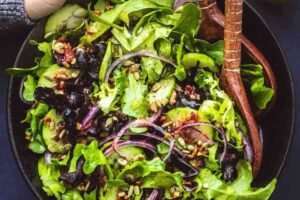
Lunch: Big salad — mixed greens, a can of wild salmon or a grilled fillet, sliced avocado, cherry tomatoes, cucumber. Dress it with lemon and olive oil. That’s it. Don’t overthink the dressing.
Dinner: Baked sweet potato loaded with black beans, sautéed red bell pepper and onion with cumin, and a spoonful of plain Greek yogurt on top. Genuinely satisfying.
Snack: Kiwi and a small handful of walnuts.
Tuesday — Day 2: Gut Focus
Breakfast: Greek yogurt with blueberries, a low-sugar granola, ground flaxseed, and a little raw honey.
Lunch: Lentil soup — homemade or from a good can — with kale stirred in and a slice of whole grain sourdough.
Dinner: Pan-seared mackerel or salmon with roasted broccoli and brown rice cooked in low-sodium chicken broth. Simple, fast, deeply nourishing.
Snack: Pumpkin seeds or celery with almond butter.
Wednesday — Day 3: Magnesium Day
Breakfast: Spinach and egg scramble cooked in olive oil, with half an avocado and whole-grain toast. Chamomile tea — drink it like you mean it.
Lunch: Quinoa bowl with roasted chickpeas, cucumber, cherry tomatoes, red onion, parsley, and tahini-lemon dressing.
Dinner: Turkey chili — ground turkey, kidney beans, diced tomatoes, red and green bell peppers, lots of cumin, turmeric, and chili powder. Make a double batch. You’ll be glad you did.
Snack: Two squares of dark chocolate and a cup of warm oat milk with ashwagandha powder stirred in.
Midweek is when cortisol cravings tend to spike hardest. The combination of magnesium-rich foods and stable carbs here is specifically designed to interrupt that pattern before the 3pm crash hits.
Thursday — Day 4: Blood Sugar Stability
Breakfast: Chia pudding — mix chia seeds and unsweetened coconut milk the night before, top with strawberries in the morning. Zero morning effort required.
Lunch: Turkey and avocado wrap in a whole-grain tortilla with romaine, tomato, and Dijon. Serve with a small side of sauerkraut.
Dinner: Baked lemon herb chicken thighs with roasted asparagus and cauliflower mashed with olive oil and garlic.
Snack: Apple with almond butter, or a hard-boiled egg.
Friday — Day 5: Feel-Good Friday
Breakfast: Smoothie — frozen spinach, frozen mango, half a banana, ground flaxseed, a thumb of fresh ginger, unsweetened almond milk. Optional: a scoop of collagen peptides.
Lunch: Grain bowl with farro, roasted beets, goat cheese crumbles, walnuts, arugula, balsamic and olive oil.
Dinner: Salmon tacos — corn tortillas, purple cabbage slaw, mango salsa, cilantro, lime. This meal feels like a reward and it should.
Snack: Kefir, or a small bowl of berries.
Friday is the day most people abandon whatever good habits they’ve built. Having a dinner that feels genuinely good — not like a compromise — matters more than any single nutrient.
Saturday — Day 6: Slow and Nourishing
Breakfast: Savory egg muffins baked in a muffin tin — eggs whisked with spinach, feta, and diced red bell pepper. Make six, eat two, refrigerate the rest.
Lunch: Homemade chicken soup in bone broth with carrots, celery, onion, garlic, and zucchini. Bone broth contains glycine, an amino acid that genuinely supports sleep quality and calms nervous system reactivity.
Dinner: Grass-fed beef stir-fry with bok choy, snap peas, and shiitake mushrooms over brown rice. Ginger-tamari sauce.
Snack: Warm golden milk — oat milk, turmeric, ginger, cinnamon, black pepper (this activates the turmeric — don’t skip it), and a small drizzle of raw honey.
Sunday — Day 7: Replenish and Prep
Breakfast: Overnight oats with chia seeds, almond milk, raspberries, almond butter, and hemp seeds.
Lunch: Mediterranean salad — romaine, chickpeas, cucumber, Kalamata olives, red onion, red bell pepper, feta, lemon-herb dressing. Warm whole-grain pita on the side.
Dinner: Herb-roasted salmon with sweet potato wedges and a simple green salad.
Snack: Dark chocolate and walnuts. Passionflower or lemon balm tea before bed — this one actually helps with sleep onset, and I wish someone had told me about it sooner.
Use Sunday to batch-cook: a pot of grains, a sheet pan of roasted vegetables, a half-dozen hard-boiled eggs. It takes maybe 90 minutes and eliminates almost every “I’m too tired to cook healthy” moment that derails the week.
Foods That Make Cortisol Worse
Worth knowing. Not to create more anxiety around food — just to understand what’s working against you.
- Too much caffeine: especially on an empty stomach or in the afternoon. Coffee spikes cortisol. One or two morning cups are fine for most people. Four cups throughout the day is not.
- Alcohol — even a couple of glasses of wine- elevates cortisol during sleep, fragments sleep architecture, and leaves you waking at 3am wired and depleted
- Skipping meals or eating too little — undereating is a stressor. Your body interprets it as scarcity and responds accordingly. This is particularly important for women.
- Refined sugar and processed foods — they spike blood glucose rapidly, trigger an insulin response, and that cascade keeps cortisol elevated in ways that compound over time
- High-intensity exercise when you’re already depleted — HIIT and hard cardio are additional stressors. When cortisol is dysregulated, it can worsen the situation rather than help it.
Lifestyle Habits That Support the Meal Plan
Food is doing a lot of work here. But a few simple habits make it work significantly better.
Eat breakfast within an hour of waking: This is probably the single biggest cortisol intervention most women aren’t doing. Your cortisol peaks about 30 minutes after waking — called the cortisol awakening response. Eating something with protein and fat shortly after helps anchor that response and keeps it from escalating through the morning.
Get outside in the morning: Natural light within the first 30 minutes of waking sets your circadian rhythm, which regulates the entire cortisol cycle. Even five minutes outside on a cloudy morning makes a difference.
Move gently when depleted: A 20-minute walk does more for cortisol than a 45-minute HIIT class when you’re already running on fumes. Walking, yoga, and moderate strength training are all supportive. Save the intense workouts for after you’ve stabilized.
Try the 4-7-8 breath when you feel the spike coming: Inhale for 4 counts, hold for 7, exhale for 8. It activates the vagus nerve and physically shifts you out of stress response. Takes two minutes. Works better than most supplements.
Protect your sleep like your health depends on it — because it does. Cortisol and sleep have a bidirectional relationship: elevated cortisol disrupts sleep, and disrupted sleep elevates cortisol. Breaking that cycle requires doing both at once. A consistent bedtime, a dark room, and cutting screens an hour before bed are the unsexy basics that actually move the needle.
Full Grocery List (Screenshot This)
Produce:
- Spinach, kale, romaine, arugula (large bags)
- Sweet potatoes (3–4 lbs)
- Broccoli, cauliflower, asparagus, zucchini
- Red, orange, and yellow bell peppers
- Avocados (5–6)
- Cherry tomatoes, cucumber, red onion
- Beets, bok choy, snap peas, shiitake mushrooms
- Bananas, apples, kiwi, strawberries, blueberries, raspberries
- Mango (fresh or frozen works)
- Lemons, limes
- Fresh ginger, garlic
Protein:
- Wild-caught salmon (plan for 4–5 servings)
- Mackerel or sardines, canned, BPA-free
- Chicken thighs, bone-in
- Ground turkey
- Eggs (2 dozen)
- Plain full-fat Greek yogurt
- Kefir
Grains and Legumes:
- Rolled oats
- Quinoa
- Brown rice
- Farro
- Green or French lentils
- Canned black beans, kidney beans, chickpeas
- Whole-grain sourdough bread
- Whole-grain tortillas and corn tortillas
Pantry:
- Extra virgin olive oil (get a real one — it matters)
- Tahini
- Almond butter
- Pumpkin seeds, hemp seeds, chia seeds, flaxseeds
- Walnuts
- Dark chocolate, 70%+ cacao
- Turmeric, ginger, cumin, cinnamon, chili powder, black pepper
- Low-sodium bone broth and chicken broth
- Canned diced tomatoes
- Sauerkraut or kimchi (refrigerated section, not shelf-stable)
- Full-fat canned coconut milk
- Raw honey
- Low-sodium tamari
Teas:
- Tulsi (holy basil) tea
- Chamomile tea
- Passionflower or lemon balm tea
- Ashwagandha powder or capsules
Products Worth Having (Amazon Picks)
| Product | Why It Helps | Link |
| Garden of Life Magnesium Glycinate | Best-absorbed form; supports sleep and HPA axis regulation | View on Amazon |
| Organic India Tulsi Tea | Adaptogenic cortisol support you can actually taste | View on Amazon |
| KOS Ashwagandha Capsules | Clinically studied; helps blunt the cortisol response over time | View on Amazon |
| Wild Planet Canned Salmon | BPA-free, wild-caught, omega-3 rich — pantry essential | View on Amazon |
| Vital Proteins Collagen Peptides | Glycine-rich; supports adrenal recovery and gut lining | View on Amazon |
| California Olive Ranch EVOO | Harvest-dated, polyphenol-verified — worth paying for | View on Amazon |
| Navitas Organics Hemp Seeds | Easy magnesium and omega-3 boost on anything | View on Amazon |
This post contains affiliate links. If you buy through them, I may earn a small commission — at no extra cost to you. I only recommend things I’d actually use.
FAQ
Q. How quickly will I notice a difference?
Most women feel some shift in energy and cravings within the first week. Real, meaningful changes — better sleep, more stable mood, less afternoon crashing — usually show up within 3 to 4 weeks of consistent eating. Give it time.
Q. Can I drink coffee?
Yes. One cup in the morning, ideally not on an empty stomach. Pair it with something containing protein or fat. Cutting caffeine after noon makes a noticeable difference for sleep within about a week.
Q. What if I’m also dealing with PCOS or a thyroid condition?
The principles here — stable blood sugar, anti-inflammatory eating, magnesium support — overlap well with both. That said, individual adjustments matter. Work with your doctor or a registered dietitian who specializes in women’s hormones for any condition-specific.
Q. Should I be doing intermittent fasting alongside this?
If your cortisol is already elevated, skipping breakfast usually makes things worse. The research on fasting in women, particularly those under chronic stress, is genuinely mixed. Prioritize eating within an hour of waking, at least while you’re stabilizing.
Q. Do I need to test my cortisol levels first?
You don’t need a test to benefit from this meal plan — the foods are good for your body regardless. But if you want data, ask your doctor about a 4-point salivary cortisol test. It gives a much more complete picture than a single blood draw.
Q. Is this safe during pregnancy or breastfeeding?
The foods in this plan are generally safe, but avoid high-dose ashwagandha supplements during pregnancy. Always check with your OB or midwife before starting any new supplement routine.
You’re Not Weak. You’re Depleted.
There’s a particular kind of exhaustion that comes from living in your own cortisol for too long. It’s not laziness. It’s not a weakness. It’s what happens when a body that was designed to sprint keeps being asked to run a marathon, every single day, with no finish line in sight.
This meal plan isn’t going to fix everything. It won’t undo a genuinely difficult season of life or make unreasonable demands suddenly reasonable. What it will do — if you stay with it — is give your body a fighting chance. It’ll give your adrenal glands the magnesium and vitamin C they’ve been burning through. It’ll stabilize the blood sugar swings that are feeding the anxiety. It’ll support the sleep that makes everything else more manageable.
Start tonight. Make the chia pudding. Put the oats in a jar. Do the small thing.
Because the small thing, done consistently, is how you start to feel like yourself again.
This article is for informational purposes only and does not constitute medical advice. Please consult your physician, registered dietitian, or a qualified healthcare provider before making significant dietary or supplement changes, particularly if you have an existing health condition.



Add Comment