

7 high protein meal prep ideas for women building muscle is exactly what I needed the year I finally got serious about lifting — and couldn’t figure out why I was putting in the gym work, but my body wasn’t changing the way I expected.
I was training four days a week. I was sore. I was tired. And I was eating what most people would describe as “pretty well.” Salads for lunch, grilled chicken for dinner, and a banana before the gym. But somewhere around month three, my coach looked at my food log and said the thing that changed everything: “You’re not eating enough protein to support the muscle you’re trying to build. Your body literally doesn’t have the raw material.”
She was right. I was getting maybe 60–70 grams of protein a day. For a woman at my weight trying to build muscle, I needed nearly double that.
What followed wasn’t complicated — it was just intentional. I started meal prepping specifically for muscle. And the results? My body started actually changing. Energy improved. Recovery got faster. And I stopped dreading the question of what’s for lunch.
This guide is the exact system I built, refined, and now swear by.
Table of Contents
Why Women Need High Protein for Muscle Gain — And Why Most of Us Aren’t Getting Enough
There’s a frustrating gap between how much protein women are generally told to eat and how much protein women who are actively training actually need. The standard recommended dietary allowance — 0.36 grams per pound of body weight — was designed for sedentary adults to prevent deficiency. It was never intended to support muscle growth, tissue repair, or athletic performance.
For women building muscle, the research consistently points to a much higher target: 0.7 to 1 gram of protein per pound of body weight per day. For a 140-pound woman, that’s 98–140 grams daily. Most women eating a typical Western diet — even a “healthy” one — are landing somewhere around 50–80 grams. The gap is real, and it explains a lot.
Here’s why protein is non-negotiable for women building muscle:
- Muscle protein synthesis (MPS): When you lift weights, you create small tears in muscle fibers. Protein provides the amino acids your body uses to repair and rebuild those fibers thicker and stronger. Without adequate protein, you’re training but not fully recovering — and that’s where adaptation (muscle growth) actually happens.
- Leucine threshold: Research shows that each meal needs to contain approximately 2.5–3 grams of leucine (a branched-chain amino acid) to maximally stimulate MPS. This usually requires at least 30–40 grams of complete protein per meal.
- Hormonal support: Protein supports the production of hormones like IGF-1 (insulin-like growth factor), which plays a direct role in muscle development in women.
- Satiety and body composition: Protein is the most satiating macronutrient — it keeps you fuller longer, reduces the likelihood of overeating, and helps preserve lean muscle while in a caloric deficit.
- Metabolism: Protein has the highest thermic effect of food — your body burns more calories just digesting it than it does processing carbohydrates or fat.
- Bone density: Women are at higher risk for osteoporosis, and adequate dietary protein directly supports bone mineral density alongside strength training.
And one more thing worth saying clearly: protein will not make you bulky. The “bulky” fear that keeps so many women under-eating protein is based on a complete misunderstanding of female physiology. Women have significantly lower testosterone levels than men, which makes gaining large amounts of muscle mass genuinely difficult. What high protein eating and lifting actually produces in women is a leaner, more defined physique — which is almost always what people are actually going for.
Best High-Protein Foods for Muscle-Building Meal Prep
Not all protein sources are created equal for meal prep. The best ones are high in complete protein (meaning they contain all nine essential amino acids), hold up well in the fridge for 4–5 days, reheat without becoming rubbery or unpleasant, and are affordable enough to use consistently.
Animal-based protein sources (highest bioavailability):
- Chicken breast — approximately 26g protein per 3 oz cooked; the undisputed king of meal prep protein. Bakes, shreds, slices. Works in everything.
- Eggs and egg whites — whole eggs provide about 6g per egg with healthy fat; egg whites are 4g each with near-zero fat. Hard-boil a batch on Sunday, and they last all week.
- Salmon and tuna — salmon provides around 22g per 3 oz, plus omega-3 fatty acids that support recovery and reduce exercise-induced inflammation. Canned tuna is one of the most economical high-protein foods available.
- Greek yogurt (full-fat or 2%) — 15–20g per cup depending on brand; doubles as breakfast, snack, or sauce base
- Cottage cheese — 14g per half cup; often overlooked, incredibly versatile, contains casein protein which digests slowly (great before bed)
- Turkey breast — similar profile to chicken, slightly leaner, excellent for batch cooking
- Lean ground beef (90/10) — around 22g per 3 oz; holds up beautifully in meal prep for bowls, wraps, and taco-style meals
- Shrimp — 20g protein per 3 oz, cooks in under 4 minutes, and reheats acceptably if not overcooked
Plant-based protein sources:
- Edamame — 17g protein per cup, one of the most complete plant proteins available
- Lentils — 18g per cup cooked; also high in iron, which women often need more of
- Tempeh — 21g per 3.5 oz; fermented, which means better digestibility than many soy products
- Black beans and chickpeas — 15g per cup; excellent as a supporting protein source
- Hemp seeds — 10g per 3 tablespoons; add to literally anything
A note on protein powder: It’s a supplement, not a food group — but a high-quality whey or plant-based protein powder is a legitimately useful tool for hitting your daily target, especially on heavy training days. Look for minimal ingredients, at least 20–25g protein per serving, and low added sugar.
7 High-Protein Meal Prep Ideas for Women Building Muscle
These seven ideas are the backbone of a real, practical muscle-building meal prep system. Each one takes 30–45 minutes to prepare in bulk and provides enough food for 4–5 servings. Mix and match throughout the week.
1. Sheet Pan Lemon Herb Chicken + Roasted Vegetables
This is the workhorse of the whole system. Season 4–5 chicken breasts with olive oil, lemon zest, garlic, oregano, salt, and pepper. Arrange on a sheet pan alongside broccoli, bell peppers, and zucchini. Roast at 425°F for 25–28 minutes. Slice the chicken and divide it into meal prep containers with the vegetables and a scoop of cooked quinoa.
Protein per serving: ~45g | Prep time: 35 minutes | Makes 5 servings
Why it works: The versatility. You can serve this over rice, in a wrap, over a salad, or just on its own. It tastes good cold and reheats well. It’s genuinely hard to get tired of it when you rotate the seasoning profile each week.
2. Ground Turkey and Black Bean Protein Bowls
Brown 1.5 lbs of ground turkey with diced onion, garlic, cumin, chili powder, smoked paprika, and a can of drained black beans. Season to taste. Serve over brown rice or cauliflower rice with sliced avocado, salsa, and a dollop of Greek yogurt in place of sour cream.
Protein per serving: ~42g | Prep time: 25 minutes | Makes 5 servings
This one hits the spot when you want something that tastes like comfort food but is actually a really strategic muscle-building meal. The black beans add fiber and support plant protein alongside the turkey.
3. Hard-Boiled Egg and Smoked Salmon Snack Boxes
Prep these for the “I need something fast between meals” moments. Boil 10–12 eggs at the start of the week. Pair each box with 2 hard-boiled eggs, 2 oz smoked salmon, a handful of cherry tomatoes, a few cucumber slices, and a small container of hummus.
Protein per box: ~28g | Prep time: 15 minutes | Makes 5 boxes
These are particularly useful if you train in the morning and need a protein-rich post-workout snack that doesn’t require cooking.
4. Greek Yogurt Power Parfaits
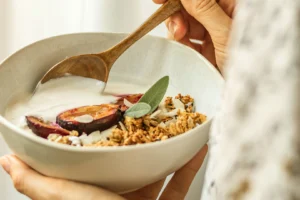
Layer full-fat Greek yogurt (1 cup) with mixed berries, hemp seeds, crushed walnuts, and a drizzle of honey. Prep 5 jars on Sunday and refrigerate. They keep beautifully for 4 days and make a complete high-protein breakfast that requires literally zero effort on a weekday morning.
Protein per jar: ~22g | Prep time: 10 minutes | Makes 5 servings
Add a scoop of vanilla protein powder stirred into the yogurt if you need to push the number higher — it blends in smoothly and doesn’t change the texture much.
5. Teriyaki Salmon Rice Bowls
Marinate 4–5 salmon portions in a mix of low-sodium tamari, honey, garlic, and ginger for 30 minutes. Bake at 400°F for 12–15 minutes. Serve over brown rice with steamed edamame, shredded red cabbage, sliced cucumber, and a drizzle of sesame oil and rice vinegar.
Protein per bowl: ~48g | Prep time: 40 minutes (including marinating) | Makes 5 servings
Salmon is worth building a prep day around, even though it’s slightly more expensive. The omega-3 content is genuinely meaningful for reducing exercise-induced inflammation, and the combination with edamame makes this one of the highest-quality protein meals in this entire plan.
6. Cottage Cheese and Turkey Stuffed Peppers
Mix 1 lb cooked ground turkey with 1 cup full-fat cottage cheese, diced spinach, garlic powder, onion powder, Italian seasoning, and a handful of mozzarella. Halve and seed 4–5 bell peppers. Fill each half and bake at 375°F for 25 minutes until bubbling. Let cool and store in containers.
Protein per serving (2 pepper halves): ~38g | Prep time: 35 minutes | Makes 5 servings
Cottage cheese sounds like an odd addition here, but it melts into the filling and creates this creamy, ricotta-like texture that makes these stuffed peppers feel genuinely indulgent. Nobody guesses it’s in there.
7. Overnight Oats With Protein Boost
Combine ½ cup rolled oats, 1 cup unsweetened almond milk, 1 scoop vanilla protein powder, 1 tablespoon chia seeds, and a tablespoon of almond butter. Stir, cover, and refrigerate overnight. Top in the morning with fresh berries and a drizzle of honey.
Protein per jar: ~32g | Prep time: 5 minutes per jar | Makes 5 jars
This one’s technically the most effortless prep on the list. Make all five jars in under 30 minutes on a Sunday evening while you’re watching something on TV. Done. Five breakfasts. No excuses Monday through Friday.
Sample Weekly High-Protein Meal Prep Plan

Here’s how to put the seven ideas into a real weekly structure. This plan delivers approximately 140–160 grams of protein per day — appropriate for a woman weighing 130–160 lbs who is actively building muscle.
| Day | Breakfast | Lunch | Dinner | Snack |
| Monday | Protein overnight oats | Sheet pan chicken + quinoa bowl | Turkey black bean bowl | Egg + salmon snack box |
| Tuesday | Greek yogurt parfait | Teriyaki salmon rice bowl | Stuffed bell peppers | Cottage cheese + berries |
| Wednesday | Protein overnight oats | Turkey black bean bowl | Sheet pan chicken + veggies | Egg + salmon snack box |
| Thursday | Greek yogurt parfait | Stuffed bell peppers | Teriyaki salmon rice bowl | Hard-boiled eggs + hummus |
| Friday | Protein overnight oats | Sheet pan chicken + quinoa bowl | Turkey black bean bowl | Greek yogurt parfait |
| Saturday | Scrambled eggs + smoked salmon | Teriyaki salmon rice bowl | Flexible / dine out | Protein shake + fruit |
| Sunday | Full cook-up + Greek yogurt parfait | Leftover stuffed peppers | Sheet pan chicken | Egg snack box |
Sunday prep takes approximately 90 minutes and covers the entire week. Set up stations: one sheet pan in the oven, one pot of grains on the stove, one pan for ground turkey on the burner, and eggs boiling in a small saucepan. It sounds like a lot, but once you’ve done it twice, it becomes automatic.
Meal Prep Tips for Busy Women
The difference between a meal prep habit that sticks and one that doesn’t usually comes down to a handful of execution details. These are the ones that actually matter:
- Prep proteins first, everything else follows: Your proteins take the longest and are the hardest to improvise. Always prioritize getting your chicken, salmon, or ground turkey cooked before anything else.
- Cook grains in bulk: A large pot of brown rice or quinoa takes 30 minutes and provides a neutral base for multiple meals all week. Store in a separate container so you can mix and match.
- Label everything with the day it was made: Cooked proteins are generally safe refrigerated for 4–5 days. Labeling removes the guessing game.
- Use uniform containers: Standard-size glass or BPA-free plastic containers stack better, store better, and make it easier to grab-and-go. Mixing random containers from your cabinet creates chaos in your fridge.
- Don’t prep everything: Some things don’t need to be prepped in advance — avocado browns, some greens wilt, some sauces separate. Prep the components that benefit from it and leave a few things fresh.
- Have a “fallback” protein always ready: Canned tuna, rotisserie chicken, or hard-boiled eggs are your safety net for the days when nothing else sounds good, and you just need a quick protein hit.
- Invest in a quality kitchen scale: If you’re serious about hitting protein targets, weighing food at least for the first few months builds accurate intuition about actual portion sizes. Most people underestimate significantly.
Common Mistakes Women Make With High-Protein Meal Prep
Even with the best intentions, these are the things that quietly derail muscle-building nutrition goals:
- Spreading protein too thin across the day: Having 10g at breakfast, 15g at lunch, 20g at dinner, and wondering why results are slow. Research consistently shows that distributing protein evenly — aiming for 30–40g per meal, 3–4 times per day — produces better muscle protein synthesis than front-loading or back-loading your intake.
- Counting total protein but ignoring leucine: Not all proteins trigger muscle protein synthesis equally. You need a meaningful leucine dose (around 2.5–3g) per meal to flip the MPS switch. Chicken, eggs, beef, and whey protein are all excellent sources. Plant proteins tend to be lower in leucine, which is why plant-based athletes often need to eat more total protein.
- Relying too heavily on protein bars and shakes: These have their place, but meals built around whole food protein sources provide co-factors — vitamins, minerals, healthy fats — that support recovery and overall health in ways powders don’t replicate.
- Not eating enough total calories: You cannot build muscle in a significant caloric deficit. If you’re training hard and keeping calories very low, your body will preferentially use dietary protein for energy rather than muscle repair. A modest surplus (100–200 calories above maintenance) or at least caloric maintenance is where muscle building happens most efficiently.
- Prepping the same thing every single week: Meal prep boredom is real, and it leads to abandoning the system entirely. Rotate your proteins, swap your grains, change your seasonings. The structure stays the same; the flavors shift enough to keep things interesting.
- Forgetting post-workout protein timing: While the “anabolic window” is smaller than it was once thought to be, consuming 30–40g of protein within 1–2 hours of training does support muscle protein synthesis meaningfully. Don’t skip it.
Recommended Tools for Muscle-Building Meal Prep
These are the tools that actually make the system work — and make Sunday prep feel less like a chore.
| Tool | Why You Need It | Amazon |
| Glass Meal Prep Containers (3-Cup, Set of 10) | Hard-boil eggs, cook grains, make soups, and pull chicken hands-free | View on Amazon |
| OXO Good Grips Kitchen Scale | Non-negotiable for tracking protein accurately without guessing | View on Amazon |
| Instant Pot Duo 7-in-1 (6-Quart) | Hard-boil eggs, cook grains, make soups, and pull chicken hands-free | View on Amazon |
| Nordic Ware Half Sheet Pans (Set of 2) | Commercial grade, won’t warp, essential for sheet pan meals | View on Amazon |
| Rubbermaid Brilliance Food Storage Set | Airtight, leak-proof, crystal clear so you can see what’s in each container | View on Amazon |
| Cuisinart Food Processor (7-Cup) | Speeds up chopping, shredding, and sauce-making dramatically | View on Amazon |
| Protein Powder (Optimum Nutrition Gold Standard Whey) | 24g protein per serving, mixes clean, widely trusted by athletes | View on Amazon |
| Stackable Pantry Organizer Bins | Keeps your prepped ingredients organized in the fridge, visible, and accessible | View on Amazon |
Note: Links direct to Amazon product search pages. Always verify current pricing and availability.
FAQ: High Protein Meal Prep for Women Building Muscle
Q: How much protein does a woman actually need to build muscle?
A: The research-supported range for women actively building muscle is 0.7–1 gram of protein per pound of body weight per day. For a 140-pound woman, that’s roughly 98–140 grams daily. Start at the lower end if you’re newer to tracking and increase from there based on your progress and recovery.
Q: Can I build muscle by eating mostly plant-based proteins?
A: Yes, but it requires more planning. Plant proteins tend to be lower in leucine and have lower overall bioavailability than animal proteins. To compensate, plant-based athletes generally need to eat 20–30% more total protein and should combine diverse protein sources (legumes with grains, edamame, tempeh, hemp seeds) to ensure a complete amino acid profile. A plant-based protein powder with leucine supplementation can also help bridge the gap.
Q: How long does prepped food stay safe in the refrigerator?
A: Cooked proteins (chicken, fish, beef, turkey) are generally safe for 4–5 days refrigerated when stored properly in airtight containers. Hard-boiled eggs last up to 7 days in the shell, 5 days peeled. Overnight oats and yogurt parfaits keep well for 4–5 days. Salmon is best consumed within 3–4 days. When in doubt, smell it and trust your instincts.
Q: Should I eat protein before or after my workout?
A: Both matter, but post-workout protein is especially important for muscle protein synthesis. Aim for 30–40 grams of protein within 1–2 hours after training. Pre-workout protein (eaten 1–2 hours before) also supports performance and reduces muscle breakdown during the session. If you’re hitting your daily total, the precise timing matters less than consistency.
Q: Will eating more protein cause weight gain?
A: Protein itself is not fattening — excess total calories cause fat gain regardless of macronutrient source. Increasing protein within your caloric target or at a modest surplus will change your body composition: more lean muscle, less fat. Many women find that eating more protein actually helps them maintain or reduce body fat because of its high satiety effect.
Q: Is chicken breast really the best protein for meal prep?
A: It’s one of the most practical, not necessarily the only good option. Chicken breast is high in protein (about 26g per 3 oz), low in fat, affordable, versatile, and holds up well in the fridge. But salmon, eggs, Greek yogurt, and ground turkey are all excellent — and a varied rotation is better for nutritional completeness and, frankly, sanity.
Q: Can I freeze my meal-prepped food?
A: Most prepped proteins freeze well — cooked chicken, ground turkey, and stuffed peppers all freeze for up to 3 months. Grains (rice, quinoa) also freeze beautifully. Avoid freezing anything with avocado, fresh greens, cucumber, or dairy-based sauces, as these break down poorly after thawing. A useful strategy is to prep one week’s worth of fresh and freeze a second batch simultaneously, for weeks when Sunday prep doesn’t happen.
Q: How do I keep meal prep from getting boring?
A: Rotate your seasoning profiles weekly rather than changing the entire plan. The same chicken breast tastes completely different when you go from lemon-herb one week to teriyaki the next, to Cajun seasoning the week after. Keep the structure stable, change the flavors. That’s the trick that keeps the system sustainable for months instead of weeks.
Start This Sunday. Your Muscles Will Thank You by Friday.
Here’s the truth nobody says enough: building muscle as a woman is one of the most empowering physical investments you can make. It changes how your body looks, how it moves, how it ages, how it handles stress, and honestly — how you feel about yourself. It’s worth doing right.
And doing it right means feeding it right.
You don’t need a complicated protocol. You don’t need expensive supplements or restaurant-grade cooking skills. You need a Sunday, a grocery list, a couple of sheet pans, and the seven meal prep ideas in this guide.
Pick two or three from this list and start there. Make your parfait jars tonight if it’s Sunday evening and you’re reading this at 9 pm. Cook a sheet pan of chicken tomorrow. Stack your containers in the fridge and feel that quiet satisfaction of being prepared before the week has even started.
That feeling — that calm, organized confidence — is what separates the women who get results from the women who stay stuck. It’s not talent. It’s not genetics. It’s a Sunday afternoon, and a plan.
Go build something.
Always speak with a registered dietitian or healthcare professional before making significant changes to your nutrition, especially if you have underlying health conditions or specific performance goals.


Add Comment