Health & Fitness

7-Day Calorie Deficit Meal Plan for Healthy Weight Loss

7-Day Calorie Deficit Meal Plan for Healthy Weight Loss

7-day calorie deficit meal plan for healthy weight loss. I almost didn’t write that title because honestly? I’m a little tired of it, too.

Not on the topic. Of the way it gets covered. The perfectly lit stock photos of smoothie bowls nobody actually makes on a Tuesday morning. The meal plans were built by someone who clearly doesn’t have a 45-minute commute and two kids asking for snacks every seven minutes. The advice that sounds clinical and doable right up until real life shows up and ruins it.

I’ve done the yo-yo thing. Lost 22 pounds, gained back 27. Lost 18, gained back 14. Spent years confusing effort with strategy — thinking if I just tried harder, white-knuckled my way through another week of restriction, something would finally stick. It didn’t.

What finally clicked wasn’t a new diet. It was understanding, on a real level, that my body isn’t the enemy and food is not a moral test. Weight loss has one actual biological mechanism: you consume less energy than you burn. That’s it. Everything else — keto, intermittent fasting, low-fat, whatever’s trending right now — works because it creates that gap. The method is just the vehicle.

So that’s what this guide is. A real, usable, not-overly-complicated 7-day calorie deficit meal plan that gives you the structure most people need without making you feel like you signed up for a punishment.


What Is a Calorie Deficit, Really?

Here’s the simplest possible version: your body burns a certain number of calories every day just to keep you alive and moving. When you eat less than that number, your body pulls the difference from stored fat. Do that consistently and you lose weight. Simple in theory, obviously trickier in practice.

What makes it tricky isn’t the math. It’s the hunger. The social situations. The bad days when you eat your feelings, and the good days when you’re so busy you forget to eat at all, and then eat everything in sight at 9 pm.

A calorie deficit isn’t a starvation diet. It’s not about suffering through hunger or cutting out entire food groups. The most sustainable version — the kind that actually produces lasting results — is a moderate deficit. Usually, somewhere between 300 and 500 calories below what you burn. Enough to create real, consistent fat loss. Small enough that you can actually live your life.

A few terms worth knowing:

  • BMR (Basal Metabolic Rate) — the calories your body burns doing absolutely nothing. Just existing. Breathing, keeping your heart beating, your organs functioning. This number is higher than most people expect.
  • TDEE (Total Daily Energy Expenditure) — your BMR plus the calories you burn through daily movement and exercise. This is your true “maintenance” number — the amount of food that keeps your weight stable.
  • Calorie deficit — eating below your TDEE. A 500-calorie daily deficit theoretically produces about one pound of fat loss per week.
  • Macros (macronutrients) — protein, carbohydrates, and fat. Not all calories behave the same way. A diet heavy in protein keeps you much more satisfied during a deficit than one heavy in simple carbs.
  • Satiety — how full you actually feel. This matters enormously. A meal that’s 500 calories of chips leaves you hungry again in an hour. A 500-calorie meal built around chicken, vegetables, and some complex carbs keeps you comfortable for three or four hours. Same calories, completely different experience.

The goal of this plan is to put you in a moderate deficit while keeping satiety high enough that you’re not miserable. That’s the whole design philosophy.


How to Calculate Your Calorie Deficit

Most people skip this step and just pick a number — 1,200 calories, 1,500 calories, whatever they read somewhere. The problem is that those numbers are guesses built around an average person who may be nothing like you. A 5’2″ 43-year-old woman working a desk job and a 6’0″ 28-year-old guy who walks construction sites all day have wildly different calorie needs. Applying the same number to both is how you end up either starving yourself or wondering why you’re not losing weight.

Here’s how to get your actual number.

Step 1 — Find Your BMR

The Mifflin-St Jeor equation is the most accurate formula for estimating your basal metabolic rate. It’s not perfect — no formula is —, but it’s what registered dietitians and sports nutritionists typically use as a starting point.

Women: BMR = (4.536 × weight in lbs) + (12.7 × height in inches) − (6.755 × age) − 161

Men: BMR = (4.536 × weight in lbs) + (12.7 × height in inches) − (6.755 × age) + 5

Let’s use a real example: a 35-year-old woman, 5’5″ tall (65 inches), weighing 165 lbs. BMR = (4.536 × 165) + (12.7 × 65) − (6.755 × 35) − 161 BMR = 748 + 825.5 − 236.4 − 161 = 1,176 calories

That’s what her body burns at complete rest. Everything she does on top of that — walking to her car, going up stairs, working out — adds to the total.

Step 2 — Multiply for Your Activity Level

Activity LevelWhat It Actually Looks LikeMultiply BMR By
SedentaryMostly sitting, no intentional exercise× 1.2
Lightly activeA few walks per week, light gym sessions× 1.375
Moderately activeWorking out 3–5 days a week consistently× 1.55
Very activeHard training 6–7 days, physically demanding job× 1.725
Extra activeDaily intense training plus physical work× 1.9

Continuing our example: she’s lightly active → 1,176 × 1.375 = 1,617 calories/day (TDEE)

That’s her maintenance. To lose weight, she subtracts her deficit.

Step 3 — Choose Your Deficit

  • Lose slowly but keep your sanity (−250 to −300 cal): about 0.5 lbs/week; easiest to stick to; best for people who’ve yo-yo dieted a lot
  • The standard sweet spot (−400 to −500 cal): roughly 0.75–1 lb/week, where most people get real results without feeling miserable
  • Aggressive approach (−600 to −750 cal): faster but harder; hunger is real; higher risk of losing muscle; not recommended for most people without professional guidance

Our example woman at a 500-cal deficit: 1,617 − 500 = 1,117 calories/day

That’s on the lower side — which is why this highlights that for smaller individuals, a 300–calorie deficit is often smarter. Don’t go below 1,200 calories if you’re a woman. Below 1,500 if you’re a man. Going under those numbers without medical supervision usually backfires.

Don’t want to do the math yourself? Tools like the NASM BMR calculator or Precision Nutrition’s calculator will do it in two minutes.


7-Day Calorie Deficit Meal Plan for Healthy Weight Loss

This plan sits around 1,400–1,600 calories per day — the right range for most moderately active adults targeting that 400–500 calorie deficit. If your personal target is higher, add a serving of protein or an extra snack. If it’s lower, trim portions slightly. Use it as a template, not a prison sentence.

Macro targets: roughly 30% protein, 40% carbs, 30% fat per day.


Day 1 — Monday

The goal on Mondays is not to be ambitious. The goal is to not blow it before the week starts.

Breakfast — Greek Yogurt Parfait (~380 cal): 6 oz plain full-fat Greek yogurt layered with ½ cup blueberries, 2 tablespoons low-sugar granola, 1 tablespoon chia seeds, and a small drizzle of honey. Takes four minutes. Tastes better than it has any right to.

Lunch — Grilled Chicken Salad (~420 cal): 5 oz grilled chicken breast over a large bed of mixed greens with cherry tomatoes, sliced cucumber, half an avocado, 2 tablespoons sunflower seeds, and a simple dressing of 1 tablespoon olive oil whisked with fresh lemon juice and a pinch of salt.

Dinner — Baked Salmon and Quinoa (~480 cal): 5 oz wild salmon baked at 400°F for 12–14 minutes with a little olive oil, garlic, and lemon. Half a cup of cooked quinoa on the side. Roasted asparagus — just toss it in olive oil spray and roast at the same time as the salmon.

Snack (~120 cal): 1 medium apple, sliced, with 1 tablespoon almond butter.

Day 1 Total: ~1,400 cal | Protein: 115g | Carbs: 120g | Fat: 48g


Day 2 — Tuesday

Breakfast — Egg Scramble (~350 cal): Three eggs scrambled with a big handful of spinach, a quarter of a diced red pepper, and a few sliced mushrooms. Cooked in half a teaspoon of olive oil. One slice of whole-grain toast. This is a real breakfast that keeps you full until noon, not a sad diet version of breakfast.

Lunch — Turkey Wrap (~430 cal): About 3.5 oz sliced turkey breast in a whole grain tortilla with romaine, tomato, a smear of mustard, a quarter of an avocado, and some shredded carrots. Roll it tight and eat it at your desk without embarrassing yourself.

Dinner — Lean Beef Stir-Fry (~510 cal): About 4.5 oz extra-lean ground beef cooked with broccoli, snap peas, minced garlic, and a thumb of fresh ginger in a low-sodium soy sauce. Served over half a cup of brown rice. Fast, filling, and genuinely good.
Snack (~100 cal): Two hard-boiled eggs. Meal prep these on Sunday and keep them in the fridge all week.

Day 2 Total: ~1,390 cal | Protein: 130g | Carbs: 110g | Fat: 44g


Day 3 — Wednesday

Hump day always tests willpower. This is why Wednesday has overnight oats — you make them Tuesday night when you still have energy.

Breakfast — Overnight Oats (~360 cal): Half a cup of rolled oats, 1 cup unsweetened almond milk, 1 tablespoon ground flaxseed, half a banana sliced in, a generous pinch of cinnamon. Mix, cover, refrigerate. Morning self thanks night self.

Lunch — Lentil and Roasted Veggie Bowl (~440 cal): Three-quarters of a cup of cooked green lentils with roasted zucchini, red onion, and cherry tomatoes. Drizzle of tahini thinned with lemon juice and a little water. Fresh parsley, if you have it. This holds up really well if you pack it a few hours ahead.

Dinner — Herb-Crusted Cod (~480 cal): 5.5 oz cod fillet with a crust of chopped parsley, garlic, olive oil, and breadcrumbs. Bake at 400°F for 15 minutes. One small roasted sweet potato and steamed green beans with lemon on the side.

Snack (~130 cal): About 20 raw almonds and one small orange.

Day 3 Total: ~1,410 cal | Protein: 95g | Carbs: 145g | Fat: 42g


Day 4 — Thursday

Breakfast — Protein Smoothie (~370 cal) One scoop vanilla protein powder, 1 cup frozen spinach (you cannot taste it, I promise), half a frozen banana, 1 tablespoon almond butter, 1 cup unsweetened almond milk, and ice. Blend until smooth. Drink on the way to wherever you’re going.

Lunch — Tuna Stuffed Peppers (~420 cal) One can of wild tuna packed in water, drained, mixed with 2 tablespoons plain Greek yogurt instead of mayo, a stalk of celery diced small, and a little red onion. Stuffed into two halved bell peppers. A handful of baby carrots on the side. Weird at first. Addictive after the second time.

Dinner — Chicken Thigh and Farro (~490 cal) One skinless chicken thigh (about 5 oz) baked with garlic, Italian herbs, and a little olive oil. Half a cup of cooked farro. Broccoli and cauliflower are roasted with olive oil spray until the edges get a little crispy.

Snack (~120 cal) One rice cake spread with 1 tablespoon of peanut butter, a few strawberry slices on top.

Day 4 Total: ~1,400 cal | Protein: 125g | Carbs: 115g | Fat: 40g


Day 5 — Friday

You made it to Friday. Don’t blow it tonight. Friday night is where a lot of plans quietly fall apart.

Breakfast — Avocado Toast (~380 cal) Two slices of whole-grain bread, toasted. Half an avocado mashed on top with a pinch of salt, red pepper flakes, and a squeeze of lemon. Two poached eggs on top. This takes maybe eight minutes and feels like something you’d pay $18 for at brunch.

Lunch — Chickpea and Spinach Soup (~410 cal) One can chickpeas, a big handful of baby spinach, one can diced tomatoes, two cloves of garlic, vegetable broth, smoked paprika. Simmer 15 minutes. It’s humble and genuinely satisfying. One small whole-grain roll on the side.

Dinner — Garlic Shrimp Zoodles (~500 cal) 5 oz shrimp sautéed fast in a hot pan with garlic and a little olive oil. Tossed with zucchini noodles (buy pre-spiralized to save time), cherry tomatoes, and fresh basil. Two tablespoons of Parmesan are grated over the top. This is legitimately a Friday night dinner.

Snack (~110 cal) Half a cup of low-fat cottage cheese with a pinch of everything bagel seasoning and some sliced cucumber. Odd combination that somehow works.

Day 5 Total: ~1,400 cal | Protein: 115g | Carbs: 125g | Fat: 43g


Day 6 — Saturday

Breakfast — Veggie Frittata (~400 cal) Three eggs and two egg whites whisked together with spinach, cherry tomatoes, and a little crumbled feta. Pour into a small oven-safe pan and finish under the broiler for a few minutes. Half a cup of mixed berries on the side. Saturday morning energy, earned.

Lunch — Big Macro Bowl (~430 cal) Half a cup of brown rice, 4 oz grilled chicken, sliced cucumber, half a cup of shelled edamame, shredded carrots, sesame seeds, and a drizzle of low-sodium teriyaki sauce. This is the kind of meal that makes you feel like you actually have your life together.

Dinner — Turkey Meatballs over Zucchini Pasta (~470 cal) Homemade turkey meatballs (lean ground turkey, an egg, a few tablespoons of oats, garlic, Italian seasoning) baked at 400°F for 18 minutes. Served over zucchini noodles with a simple no-sugar-added marinara from a jar. One tablespoon of Parmesan.

Snack (~130 cal): One protein bar. Look for: under 200 calories, at least 15g protein, under 10g sugar. Quest and RXBARs are solid options.

Day 6 Total: ~1,430 cal | Protein: 120g | Carbs: 130g | Fat: 40g


Day 7 — Sunday

Make extra of everything tonight. Lunch is already handled for Monday.

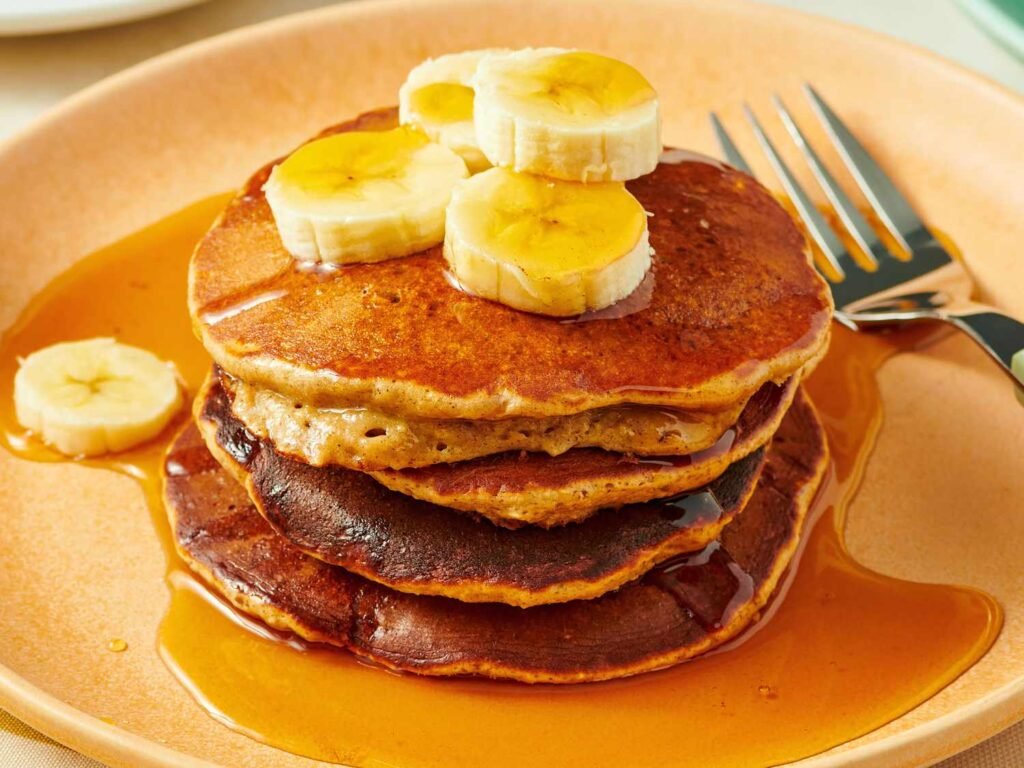
Breakfast — Banana Oat Pancakes (~360 cal) One ripe banana mashed with two eggs and a quarter cup of rolled oats. That’s literally the whole batter. Pan-fry in coconut oil spray, two minutes per side. Top with a handful of raspberries and a tiny pour of maple syrup. Four ingredients. Takes 10 minutes. Kids eat them too.
Lunch — Leftover Meatball Bowl (~440 cal) Yesterday’s turkey meatballs over a bed of arugula with cherry tomatoes and a drizzle of balsamic glaze. Zero cooking. Maximum laziness. Fully acceptable.

Dinner — One-Pan Roast (~490 cal) One 5-oz chicken breast, one small sweet potato cubed, half a red onion wedged, a handful of green beans — all of it tossed in 1 tablespoon olive oil with minced garlic, dried thyme, salt, and pepper. Spread on a sheet pan. Roast at 400°F for 28–32 minutes. One pan, minimal prep, virtually no cleanup. This is the dinner that makes Sunday meal prep feel manageable.

Snack (~110 cal) 3.5 oz plain Greek yogurt, a drizzle of honey, and four or five walnut halves.

Day 7 Total: ~1,400 cal | Protein: 110g | Carbs: 140g | Fat: 38g


Full 7-Day Grocery List

Print this or screenshot it before you go. Organized by section so you can move through the store fast.

Proteins:

  • Chicken breast (~12 oz total) and chicken thighs, skinless (~5 oz each)
  • Wild salmon fillets (two, ~5 oz each)
  • Cod fillet (one, ~5.5 oz)
  • Extra-lean ground beef (~4.5 oz)
  • Turkey breast, deli-sliced (~3.5 oz)
  • Ground turkey for meatballs (~10 oz)
  • Shrimp, raw and peeled (~5 oz)
  • Canned wild tuna in water (2 cans)
  • Eggs (2 dozen — you’ll use nearly all of them)
  • Plain full-fat Greek yogurt (large container)
  • Low-fat cottage cheese (one small tub)
  • Vanilla protein powder (1–2 scoops needed)

Produce:

  • Spinach, arugula, mixed greens (large bags)
  • Broccoli (1 head) and cauliflower (1 head)
  • Asparagus (1 bunch)
  • Zucchini (4 medium — also used as noodles)
  • Green beans (1 bag)
  • Sweet potatoes (2–3 medium)
  • Bell peppers, red and yellow (4 total)
  • Cherry tomatoes (2 pints)
  • Cucumber (2)
  • Baby carrots (1 bag)
  • Avocados (3–4, buy a mix of ripe and firm)
  • Bananas (4–5)
  • Blueberries and raspberries (fresh or frozen)
  • Strawberries (fresh or frozen)
  • Oranges (2)
  • Apple (1)
  • Shelled edamame (frozen, 1 bag)
  • Red onion (2) and garlic (1 head)
  • Mushrooms (1 container)
  • Fresh parsley (1 bunch)
  • Fresh basil (1 small bunch)
  • Lemon (3)

Grains and Legumes:

  • Rolled oats (large bag)
  • Whole grain bread (1 loaf)
  • Whole grain tortillas (1 pack)
  • Brown rice
  • Quinoa
  • Farro
  • Green lentils (1 can or 1 cup dry)
  • Chickpeas (1 can)
  • Rice cakes (1 pack)

Dairy and Refrigerated:

  • Feta cheese (small block)
  • Parmesan (small wedge)
  • Unsweetened almond milk (1 quart)
  • Coconut oil spray

Pantry Staples:

  • Extra virgin olive oil (a good one — this matters)
  • Almond butter and peanut butter
  • Chia seeds, ground flaxseed
  • Sunflower seeds, raw walnuts, raw almonds
  • Tahini
  • Low-sodium soy sauce
  • Low-sodium teriyaki sauce
  • Canned diced tomatoes (2 cans)
  • Low-sodium vegetable broth and chicken broth
  • Smoked paprika, cumin, cinnamon, red pepper flakes, Italian seasoning, dried thyme
  • Honey and maple syrup (small amounts)
  • Low-sugar granola (small bag)
  • Everything bagel seasoning
  • Balsamic glaze
  • No-sugar-added marinara sauce (1 jar)

Amazon Tools That Actually Help You Stick to This

Willpower runs out. Systems don’t. These are the tools that make the practical side of this plan genuinely easier.

ProductWhy It Actually MattersApprox. Price
Etekcity Digital Kitchen ScaleYou cannot accurately track calories without weighing food. Eyeballing is off by 20–40% on average. This changes everything.$10–$20
Quest Nutrition Protein Bars20g protein, around 190 calories, and they actually taste decent. Perfect for the Day 6 snack.~$25/12-pack
Nalgene 32 oz Wide-Mouth BottleStaying hydrated reduces false hunger. Half the time you think you’re hungry, you’re just thirsty.$12–$18
Pyrex Glass Meal Prep Containers (10-piece set)Glass reheats way better than plastic. Sunday prep without containers is just chaos.$30–$40
Instant Pot Duo 6 QuartCook chicken, farro, and lentils all in one appliance. Cuts prep time in half, at least.$80–$100
NutriBullet Pro 900WTwo-minute smoothies. No excuse to skip breakfast.$60–$80
Isopure Zero Carb Protein PowderClean ingredients, mixes easily, works well for the Thursday smoothie.~$35/1.6 lbs
Taylor Precision Digital Bathroom ScaleWeekly weigh-ins track trends. A consistent scale matters more than a perfect one.$20–$35

As an Amazon Associate, qualifying purchases may earn a small commission at no extra cost to you.


Mistakes That Quietly Kill Your Progress

None of these are dramatic. They don’t feel like mistakes when you’re making them. That’s what makes them dangerous.

You’re drinking more calories than you realize. A flavored latte, a glass of OJ, a sports drink after the gym, and two glasses of wine in the evening can add up to 700+ calories in a day — and most people don’t register drinks as “eating.” Log everything that isn’t plain water.

You’re measuring with your eyes. Study after study shows people underestimate their portions by 20 to 40 percent when they don’t measure. That “handful” of nuts is usually two or three servings. Get a scale. Weigh for a few weeks. Then your calibration will be solid enough that you can eyeball more accurately.

You’re not eating enough protein. This is the one that makes or breaks a deficit. Protein keeps you full longer than any other macronutrient. It also prevents your body from burning muscle for energy when you’re in a calorie deficit — and losing muscle slows your metabolism, which makes everything harder. Aim for at least 0.7 to 1 gram per pound of body weight per day.

You’re skipping meals to save up calories. Skipping lunch so you can eat more at dinner sounds logical. In practice, it causes extreme hunger by late afternoon, which leads to overeating that blows the deficit entirely. Consistent, spaced meals keep your hunger hormones regulated. Don’t skip.

You trust labels on “healthy” packaged foods. Low-fat flavored yogurt. Protein granola. Healthy crackers. Wellness-branded snack bars. A lot of these products have more sugar and calories than you’d expect, and they’re often much less filling than whole food alternatives. Read the actual nutrition label, not just the front of the package.

You started too hard. Dropping 1,000 calories on day one feels like a commitment. It usually just creates misery, followed by rebound eating, followed by giving up. A 400–500 calorie daily deficit is enough to produce real, consistent fat loss. Slower is sustainable. Sustainability is how you actually win.


Tips to Stay in a Deficit Without Going Crazy

  • Sunday prep changes everything: Even just cooking proteins in bulk and washing your produce takes maybe 45 minutes and eliminates most of the weekday decision fatigue that leads to ordering pizza at 7 pm.
  • Protein at every single meal. It’s the most effective hunger management tool you have access to. Use it.
  • Drink a full glass of water before you eat: Research consistently shows that this reduces how much people eat at the following meal. Simple. Free. Actually works.
  • Smaller plates aren’t a gimmick: Your brain uses visual cues to decide if a meal looks satisfying. A moderate portion on a smaller plate looks like a real meal. The same portion on a large plate looks like a punishment.
  • Don’t keep trigger foods in the house: If cookies derail you every single time, don’t buy cookies “just to have around.” Willpower is a limited resource. Stop relying on it for things you can control with a grocery list.
  • Give yourself one really flexible meal per week: Not a cheat day — a flexible meal. Planned, not reactive. This prevents the deprivation spiral that turns into weekend binges.
  • Weigh yourself once a week, same day, same time: Daily weight swings 1–3 lbs based on water retention, sodium, hormones, and digestion. Those fluctuations mean nothing. Weekly trends mean everything.
  • Sleep like it’s your job: Seriously. Sleep deprivation elevates ghrelin (makes you hungrier) and suppresses leptin (makes you feel less full). Bad sleep makes your deficit twice as hard to maintain. Seven to nine hours isn’t a luxury — it’s part of the plan.

FAQ

Q1. How much weight will I actually lose in 7 days?

Honestly? The scale number at the end of week one doesn’t tell you much. If you significantly cut processed food and sodium, you might drop 3–5 lbs of water weight in the first week, which feels great but isn’t fat loss. Real fat loss on a 500-calorie deficit is about one pound per week. It’s slower than you want. It’s also permanent in a way that crash diets aren’t.

Q2. Should I exercise while doing this?

Yes, but adjust your calories if you’re exercising hard. If you’re lifting weights or doing longer cardio sessions, you may need to add 100–200 calories on training days to fuel performance and protect muscle. Strength training is especially valuable on a deficit — it’s the main thing that prevents you from losing muscle alongside fat.

Q3. What do I do when I hit a plateau?

First, check your tracking. Most plateaus involve unlogged calories that have crept in — a splash of creamer here, an extra handful of something there. If your tracking is genuinely accurate and you’ve been in a plateau for two weeks, recalculate your TDEE. As you lose weight, your maintenance calories decrease — the deficit that worked at 175 lbs doesn’t work the same way at 162 lbs.

Q4. Is 1,400 calories too low for me?

Maybe. It depends entirely on your height, weight, age, and activity level. A 6’1″ man who works on his feet all day needs significantly more than 1,400 calories even in a deficit. Use the Mifflin-St Jeor calculation above to find your specific number. Use this plan as a structural template and scale portions to match your actual target.

Q5. Can I do this as a vegetarian?

Yes, with straightforward swaps. Replace fish and meat with: lentils, chickpeas, tofu, tempeh, edamame, eggs, cottage cheese, and Greek yogurt. Add a plant-based protein powder to hit your daily protein targets. Most of the meals in this plan adapt easily.

Q6. Do I have to count calories forever?

No. Eight to twelve weeks of consistent tracking typically builds an intuitive sense of portion sizes that makes strict tracking unnecessary. Most people who maintain weight loss long-term track loosely — maybe logging a few days here and there when habits start drifting. The goal is building awareness, not creating a permanent dependency on an app.

Q7. What about alcohol?

Alcohol delivers 7 calories per gram — more than carbs or protein — and it tends to make you hungrier and less thoughtful about what you’re eating alongside it. An occasional drink on the weekend isn’t going to derail anything. Regular drinking makes the deficit harder to maintain. Know the tradeoff and make the call with clear eyes.


One Last Thing

Weight loss isn’t complicated. It’s hard, but it’s not complicated. You eat a moderate amount less than you burn. You do it consistently. You prioritize protein. You sleep. You move. You stop treating the occasional bad day as evidence that you can’t do this.

No plan removes the effort. But there’s a real difference between effort with a strategy and effort without one. That’s what this is — a strategy. Something to come back to when Wednesday goes sideways, and you need to remember what you were doing and why.

Start this Sunday. Keep it boring. Do it for four weeks before you decide whether it’s working. Fat loss is slow, and the scale is a liar in the short term. Trust the process long enough for it to actually show you something.

You’ll figure out the rest.


Talk to your doctor or a registered dietitian before making big changes to your diet, especially if you’re managing a health condition, on any medications, or have a history of disordered eating.

About the author

jayaprakash

I am a computer science graduate. Started blogging with a passion to help internet users the best I can. Contact Email: jpgurrapu2000@gmail.com

Add Comment

Click here to post a comment