
Meal prep for weight loss beginners saved me from my own worst habits — and I say that with complete sincerity.
For most of my late 20s and early 30s, I had the same relationship with food that a lot of people have: I ate well when I had time and energy, and I ate terribly when I didn’t. Which, if you do the math, means I ate terribly about 70% of the time. Drive-throughs on Wednesday nights. Cereal for dinner when the week gets long. “Healthy lunches,” I’d packed with good intentions, forgotten in the fridge, and eventually thrown away while standing there eating crackers straight from the box.
The thing is, I didn’t have a nutrition problem. I had a logistics problem.
I knew roughly what I should eat. I just hadn’t built a system that made it easier to eat that way than not to. And that gap — between knowing and doing — is where most weight loss attempts quietly die. Not from lack of motivation. From a lack of a plan that survives contact with a real week.
Meal prep closed that gap for me. And it can close it for you, too.
This guide covers everything you need to start: what meal prep actually is, why it specifically supports weight loss (the science is more interesting than you might expect), the foods to build your prep around, a full beginner-friendly 7-day plan, and the step-by-step process to make it happen without giving up your entire Sunday. Plus, the tools worth actually buying, and the mistakes worth actually avoiding.
Let’s go.
Table of Contents
What Meal Prep Actually Is — And What It Isn’t
Before we get into strategy, let’s clear something up. Meal prep has a bit of an image problem. The phrase conjures up a certain type of person — someone with a whole wall of matching glass containers, 47 perfectly portioned meals labeled by day and macronutrient, a blender that costs more than your rent, and apparently unlimited free time on Sundays.
That version of meal prep is real. It’s also completely unnecessary.
Meal prep, at its most essential, is simply the practice of doing some cooking work in advance so that the rest of your week is easier. That could mean:
- Batch cooking — making large quantities of a single food (a pot of grains, a sheet pan of roasted vegetables, a big protein) that you use in multiple meals throughout the week
- Full meal prep — cooking complete, ready-to-eat meals that just need reheating
- Component prep — washing, chopping, and portioning ingredients so that assembling meals is fast instead of laborious
- Hybrid prep — a combination of all three, depending on the week
What it is not: a rigid all-or-nothing system where one missed prep day means the whole week falls apart. Good meal prep is flexible. It adapts to your schedule, your preferences, and your life.
For beginners especially, starting with just 2–3 prepped components — a protein, a grain, and some vegetables — changes everything. You’re not cooking meals, you’re just making sure the building blocks are there. The rest comes together in minutes.
Why Meal Prep Helps With Weight Loss — The Real Reasons
This is where it gets genuinely interesting. Because the connection between meal prep and weight loss isn’t just about portion control or eating salad. It’s deeper than that.
It removes the decision fatigue that derails healthy eating. Every time you stand at the fridge at 6:30 pm trying to figure out what to eat, you’re burning through cognitive resources you don’t have at the end of a long day. Decision fatigue is real and well-documented. The hungrier and more tired you are, the worse your food decisions become. Meal prep eliminates that decision point. The food is already there. You don’t have to think.
It breaks the “convenient vs. healthy” false choice. Ultra-processed, high-calorie food is engineered to be easy. Ordering a pizza takes 3 minutes. Driving through takes 10. For most people, the barrier to eating well isn’t knowledge — it’s convenience. Meal prep makes healthy food just as easy to access as junk food. That shift in friction is enormously powerful.
It supports consistent caloric awareness without obsessive tracking. You don’t need to count every calorie to lose weight, but you do need some general awareness of what you’re eating. When you prep your own food, you inherently know what went into it. You’re not guessing at restaurant portions or hidden oils. That transparency supports more consistent, moderate eating — which is what actually drives sustainable weight loss.
It reduces food waste and saves money — which reduces stress. Financial stress and food insecurity are genuine barriers to healthy eating. When you shop with a plan and use what you buy, you spend less and waste less. Lowering that background stress has a real physiological benefit: lower cortisol, which directly affects fat storage around the abdomen.
Research backs this up. Studies published in the International Journal of Behavioral Nutrition and Physical Activity found that people who plan and prepare meals at home have higher diet quality, lower body weight, and greater success with weight management than those who rely heavily on take-out and convenience foods. The correlation is consistent across multiple populations.
Meal prep isn’t a diet. It’s the infrastructure that makes a healthy diet possible in the real world.
Essential Foods for Weight Loss Meal Prep
Building your prep around the right foods means every meal you pull from the fridge is already working in your favor. Here’s what to stock consistently:
Lean Proteins (the anchor of every meal):
- Chicken breast and chicken thighs (thighs stay moist after reheating — important)
- Eggs (hard-boiled for snacks, batch-scrambled for breakfast meal prep)
- Canned tuna and salmon (no cooking required, endlessly versatile)
- Ground turkey (lean, fast, works in everything from bowls to wraps)
- Tofu and tempeh (excellent plant-based options that absorb flavor beautifully)
- Cottage cheese and plain Greek yogurt (protein-dense, high-satiety dairy options)
Complex Carbohydrates (sustained energy, not blood sugar spikes):
- Brown rice and wild rice
- Quinoa (also a complete protein source — double duty)
- Sweet potatoes and regular oats
- Whole grain bread and wraps (for easy assembly meals)
- Lentils and chickpeas (fiber + protein + complex carbs in one)
Vegetables (volume, fiber, micronutrients):
- Broccoli, cauliflower, Brussels sprouts, and cabbage
- Spinach, kale, and mixed greens (don’t cook these in advance — just wash and store dry)
- Zucchini, bell peppers, mushrooms, onions (roast large batches)
- Cherry tomatoes and cucumber (no prep required, great for salads and snacking)
- Carrots and celery (chop once, snack all week)
Healthy Fats (satiety and hormonal health):
- Avocado (buy at different ripeness stages so they’re ready across the week)
- Olive oil (your default cooking fat)
- Nuts and seeds: almonds, walnuts, pumpkin seeds, chia seeds, flaxseeds
- Natural nut butters (no added sugar)
Flavor Builders (the underrated weight loss tool):
- Garlic, ginger, and onion — these form the flavor foundation of almost every cuisine
- Fresh herbs: cilantro, parsley, basil
- Spice blends: cumin, smoked paprika, turmeric, chili flakes
- Acids: lemon juice, lime juice, apple cider vinegar — these brighten every dish and reduce the need for calorie-dense sauces
- Low-sodium condiments: Dijon mustard, hot sauce, low-sodium tamari
The more your prepped food actually tastes good, the more you’ll eat it instead of ordering something else. Flavor is not a luxury in weight loss meal prep — it’s a strategy.
Simple 7-Day Beginner Meal Plan for Weight Loss
This plan is built around three prep sessions (not seven separate cooking sessions) and realistic, repeatable meals. Every day is balanced: lean protein, complex carbs, plenty of vegetables, healthy fat. The estimated calorie range is 1,400–1,700 calories per day, which supports gradual, sustainable weight loss of roughly 0.5–1.5 pounds per week.
Day 1 — Monday
- Breakfast: Overnight oats with chia seeds, almond milk, blueberries, and a tablespoon of almond butter
- Lunch: Quinoa bowl with grilled chicken, roasted broccoli, cherry tomatoes, and tahini-lemon dressing
- Dinner: Sheet pan chicken thighs with sweet potato wedges and roasted green beans
- Snack: Hard-boiled egg + a small handful of almonds
Day 2 — Tuesday
- Breakfast: Greek yogurt parfait with rolled oats, raspberries, and a drizzle of honey
- Lunch: Tuna salad in lettuce wraps with diced celery, Dijon, and cucumber rounds on the side
- Dinner: Ground turkey stir-fry with broccoli, snap peas, garlic, ginger, and brown rice
- Snack: Carrot and celery sticks with hummus
Day 3 — Wednesday
- Breakfast: Scrambled eggs (batch-prepped, reheated) with sautéed spinach and whole grain toast
- Lunch: Leftover turkey stir-fry over brown rice — intentional leftovers are a prep strategy, not laziness
- Dinner: Baked salmon with roasted asparagus and a simple cucumber-tomato salad
- Snack: Apple with a tablespoon of natural peanut butter
Day 4 — Thursday
- Breakfast: Overnight oats (same as Monday — prep two jars at once)
- Lunch: Big salad: mixed greens, chickpeas, roasted red peppers, cucumber, feta, olive oil, and lemon dressing
- Dinner: Ground turkey lettuce tacos with salsa, shredded cabbage, lime, and a sprinkle of cheddar
- Snack: Cottage cheese (½ cup) with pumpkin seeds and a few cherry tomatoes
Day 5 — Friday
- Breakfast: Smoothie: frozen spinach, banana, frozen mango, flaxseed, Greek yogurt, almond milk
- Lunch: Quinoa and black bean bowl with roasted vegetables, avocado, and hot sauce
- Dinner: Baked lemon herb chicken breast with cauliflower rice and steamed broccoli
- Snack: Dark chocolate (2 squares, 70%+) and a small handful of walnuts
Day 6 — Saturday
- Breakfast: Veggie egg muffins (baked in a muffin tin with spinach, peppers, onion) — make 6, eat 3, save 3 for Sunday
- Lunch: Large grain bowl: brown rice, shredded rotisserie chicken, roasted vegetables, hummus, lemon-olive oil drizzle
- Dinner: Sheet pan salmon with roasted zucchini, cherry tomatoes, and garlic
- Snack: Sliced bell pepper with guacamole
Day 7 — Sunday
- Breakfast: Saved egg muffins (from Saturday) with avocado and a cup of green tea
- Lunch: Leftover salmon flaked over mixed greens with capers, red onion, cucumber, and a light vinaigrette
- Dinner: Slow-cooked chicken and white bean soup — shredded chicken, cannellini beans, kale, garlic, onion, low-sodium chicken broth. Make extra for Monday lunch.
- Snack: Greek yogurt with a handful of frozen berries (thaw quickly at room temperature)
Step-by-Step Meal Prep Process for Beginners
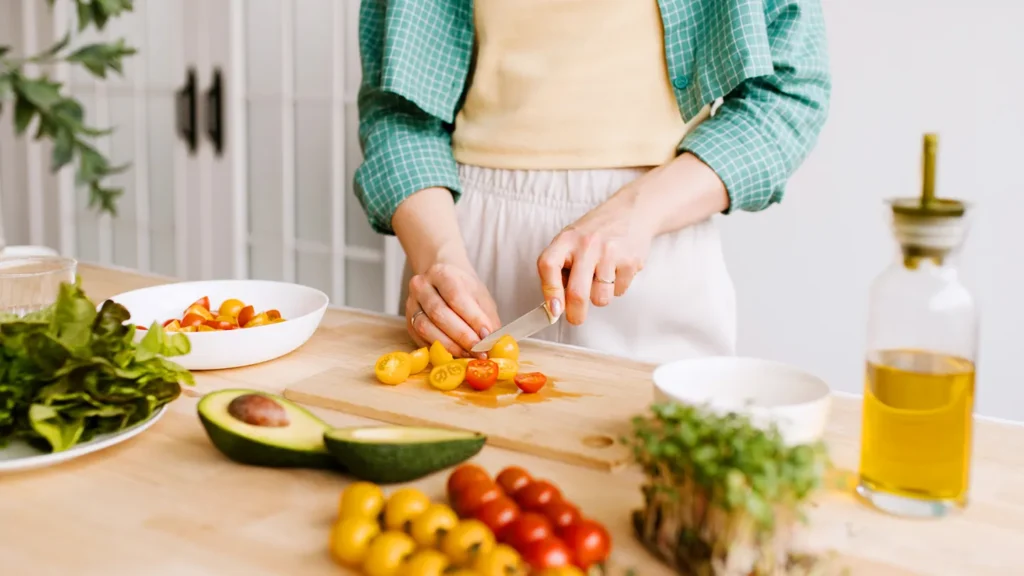
Here’s exactly how to approach prep without burning out or spending your entire day in the kitchen. This process takes roughly 2–2.5 hours and sets you up for the entire week.
Step 1: Plan before you shop (Friday evening, 15 minutes) Look at your week. How many lunches do you need? How many dinners? What nights will you definitely not be home? Write it down. Then build your grocery list around that plan, not the other way around.
Step 2: Shop with one focused list (Saturday morning) Stick to the perimeter of the store where whole foods live: produce, protein, dairy. Get in, get out. Having a list prevents impulse purchases and makes sure you actually have everything you need when Sunday comes.
Step 3: Start your longest-cooking items first (Sunday) Put grains on the stove first — they need 30–45 minutes and require minimal attention. While the brown rice or quinoa cooks, prep your proteins.
Step 4: Roast your vegetables in big batches Preheat the oven to 425°F. Cut your vegetables, toss in olive oil, salt, and pepper (or a spice blend), spread across two sheet pans, and roast for 20–25 minutes. This single step means you have ready-to-use vegetables for salads, bowls, wraps, and sides all week.
Step 5: Cook your proteins Grill or bake chicken. Brown ground turkey with garlic and onion. Hard-boil a batch of eggs. These don’t all need to happen at once — stagger them so you’re not managing 5 things simultaneously.
Step 6: Prep your raw snack components Wash and portion berries. Chop carrots and celery. Portion out nuts. This step takes maybe 15 minutes and makes grabbing healthy snacks completely effortless all week.
Step 7: Store everything properly and label it Use clear containers so you can see what’s inside without opening everything. Label with the day or meal if you’re organized that way — even a piece of masking tape with a marker works fine.
Meal Prep Tips for Beginners That Actually Make a Difference
Most meal prep advice focuses on what to cook. This is advice about how to actually keep doing it.
- Start with just three components, not full meals: One protein, one grain, one vegetable. That’s it for your first prep session. Assembly takes 5 minutes.
- Make intentional leftovers: If you’re making dinner for two, make enough for four. Wednesday dinner becomes Thursday lunch. You’ve prepped without extra effort.
- Keep a “dump meal” in reserve: One meal you can always make from pantry staples — canned tuna over rice, eggs and frozen vegetables, a quick bean soup. When prep doesn’t happen, your dump meal saves you from the drive-through.
- Invest in clear containers: If you can’t see the food, you’ll forget it’s there and order something instead. Clear containers make your fridge a billboard for your own prepped food.
- Prep for your actual week, not your ideal week: If you know Thursday is chaos, prep a meal that requires zero effort for Thursday — something you just reheat and eat.
- Give yourself a 90-minute maximum: If your prep is regularly taking 3+ hours, you’ll stop doing it. Find shortcuts: rotisserie chicken, pre-washed salad greens, frozen vegetables, canned beans. These aren’t cheating. Their strategy.
- Make one new recipe per week, max: The rest should be repeats you know by heart. Novelty is good; learning five new recipes simultaneously is a path to decision paralysis.
Common Meal Prep Mistakes Beginners Make
Knowing what to avoid is half the battle, honestly.
- Prepping foods you don’t actually enjoy eating: This sounds obvious, but it happens constantly. People prep “healthy” foods they feel like they should eat, and then don’t touch them all week. Only prep foods you genuinely like.
- Over-prepping variety: Making seven completely different meals sounds impressive and leads to food fatigue, food waste, and burnout. Repetition is your friend in the beginning.
- Not accounting for storage life: Cooked chicken lasts 3–4 days in the fridge. Dressed salads wilt quickly. Some things freeze beautifully (soups, cooked grains, ground meat); others don’t (cucumber, avocado, anything creamy). Know your food’s shelf life before you prep it.
- Prepping everything at once and burning out: Two medium prep sessions (Sunday and Wednesday) often work better than one massive Sunday session. Spreading it out reduces the burden and keeps food fresher.
- Forgetting to prep breakfast: Dinner and lunch get all the attention, but breakfast is often where people fall off — grabbing something fast and sugary because nothing is ready. Overnight oats and egg muffins take almost no effort and are genuine game changers.
- Buying too many specialty ingredients: Low-carb tortillas, protein powders, expensive superfoods — these can absolutely complement your plan, but when the basics aren’t prepped, no supplement will save you. Foundation first.
Best Meal Prep Tools Worth Buying
You don’t need much to start. But having the right tools removes friction at every step of the process.
| Tool | Why You Need It | Search on Amazon |
| Glass Meal Prep Containers (3-cup, set of 10) | Airtight, microwave-safe, clear so you actually see and eat the food | View on Amazon |
| Instant Pot Duo 7-in-1 (6-Quart) | Cooks rice, chicken, soups, and hard-boiled eggs simultaneously — cuts prep time in half | View on Amazon |
| Nordic Ware Sheet Pans (Half-Sheet, Set of 2) | Roasting large batches of vegetables requires good pans that don’t warp | View on Amazon |
| OXO Good Grips Salad Spinner | Washed, dried greens last a full week in the fridge — this makes it effortless | View on Amazon |
| KitchenAid Chef’s Knife (8-inch) | A sharp, well-balanced knife makes chopping faster, safer, and less exhausting | View on Amazon |
| Pyrex Glass Mixing Bowls with Lids (3-Piece Set) | Toss, store, and transport salads and grain bowls without transferring containers | View on Amazon |
| Digital Kitchen Scale | Particularly useful for beginners learning portion sizes without having to memorize cup measurements | View on Amazon |
| Reusable Silicone Bags (Stasher Brand) | Perfect for storing prepped snacks, marinating proteins, freezing individual portions | View on Amazon |
| Cuisinart Food Processor (7-Cup) | Shreds cooked chicken, slices vegetables, and makes sauces and dressings in seconds | View on Amazon |
Always check current prices and reviews before purchasing. Availability varies by location.
FAQ: Meal Prep for Weight Loss Beginners
Q: How much weight can I lose with meal prepping?
A: Meal prep itself doesn’t directly cause weight loss — the quality and quantity of the food you prep does. That said, research consistently shows that people who meal prep eat fewer calories, more vegetables, and less ultra-processed food than those who don’t plan. Combined with a modest caloric deficit, meal prep supports losing roughly 0.5–1.5 pounds of actual fat per week — a pace that’s sustainable and doesn’t trigger the metabolic adaptation that crash diets cause.
Q: How long does meal-prepped food last in the fridge?
A: Cooked chicken, turkey, and ground meat: 3–4 days. Cooked fish: 2–3 days (prep fish mid-week, not Sunday). Cooked grains like rice and quinoa: 4–5 days. Roasted vegetables: 4–5 days. Hard-boiled eggs: up to 1 week in the shell. Prepped salad greens (unwashed): up to 5 days. The safest habit is to prep enough for 3–4 days, then do a small mid-week refresh on Wednesday.
Q: Do I need to count calories when meal prepping for weight loss?
A: Not necessarily. Tracking calories can be a useful tool for building awareness, especially at the beginning — but it’s not mandatory for weight loss. When you prep whole, nutrient-dense foods and reduce ultra-processed items, you naturally tend to eat fewer calories without obsessing over numbers. If you plateau or aren’t seeing results after several weeks, tracking temporarily can reveal patterns you weren’t aware of.
Q: What if I don’t have time to prep on Sunday?
A: Prep doesn’t have to happen on Sunday. It just needs to happen before the busy part of your week. Some people do a Monday evening prep for the work week. Others do two shorter sessions — Wednesday and Saturday. There’s also a “rolling prep” approach where you cook extra at every dinner and use it the next day. Find the rhythm that fits your schedule, not someone else’s.
Q: Is meal prep expensive?
A: Done well, meal prep actually reduces grocery spending significantly. Buying whole ingredients in bulk and cooking at home is almost always cheaper per serving than restaurant meals, takeout, and convenience food. Batch cooking proteins (especially buying chicken or ground turkey in family packs) and using seasonal produce keeps costs low. Many people find they save $50–$150 per week compared to their previous eating habits.
Q: Can I meal prep if I have a family with different preferences?
A: Yes — this is where component prep really shines. Instead of making a single complete meal, prep the components separately: a protein, a grain, roasted vegetables, and a sauce. Everyone assembles their own bowl or plate with what they like. Kids can have their chicken plain; adults can have it spiced. Nobody eats something they hate, and you only cooked it once.
Q: How do I avoid getting bored eating the same thing all week?
A: Sauces and dressings are your most powerful tool here. The same grilled chicken and roasted broccoli tastes completely different over brown rice with tahini versus in a tortilla with salsa versus in a salad with lemon vinaigrette. Prep the components neutrally (simple seasoning, clean cooking) and change the flavoring and format each meal. You’re not eating “the same thing” — you’re eating the same building blocks in a different form.
Your Next Step Starts Right Now
Here’s the truth about meal prep: the hardest session is always the first one.
Not because it’s particularly difficult, but because it’s unfamiliar. You don’t know where things are in your fridge yet. You haven’t found your rhythm. It takes a little longer than you expect, and you probably forget one thing and have to improvise.
That first session is also the most important one — because it shows you that it’s possible. That you can do it. That the prepped food actually tastes good and actually gets eaten and actually makes your week easier in ways you didn’t fully believe until you experienced it.
So here’s your action plan: this week, do one small prep session. Not the whole seven-day plan. Just one protein, one grain, and one vegetable. Cook those three things. Store them in the fridge. See what happens to your week.
I’ll be honest with you — most people who do that one session become meal preppers. Not because they’re disciplined or organized by nature, but because it works. Because it makes their life genuinely easier and their body genuinely feels better. Because that gap between knowing and doing finally closes.
You already know what to do. Now you have the plan to actually do it.
Go grocery shopping. And then go cook something.
Consult your healthcare provider or a registered dietitian before making significant changes to your diet, especially if you have underlying health conditions, are pregnant or breastfeeding, or are managing a chronic illness.


Add Comment