
High fiber foods that relieve constipation quickly in adults — that’s what I desperately searched for after spending three uncomfortable days dealing with what I can only describe as a digestive standstill. No judgment here. It happens to almost everyone at some point, and if you’re reading this, you’re probably ready for real answers, not vague advice about “eating more vegetables.”
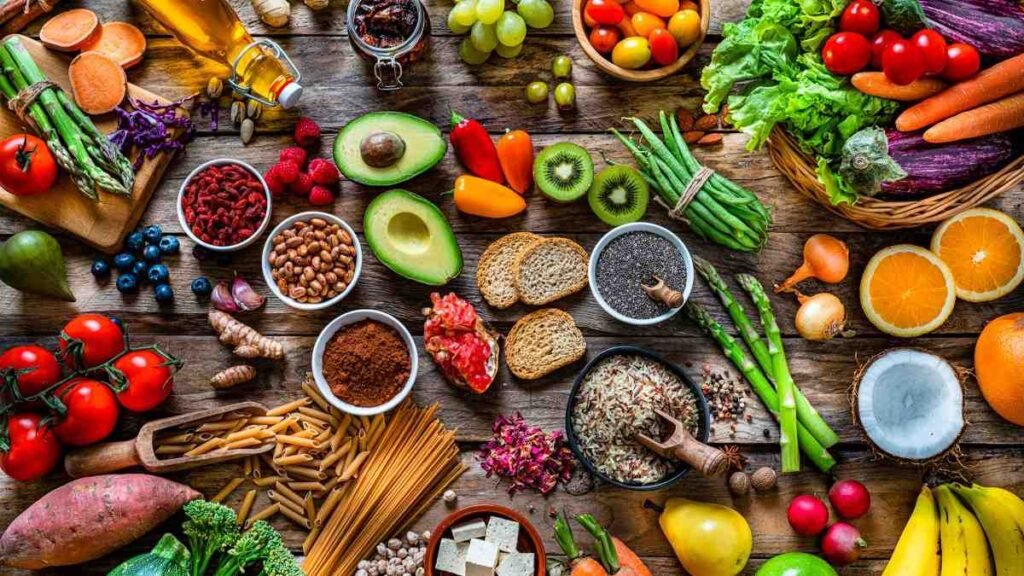
The good news? For most healthy adults, constipation can be relieved — and prevented — largely through diet. Specifically, through fiber. The right kinds, in the right amounts, eaten consistently. This guide gives you 15 of the most effective high-fiber foods, explains exactly how they work, and includes quick relief tips for when you need results today, not next week.
Table of Contents
Why Fiber Helps Constipation — The Actual Science (Simply Explained)
Before we get into the list, it helps to understand what fiber is actually doing inside your body — because “eat more fiber” is advice that lands very differently once you understand the mechanism.
Dietary fiber comes in two forms, and both matter for constipation.
Soluble fiber: Dissolves in water to form a thick, gel-like substance in your digestive tract. This gel slows digestion slightly, softens stool, and makes it easier to pass. Think of it as adding a lubricant to the pipeline. Foods like oats, apples, and flaxseeds are high in soluble fiber.
Insoluble fiber: Doesn’t dissolve — it adds bulk to your stool and speeds up the movement of material through your intestines. It essentially acts like a brush moving through your digestive system, pushing things along. Whole wheat, bran, and most vegetables are good sources.
Adults need between 25 and 38 grams of fiber per day — women on the lower end, men on the higher end. Most people eat somewhere around 15 grams. That gap is almost certainly contributing to the problem.
15 High Fiber Foods That Relieve Constipation Quickly in Adults
1. Prunes (Dried Plums)
If there’s one food that has earned its reputation for constipation relief, it’s prunes. A single serving of about 5–6 prunes contains roughly 3.1 grams of fiber — but the fiber isn’t even the main event. Prunes also contain sorbitol, a natural sugar alcohol that draws water into the intestines and acts as a mild osmotic laxative. They also contain dihydrophenylisatin, a compound that stimulates intestinal contractions.
Studies have consistently shown that prunes are more effective at relieving constipation than psyllium husk. That’s a notable finding. Eat them as a snack, blend them into a smoothie, or soak them overnight and eat them in the morning for best results.
Fiber content: ~3.1g per 1 oz serving (about 5–6 prunes)
2. Chia Seeds
Tiny, unassuming, and absurdly effective. Chia seeds are one of the most fiber-dense foods on the planet — two tablespoons deliver about 9.8 grams of dietary fiber, which is nearly 40% of many adults’ daily target in a single small addition to your meal.

What makes chia seeds particularly useful for constipation is their soluble fiber content. When exposed to water, they expand into a gel that adds bulk and moisture to stool simultaneously. Stir them into water with lemon juice and let it sit for 10 minutes. Eat it. Results typically follow within 24 hours.
Fiber content: ~9.8g per 2 tablespoons
3. Lentils
Lentils might be the most underrated gut-health food in most people’s kitchens. One cup of cooked lentils contains a staggering 15.6 grams of fiber — more than half the daily recommended intake in a single serving. They’re also rich in prebiotics, which feed beneficial gut bacteria and support the kind of microbiome environment that naturally reduces constipation over time.

Brown and green lentils have slightly higher insoluble fiber content than red lentils, making them better for constipation specifically. They’re cheap, versatile, and easy to add to soups, salads, or grain bowls.
Fiber content: ~15.6g per 1 cup cooked
4. Flaxseeds (Ground)
Ground flaxseeds are a powerful constipation remedy that works on multiple levels. They’re high in both soluble and insoluble fiber, and they also contain lignans and mucilage — a gel-forming substance that coats the digestive tract and helps move things through more smoothly.

The key word is ground. Whole flaxseeds often pass through your digestive system undigested, which limits their effectiveness. Buy them pre-ground or grind them yourself. One tablespoon in your morning oatmeal or yogurt is a genuinely effective habit.
Fiber content: ~2.8g per tablespoon
5. Black Beans
Half a cup of black beans contains about 7.5 grams of fiber, and like lentils, they’re also prebiotic-rich, feeding the gut bacteria that help regulate bowel function. They’re one of the most fiber-dense plant foods per calorie, which makes them an exceptional value for digestive health.
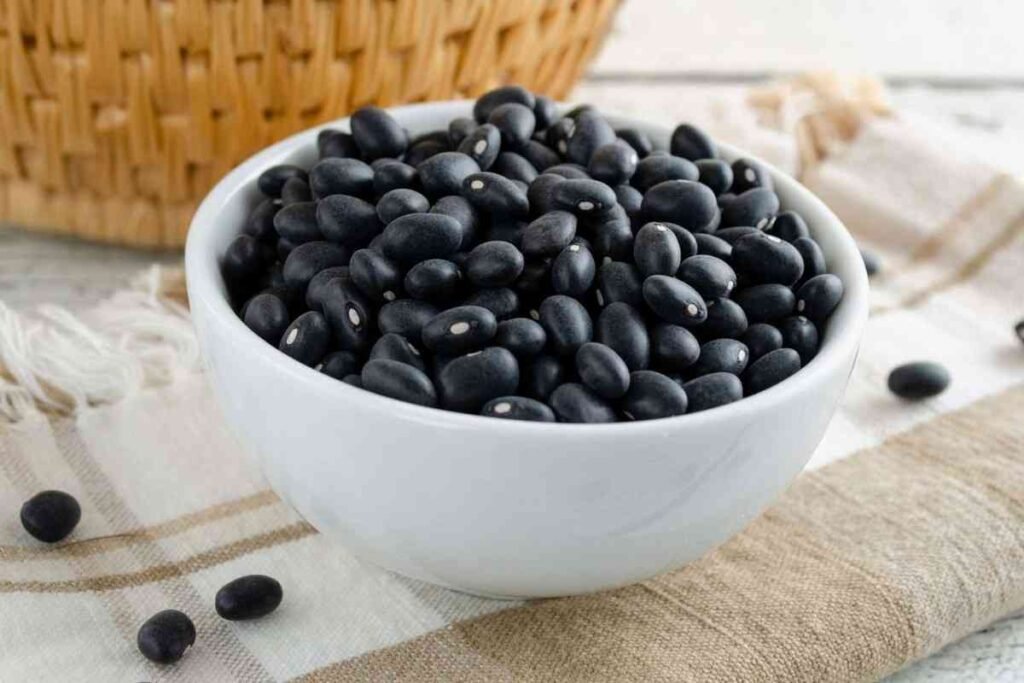
If beans have caused you gas in the past, don’t write them off — that reaction typically decreases as your gut microbiome adjusts to higher fiber intake, usually within 2–3 weeks of eating them regularly.
Fiber content: ~7.5g per ½ cup cooked
6. Oats
Oats are one of the best sources of beta-glucan, a type of soluble fiber that forms a thick gel in the digestive tract, softens stool, and supports healthy bowel movements. A bowl of oatmeal made from rolled oats provides about 4 grams of fiber and sets you up with sustained energy that keeps blood sugar stable through the morning.
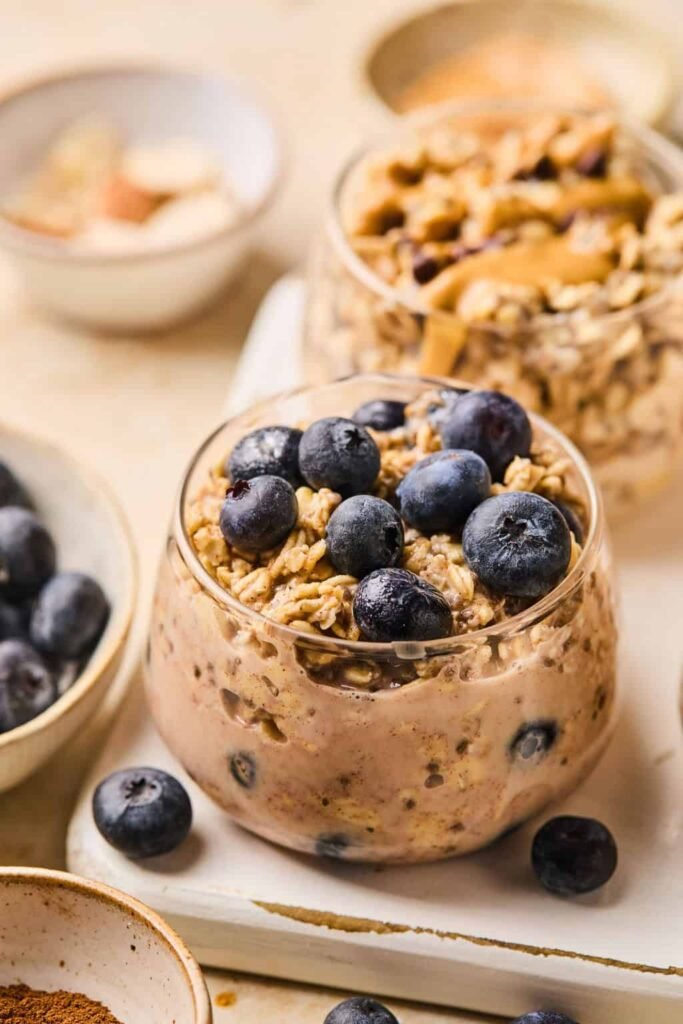
Steel-cut oats have slightly more fiber and a lower glycemic index than quick oats — worth the extra 10 minutes of cook time if you can manage it.
Fiber content: ~4g per 1 cup cooked (rolled oats)
7. Pears
A medium pear with the skin on delivers about 5.5 grams of fiber — one of the highest fiber counts of any common fruit. Pears are also naturally high in fructose and sorbitol, which (like in prunes) draw water into the intestines. That dual mechanism — bulk plus osmotic pull — is why pears are particularly effective for constipation relief.
Always eat the skin. That’s where a significant portion of the insoluble fiber lives.
Fiber content: ~5.5g per medium pear (with skin)
8. Avocados
Half an avocado contains about 5 grams of fiber, split fairly evenly between soluble and insoluble types. But what makes avocados special for digestive health is their combination of fiber with healthy monounsaturated fats — fat helps lubricate the intestinal walls, which makes passage easier. It’s a genuinely complementary combination.
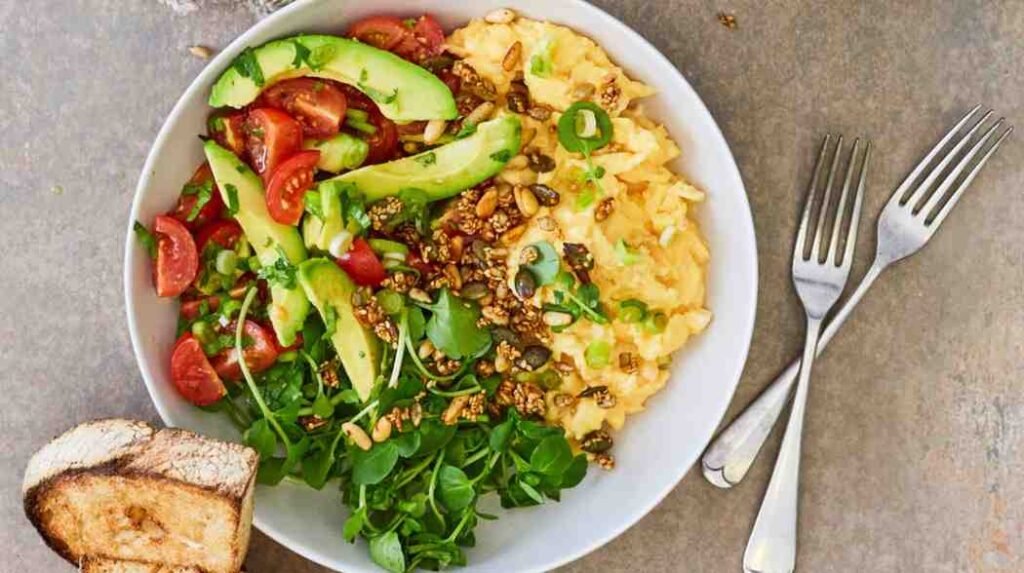
Add avocado to eggs, salads, toast, or eat it simply with salt and lemon. It’s one of the most pleasant ways to hit your fiber targets.
Fiber content: ~5g per half avocado
9. Broccoli
One cup of cooked broccoli provides about 5.1 grams of fiber, and it’s particularly high in insoluble fiber, the type that adds bulk and accelerates intestinal transit. Broccoli is also rich in sulforaphane, which supports overall gut health by protecting the gut lining and supporting beneficial bacteria.
Steam it rather than boiling it to preserve both fiber integrity and nutrient content. And yes, you need to actually chew it well — the mechanical breakdown starts the fiber’s work earlier.
Fiber content: ~5.1g per 1 cup cooked
10. Apples
“An apple a day keeps the doctor away” is tired advice — but it’s not wrong. A medium apple with skin contains about 4.4 grams of fiber, mostly as pectin, a soluble fiber that acts as a prebiotic and forms a gel-like substance in the colon. Pectin has been specifically studied for its role in reducing constipation and improving stool consistency.
Raw, not juice. The juicing process strips out most of the fiber and leaves mostly sugar.
Fiber content: ~4.4g per medium apple (with skin)
11. Sweet Potatoes
One medium sweet potato with skin contains about 3.8 grams of fiber, and its combination of soluble and insoluble fiber is well-matched for constipation relief. They’re also high in magnesium — a mineral that plays a key role in bowel function. Low magnesium intake is surprisingly common and often an overlooked contributor to chronic constipation.
Bake them with the skin on for maximum fiber benefit.
Fiber content: ~3.8g per medium sweet potato (with skin)
12. Popcorn
This one surprises people. Air-popped popcorn is actually a whole grain and delivers about 3.5 grams of fiber per 3 cups — more than most crackers or cereals. It’s mostly insoluble fiber, making it useful for bowel regularity, and it’s low in calories, which makes it a sustainable daily habit rather than a temporary fix.
Air-popped is the version that works. Movie theater butter-drenched popcorn is a different food with a different nutritional profile entirely.
Fiber content: ~3.5g per 3 cups air-popped
13. Kiwi
Kiwi might be the most surprising entry on this list, but the research behind it is genuinely impressive. Two green kiwis per day have been shown in multiple randomized controlled trials to reduce constipation in adults with the same effectiveness as prunes and significantly better than psyllium supplementation — and with fewer side effects like bloating.
The mechanism isn’t fully understood, but kiwi contains a unique combination of fiber, water content, and a natural enzyme called actinidin that aids protein digestion and appears to improve gut motility.
Fiber content: ~4.2g per 2 medium kiwis
14. Psyllium Husk
Psyllium husk is technically a fiber supplement rather than a whole food, but it deserves a place on this list because it is one of the most clinically validated interventions for constipation in existence. It’s the active ingredient in Metamucil and similar products. One tablespoon contains about 5 grams of soluble fiber, and it forms a viscous gel that dramatically softens and bulks stool.
It must be taken with a full glass of water (at minimum 8 oz) — without adequate fluid, it can actually worsen constipation.
Fiber content: ~5g per tablespoon
15. Whole Wheat Bread
Two slices of 100% whole wheat bread provide about 3.8 grams of fiber, primarily insoluble. It’s one of the most accessible fiber sources for people who aren’t ready to make dramatic dietary shifts — a simple swap from white bread to whole wheat bread can meaningfully increase daily fiber intake without changing your eating patterns much at all.
Check the label: the first ingredient should say “whole wheat flour,” not “enriched wheat flour.”
Fiber content: ~3.8g per 2 slices
Product Comparison Table — Top Fiber Picks on Amazon
| Product | Type | Fiber Per Serving | Amazon |
| Anthony’s Organic Psyllium Husk | Supplement | 5g per tbsp | View on Amazon |
| Navitas Organics Chia Seeds | Whole Food | 9.8g per 2 tbsp | View on Amazon |
| Bob’s Red Mill Ground Flaxseed | Whole Food | 2.8g per tbsp | View on Amazon |
| Sunsweet Amazin Prunes | Whole Food | 3.1g per oz | View on Amazon |
| NOW Psyllium Husk Capsules | Supplement | 1.3g per 2 caps | View on Amazon |
| Bob’s Red Mill Steel Cut Oats | Whole Grain | 4g per serving | View on Amazon |
Leave a Reply