
If you ask me, stuffing is the MVP of any holiday spread — and this turkey sausage stuffing is proof. Golden, herb-scented, and loaded with texture, it pairs crispy sourdough with deeply seasoned Turkey Sausage Stuffing, sweet sautéed vegetables, and enough fresh herbs to make your kitchen smell like an old-school Italian grandmother lives there.
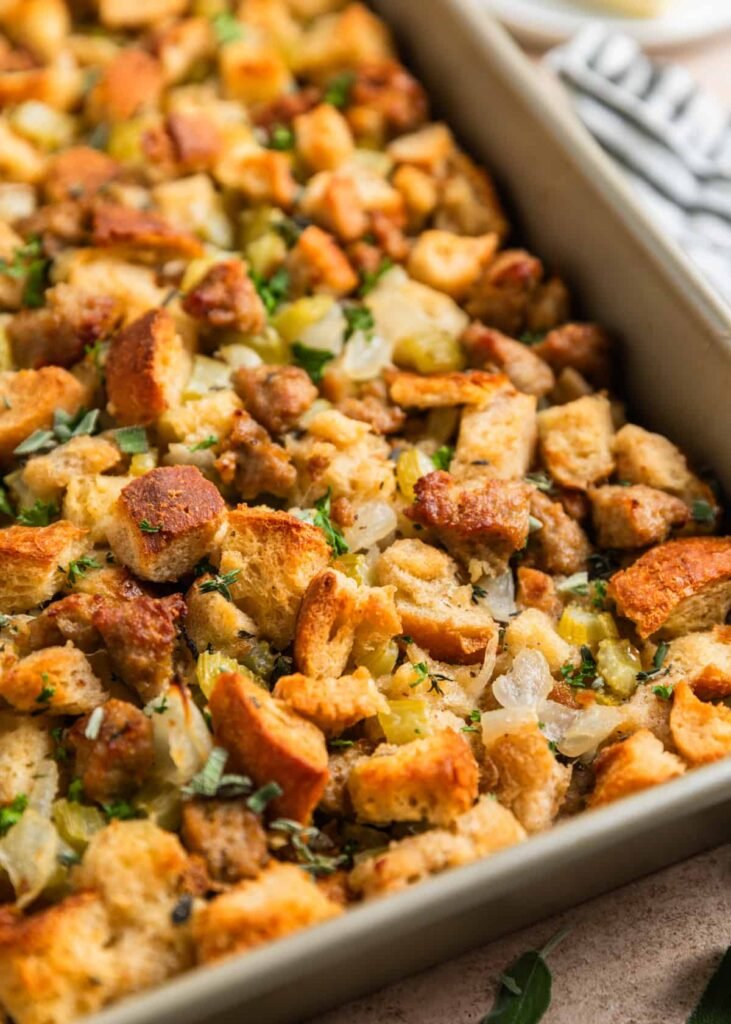
It comes together beautifully, tastes even better the next day, and honestly deserves a spot at the table year-round — not just in November.
Table of Contents
Why We Love This Turkey Sausage Stuffing
It’s a meal prep dream. Stuffing is one of those rare dishes that genuinely improves when you assemble it the night before. The bread soaks up all the buttery herb goodness while it sits, which means deeper flavor and a more cohesive texture when it finally hits the oven.
It plays well with everything. Roast turkey? Obviously. A simple rotisserie chicken on a Tuesday? Absolutely. Creamy mashed potatoes, green bean casserole, glazed carrots — this stuffing gets along with just about anything on the table.
It’s endlessly adaptable. Gluten-free household? Swap the sourdough for your favorite GF loaf. Dairy-sensitive crowd? Use plant-based butter without compromising the result. Want more depth? Throw in a handful of mushrooms or a splash of white wine. This recipe welcomes creativity.
Ingredient Notes
- Turkey sausage — Turkey breakfast sausage is the sweet spot here. It brings a subtle sweetness that balances the savory richness of the buttered bread and herbs. If you can find turkey Italian sausage, that works too — it just adds a bolder, more assertive flavor profile. Whichever variety you use, cook ground poultry to a minimum internal temperature of 165°F.
- Bread — This is not the moment for soft sandwich bread. You want something with structure — sourdough is our top pick because it holds its shape during baking and adds a faint tang that plays beautifully against the butter and herbs. French bread or a sturdy Italian loaf are solid alternatives. Day-old or slightly stale bread works best, but we’ll walk you through a shortcut if you’re working with fresh.
- Onions — Sweet yellow onions are ideal here because they caramelize gently and lend a mellow sweetness. White onions will work if that’s what you have on hand.
- Butter — Go with unsalted so you can control the salt level. If you only have salted butter, just dial back the added salt later in the recipe.
- Fresh herbs — Please don’t skip fresh for dried here. Fresh thyme and sage transform this dish from good to memorable. Rosemary can be a nice addition in small amounts, but it’s strong — it tends to overpower everything else, so use a light hand if you go that route.
- Broth — Low-sodium or no-sodium chicken broth gives you the most control over seasoning. Chicken stock works just as well and adds a bit of extra richness.
Step-by-Step Instructions
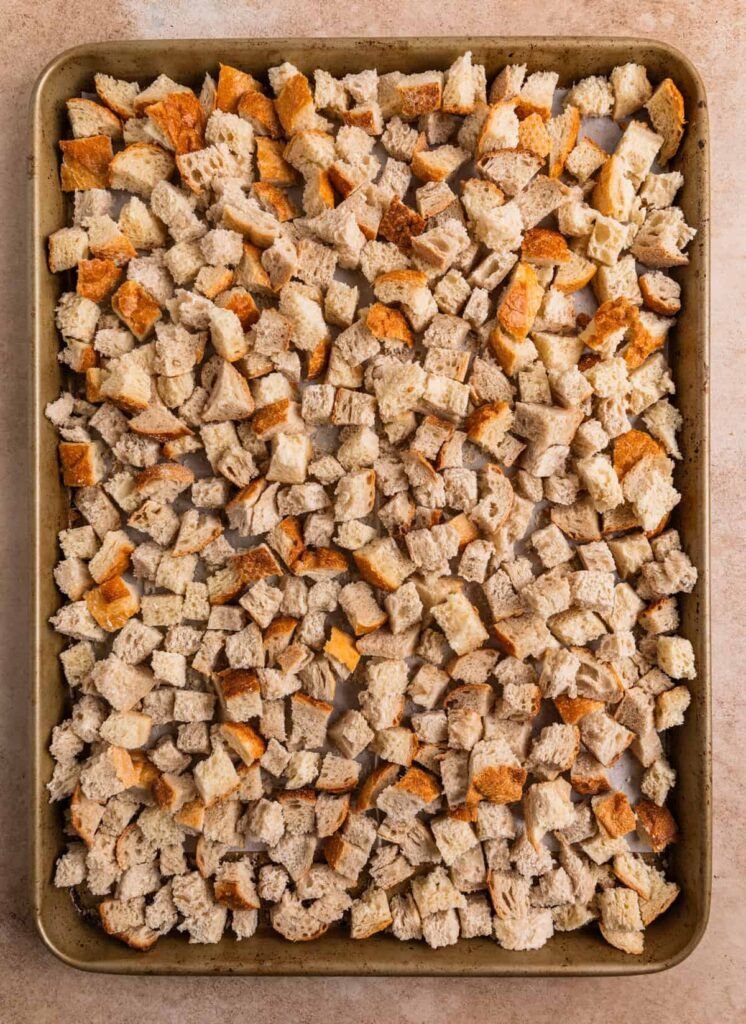
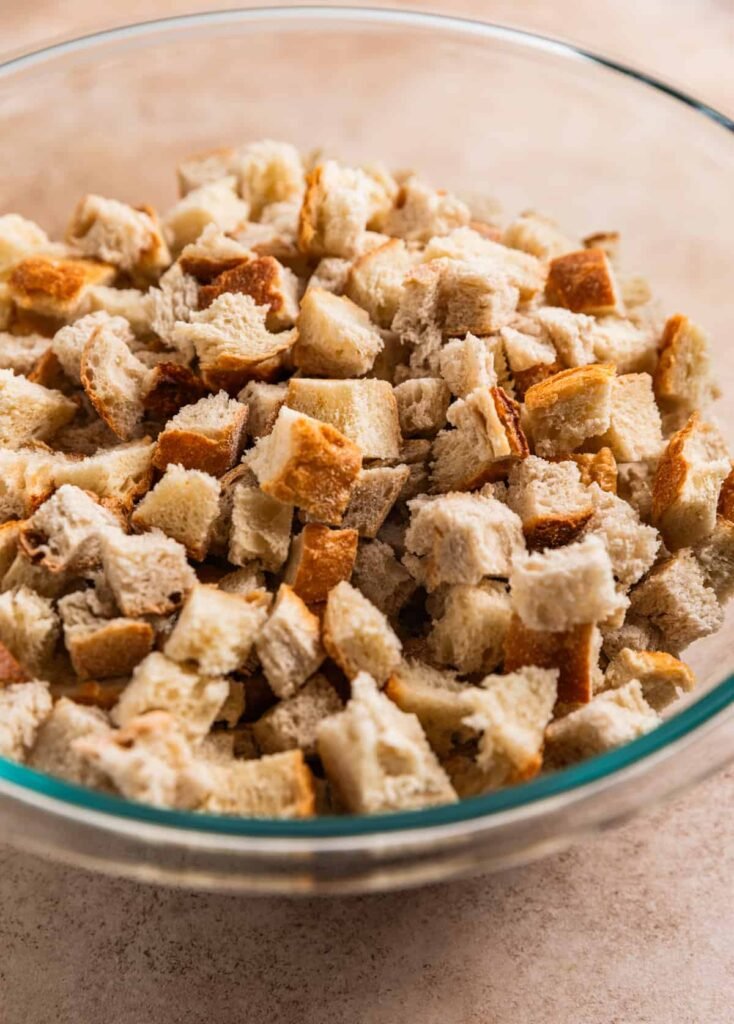
Prepare the bread. Begin by cutting or hand-tearing your bread into bite-sized, ½-inch chunks while it still has a little life in it — not completely hardened. Lay the pieces out and let them air-dry on the counter overnight for the best results. Pressed for time? Spread them in a single layer on a parchment-lined baking sheet and slide them into a 300°F oven for 30 to 45 minutes until thoroughly dried out. Once ready, pile everything into a large mixing bowl and set it aside.
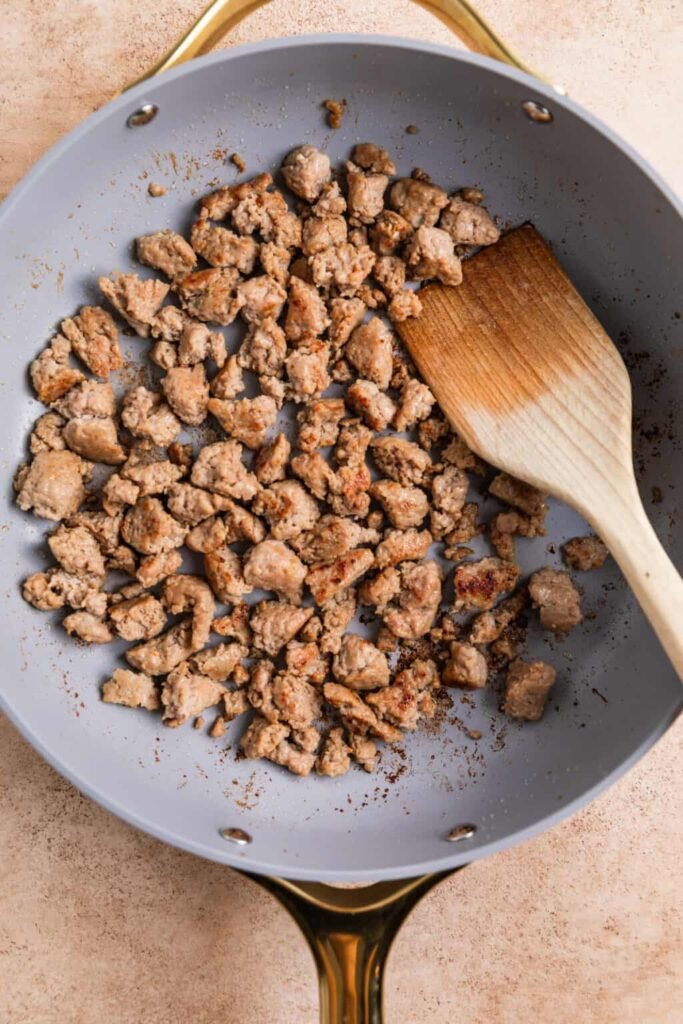
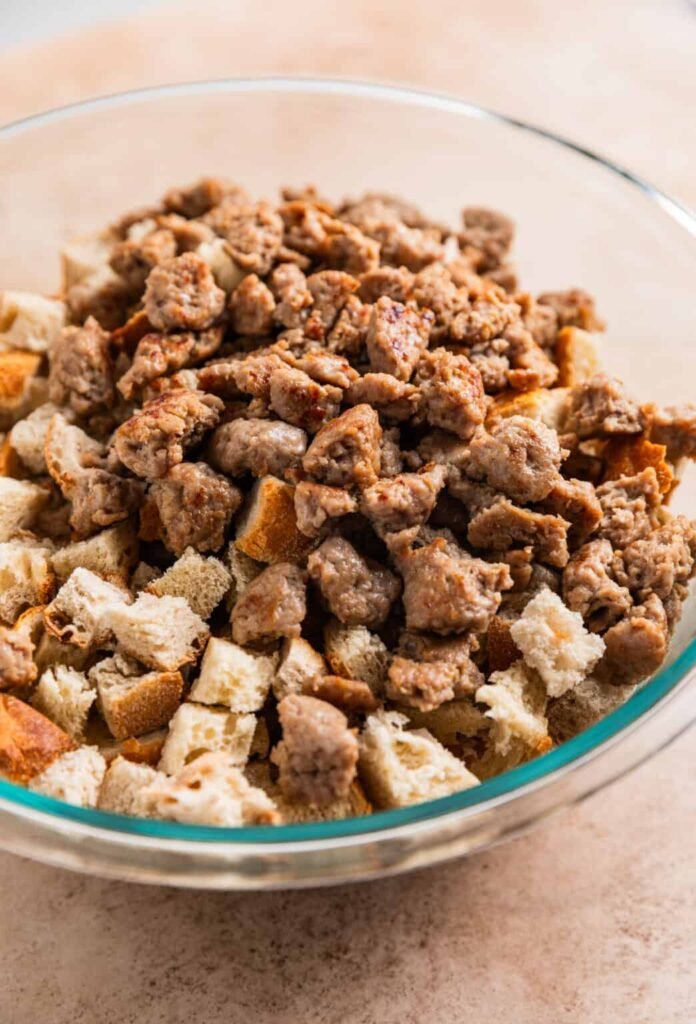
Cook the turkey sausage. Pour a glug of olive oil into a large skillet and bring it up to medium-high heat. Crumble in the turkey sausage and break it into rustic chunks with a wooden spoon. Here’s the key — walk away from it. Let the meat rest undisturbed for a few minutes at a time so the bottom side gets a proper golden sear rather than just steaming. Once fully cooked through with good color, scoop it into the bowl with the bread.
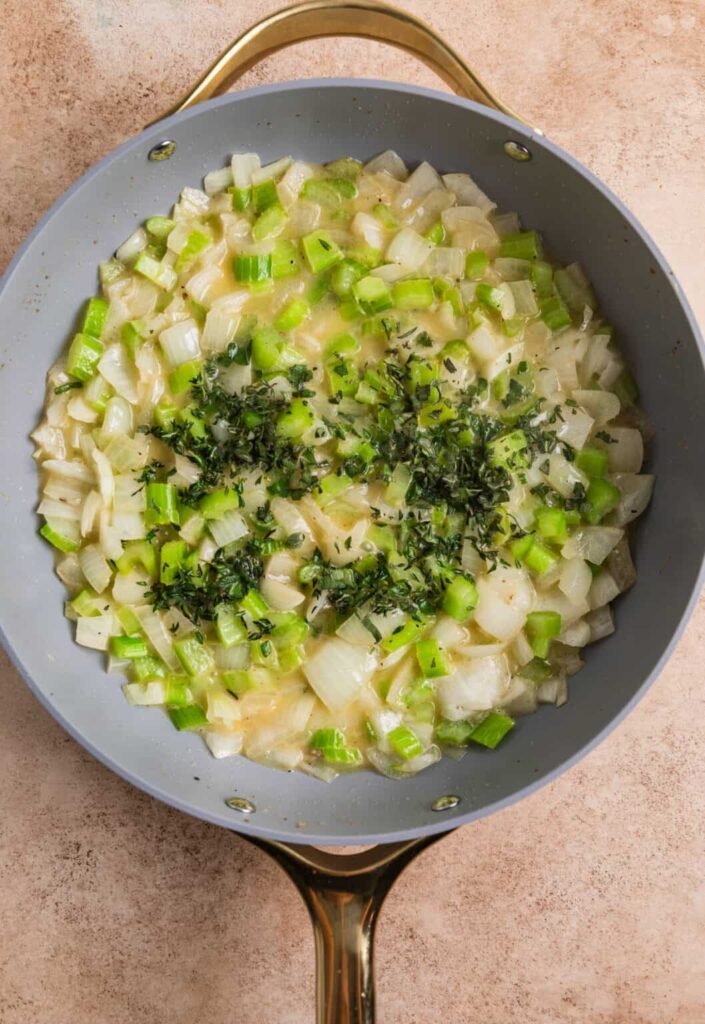
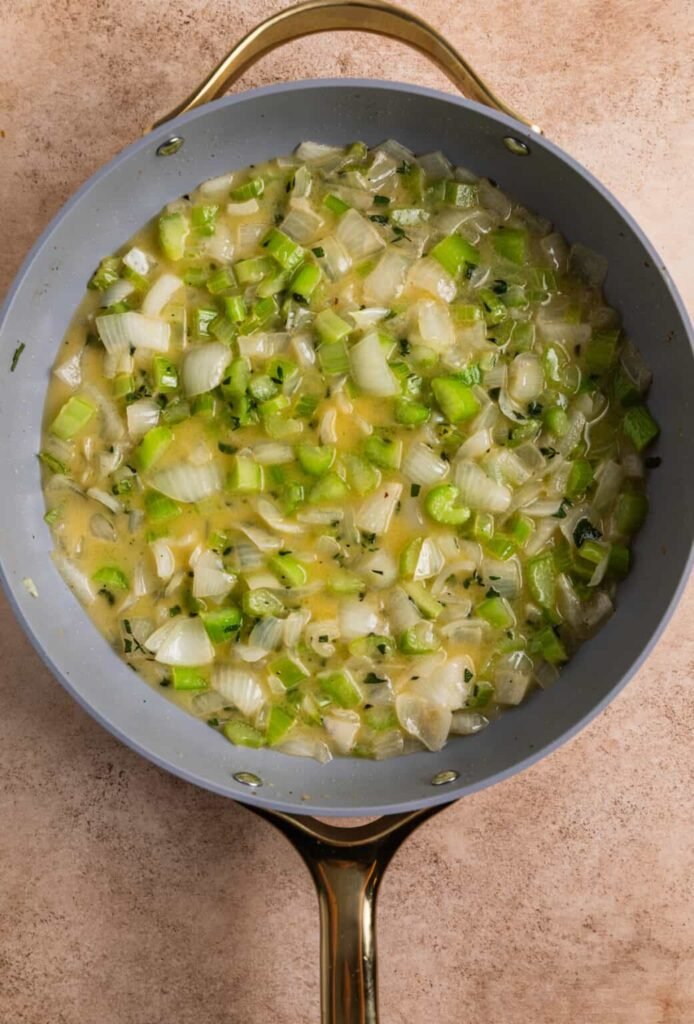
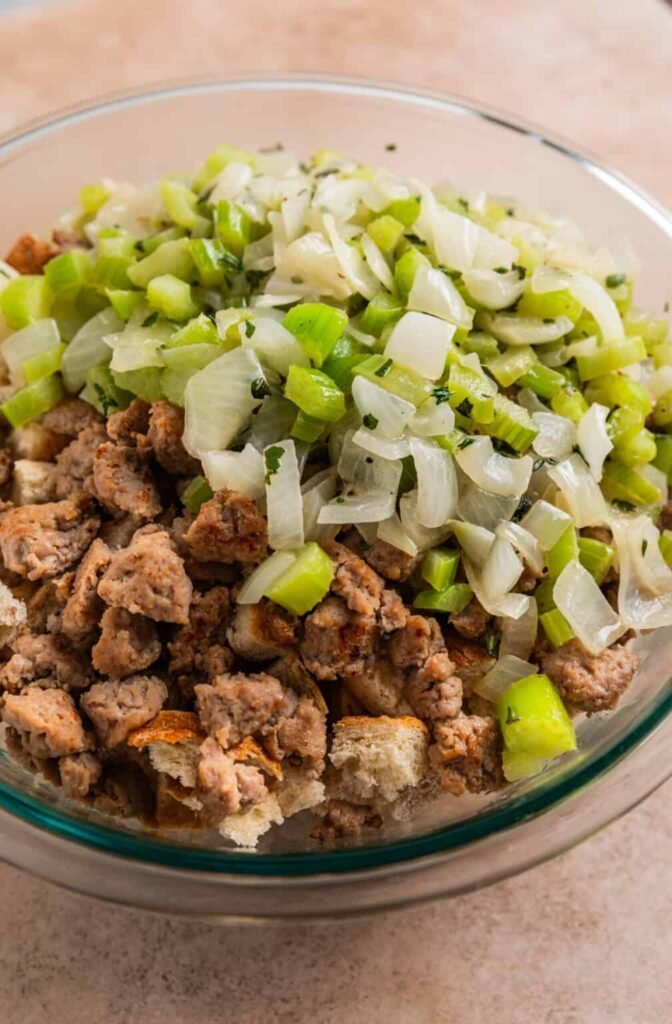
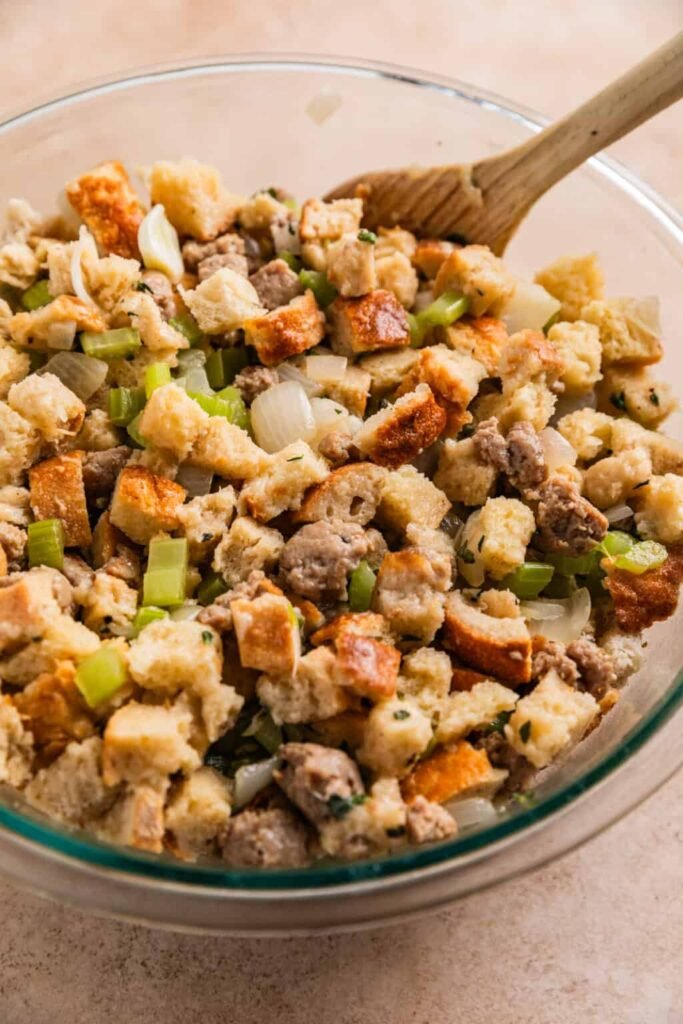
Build the vegetable and herb base. Without cleaning the skillet, drop in ¾ cup of butter and use a spatula to work those caramelized bits off the bottom — they’re loaded with flavor. Once the butter is melted and bubbling, toss in the diced onion and celery. Let everything cook low and slow for 5 to 7 minutes, stirring occasionally, until the onion softens and goes translucent at the edges. Add your fresh herbs and stir for another minute or two until the kitchen smells incredible. Pour in 1½ cups of chicken broth, season with salt and pepper, then tip the entire pan into the bowl with the bread and sausage. Fold gently to combine.
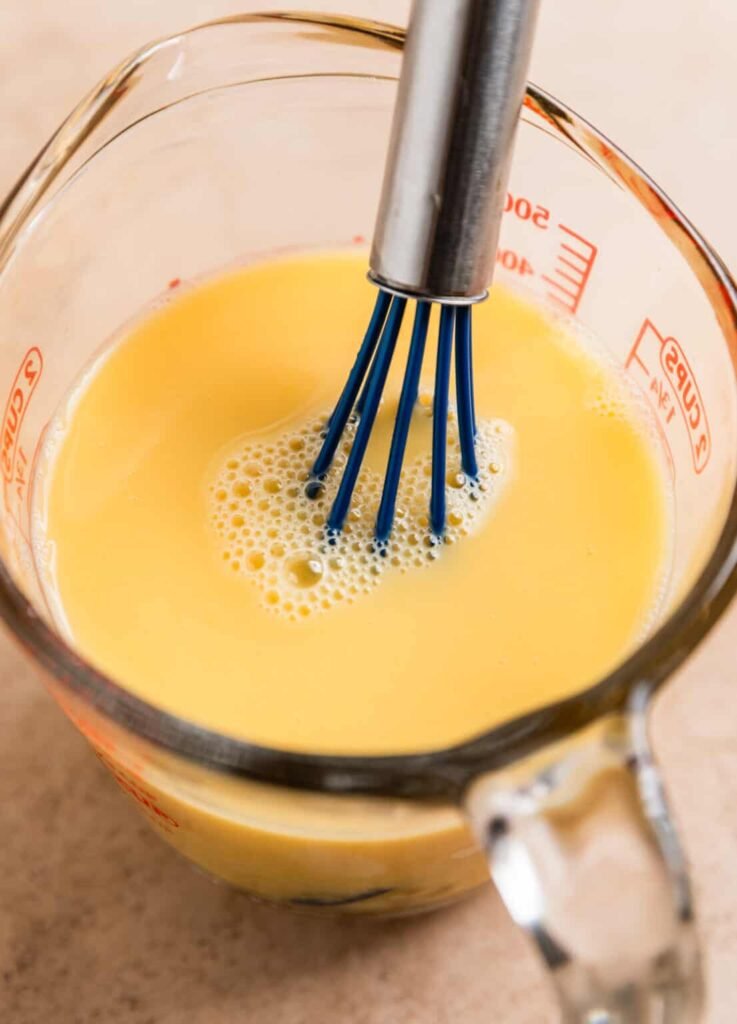
Mix in the egg binder. Crack the eggs into a small bowl or large measuring cup, pour in the remaining chicken broth, and whisk until the mixture is completely smooth and uniform. Drizzle this over the stuffing and toss everything together, making sure every last piece of bread is coated and soaking up the liquid evenly.
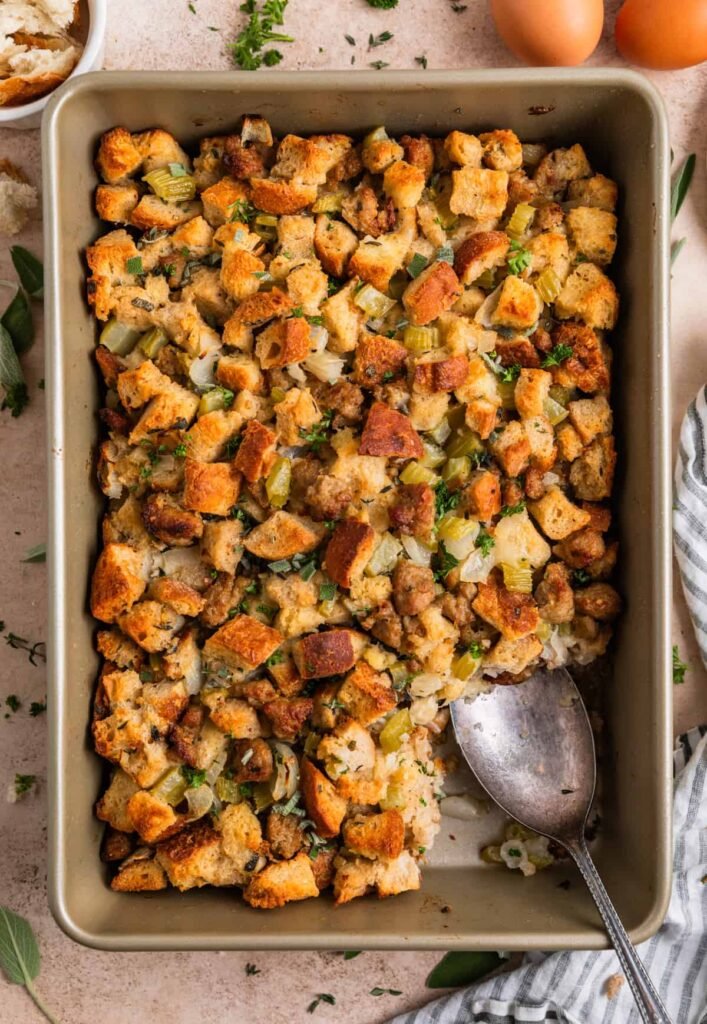
Bake to perfection. Grease your baking dish well and transfer the stuffing mixture in, spreading it into an even layer. Brush the top generously with the remaining melted butter — don’t skip this step, it’s what gives you that irresistible golden crust. Bake uncovered at the recommended temperature for 50 to 60 minutes, until the center is fully set and the top is a deep, burnished brown.
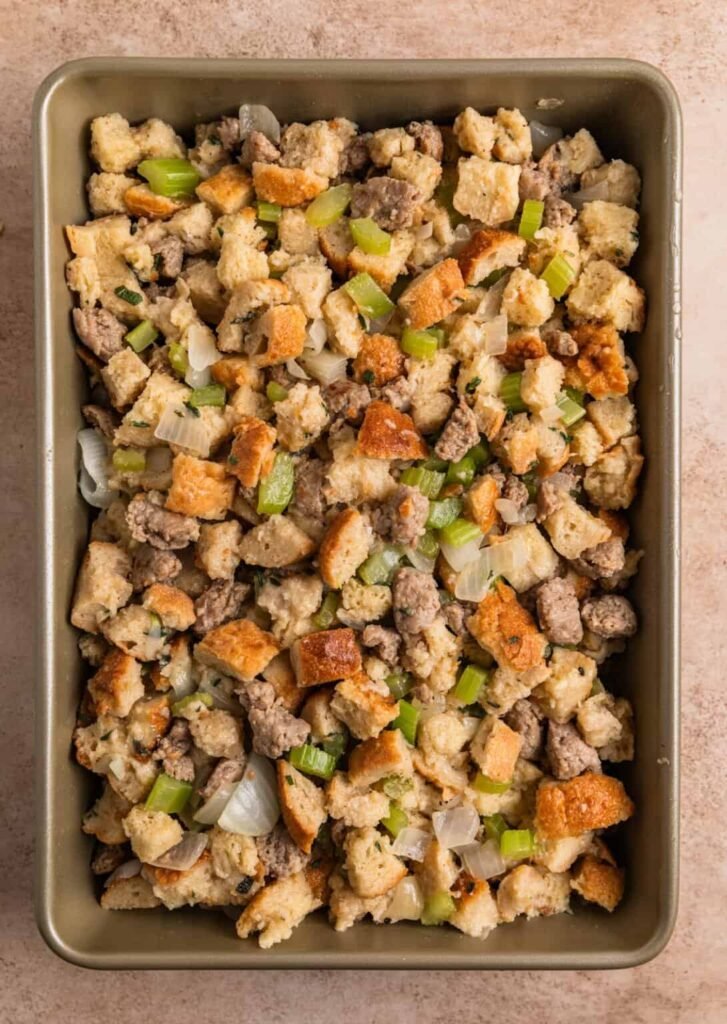
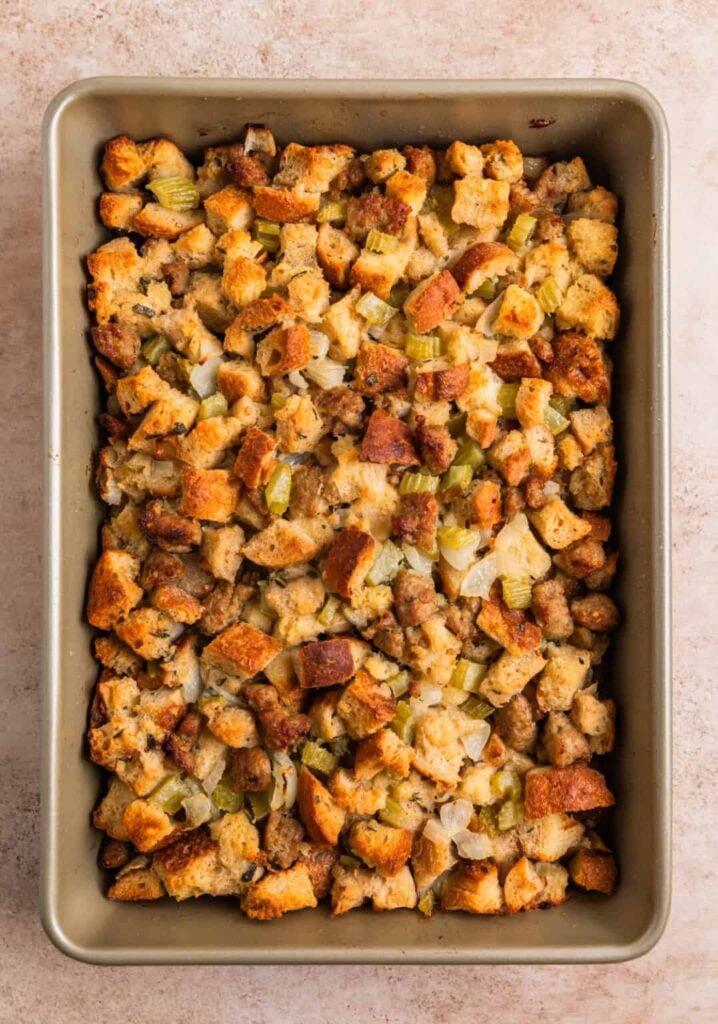
If the surface starts to darken before the middle has had a chance to set, simply drape a loose sheet of foil over the top and continue baking until done.
Recipe Tips
- Want maximum crunch? Use a large rimmed sheet pan instead of a deep baking dish. More surface area means more of that gorgeous caramelized crust. Start checking for doneness around the 30-minute mark.
- Making it ahead? Assemble the stuffing as directed but hold off on brushing the top with butter until you’re ready to bake. Store it covered in the refrigerator overnight, then butter the top and bake just before serving.
- Working with fresh bread? No problem. Cut it into pieces, spread on a sheet pan, and bake at 300–325°F for about 30 minutes, tossing every 10 minutes to ensure even drying.
Storage Instructions
This stuffing is at its absolute best fresh out of the oven, but leftovers store and reheat beautifully. Keep it in an airtight container in the refrigerator for up to 3 to 4 days. If it dries out a little, stir in a splash of broth before reheating to bring the moisture back.
To freeze, let the stuffing cool completely, then transfer to a freezer-safe airtight container. It keeps well for up to 3 months. Thaw overnight in the refrigerator before reheating for best results.
Food safety reminder: Any cooked turkey sausage left at room temperature for more than 2 hours should be discarded to avoid foodborne illness.
Frequently Asked Questions
Can I use pork sausage instead of turkey sausage?
You can, but it will change the character of the dish. Pork sausage is richer and fattier, which can make the stuffing a little heavier overall. Turkey sausage keeps things lighter while still delivering plenty of savory flavor. If you go with pork, consider using a mild Italian or breakfast variety.
What’s the best bread for stuffing?
Dense, crusty breads are your best bet — sourdough, French bread, or a sturdy Italian loaf all work well. Avoid soft, pre-sliced sandwich bread; it tends to turn mushy rather than holding its shape during baking. The drier and staler the bread, the better it will absorb all the flavorful liquid without falling apart.
Can I make this stuffing gluten-free?
Yes! Simply substitute your favorite gluten-free loaf for the sourdough. Look for one with a firmer texture — some GF breads are quite soft and may not hold up as well. The rest of the recipe remains the same, and the result is just as satisfying.
How far in advance can I make this?
You can assemble the stuffing up to 24 hours ahead and refrigerate it unbaked. Don’t brush the top with butter until just before it goes into the oven — this keeps the crust from getting soggy in the fridge. The flavor actually deepens overnight, so make-ahead stuffing is a genuine bonus.
My stuffing came out dry — what went wrong?
A few things can cause dry stuffing: too much bread, not enough broth, or overbaking. Make sure every piece of bread is well-coated before transferring it to the baking dish. If it still seems dry after baking, a drizzle of warm broth stirred in before serving will bring it right back to life.
Can I add vegetables like mushrooms or bell peppers?
Absolutely. Cremini or shiitake mushrooms are a popular addition and add a nice earthy depth. Dice them small and sauté them with the onion and celery in Step 3. Bell peppers, leeks, and even fennel can all work well depending on what flavors you’re going for.
Turkey Sausage Stuffing
Ingredients
- 1 lb turkey breakfast sausage casings removed if applicable
- 1 loaf sourdough bread about 12–14 oz, day-old preferred
- 1 cup unsalted butter divided
- 1 large yellow onion diced
- 3 stalks celery diced
- 2 tbsp fresh thyme leaves stems removed
- 2 tbsp fresh sage roughly chopped
- 2 large eggs
- 1 tbsp olive oil
- 1 tsp salt or to taste
- ½ tsp black pepper freshly ground
Instructions
- Prepare the bread. Cut or hand-tear the sourdough into ½-inch chunks. Spread in a single layer on a parchment-lined baking sheet and allow to air-dry overnight, or bake at 300°F for 30–45 minutes until fully dried out. Transfer to a large mixing bowl.2. Cook the turkey sausage. Heat olive oil in a large skillet over medium-high heat. Add the turkey sausage and break into chunks. Let it sit undisturbed every few minutes to develop a golden sear. Cook until browned and cooked through, then transfer to the bowl with the bread.3. Sauté the vegetables and herbs. Add ¾ cup butter to the same skillet and scrape up any browned bits from the bottom. Once melted, add the diced onion and celery and sauté for 5–7 minutes until softened and translucent. Stir in the fresh thyme and sage and cook for 1–2 more minutes. Pour in 1½ cups of chicken broth, season with salt and pepper, and tip the entire mixture into the bowl with the bread and sausage. Fold gently to combine.4. Add the egg mixture. In a small bowl or measuring cup, whisk together the remaining 1 cup of chicken broth and the eggs until smooth. Pour over the stuffing and toss to coat every piece of bread evenly.5. Bake the stuffing. Transfer the mixture to a well-greased 9×13 baking dish. Brush the top with the remaining ¼ cup of melted butter. Bake uncovered at 350°F for 50–60 minutes, until the center is set and the top is deep golden brown. If the top browns too quickly before the center sets, tent loosely with foil and continue baking.
Notes
- For a crispier top, bake in a large rimmed sheet pan instead of a deep dish. Check for doneness at the 30-minute mark.
- To make ahead, assemble the stuffing up to 24 hours in advance and refrigerate unbaked. Brush with butter just before baking.
- Leftovers keep in an airtight container in the refrigerator for 3–4 days. Add a splash of broth before reheating to restore moisture.
- To freeze, cool completely and store in a freezer-safe container for up to 3 months. Thaw overnight in the refrigerator before reheating.
- Ground poultry should always be cooked to a minimum internal temperature of 165°F.
Nutrition
Calories: 376kcal, Carbohydrates: 28g, Protein: 16g, Fat: 22g, Saturated Fat: 11g, Polyunsaturated Fat: 3g, Monounsaturated Fat: 6g, Trans Fat: 1g, Cholesterol: 110mg, Sodium: 742mg, Potassium: 256mg, Fiber: 3g, Sugar: 3g, Vitamin A: 626IU, Vitamin C: 3mg, Calcium: 103mg, Iron: 3mg Nutrition information is automatically calculated and should only be used as an approximation.Shop This Post:
Glass 9×13-inch Baking Dish
Mixing Bowls
Ceramic Knives
Silicone Spatulas
Sheet Pan
Leave a Reply