
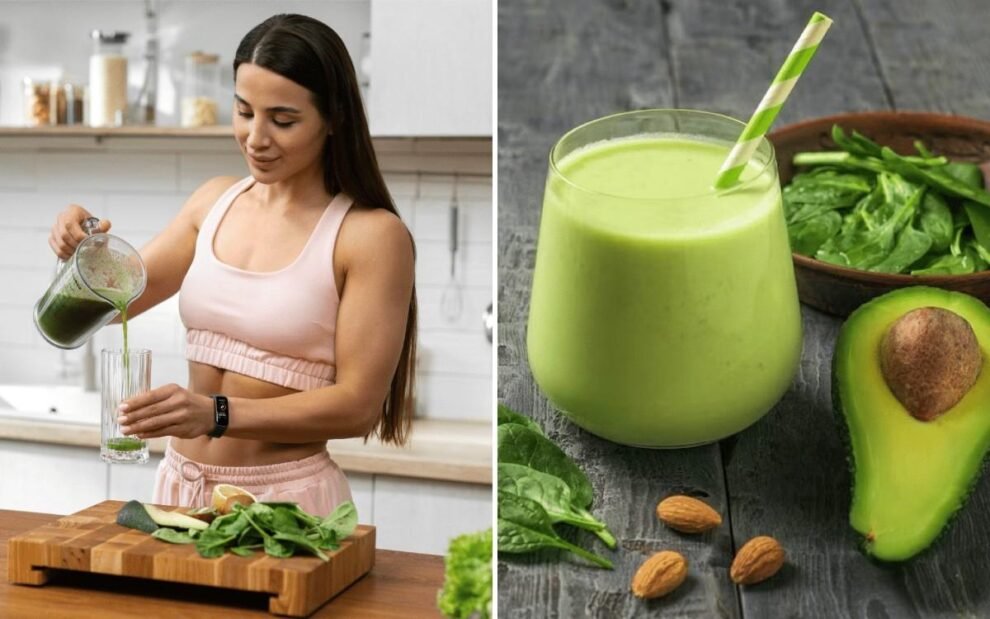
Gut health diet for women is something I wish someone had handed me five years ago — when I was three buttons deep into “why am I always bloated” at 1 am and absolutely convinced my body had simply given up on me.
I wasn’t sick, technically. My doctor ran the standard bloodwork, nodded approvingly, and said everything looked fine. And yet I was exhausted by 2 pm every single day. My stomach was distended by dinner even on days I’d “eaten healthy.” My skin was breaking out in a way it hadn’t since high school. My moods were swinging in directions that had nothing to do with anything actually happening in my life. And somewhere in the back of my mind, I had this persistent, nagging feeling that my body was trying to tell me something — I just didn’t know how to listen.
It turns out, the answer was in my gut.
Not metaphorically. Literally. The 100 trillion microorganisms living in your digestive tract — your gut microbiome — are doing a job so much bigger than digestion. They regulate your immune system. They produce neurotransmitters like serotonin. They influence your hormones, your skin, your sleep, your mood, and your energy levels. And for women especially, the gut is connected to nearly every system in the body in ways that conventional medicine is only just beginning to fully appreciate.
This guide is the practical, honest, thoroughly researched version of everything I learned the hard way. A 7-day gut health plan, the best and worst foods, supplements worth taking, and the lifestyle shifts that actually move the needle. Whether you’re dealing with chronic bloating, low energy, hormonal chaos, or just a general sense that something is off — let’s figure this out together.
Table of Contents
What Is Gut Health? (And Why Everyone’s Talking About It)
Your gut is essentially a long, muscular tube stretching from your mouth to the other end. But calling it a digestive pipe misses about 90% of the story.
Inside your large intestine lives an ecosystem of bacteria, fungi, viruses, and other microorganisms that scientists call the gut microbiome. You have more microbial cells in your body than you have human cells. More microbial genes than human genes. And the activity of this microscopic community affects everything from how well you absorb nutrients to how effectively your immune system responds to threats.
When your microbiome is diverse and balanced — meaning you have a wide range of beneficial bacterial species in healthy numbers — the whole system tends to function well. Digestion is smooth. Energy is steady. Inflammation stays low. Your brain gets the chemical signals it needs to regulate mood.
When the balance tips — a state called dysbiosis — you get the opposite. Poor digestion, nutrient deficiencies, heightened immune activity, systemic inflammation, and a cascade of symptoms that can look very different from one person to the next.
Good gut health, at its simplest, is the practice of feeding and protecting that microbial community so it can do its job.
Key gut health terms to know:
- Microbiome — the collective community of microorganisms in your digestive tract
- Probiotics — live beneficial bacteria, found in fermented foods and supplements
- Prebiotics — dietary fiber that feeds beneficial bacteria; found in plants
- Dysbiosis — microbial imbalance linked to digestive, immune, and metabolic issues
- Leaky gut (intestinal permeability) — when the gut lining becomes compromised, allowing particles into the bloodstream that trigger immune responses
- The gut-brain axis — the bidirectional communication highway between your digestive system and your central nervous system
Why Gut Health Is Different for Women
This section matters, and it doesn’t get talked about enough.
Women’s gut health is not simply a smaller version of men’s gut health. The female body introduces a layer of hormonal complexity that directly shapes how the gut functions — and vice versa. This relationship runs in both directions, and understanding it changes how you approach the whole thing.
Hormones and the gut: Estrogen and progesterone fluctuate across the menstrual cycle, pregnancy, perimenopause, and menopause — and these fluctuations directly affect gut motility, gut permeability, and the composition of the microbiome. Many women notice their digestion changes predictably with their cycle: bloating and constipation are common in the luteal phase (the two weeks before a period), while loose stools and urgency are more common just before and during menstruation. This isn’t random. It’s hormonal.
There’s also a specific community of gut bacteria called the estrobolome — a subset of the microbiome that metabolizes and recirculates estrogen. When the estrobolome is disrupted, estrogen metabolism becomes dysregulated, which can contribute to conditions like endometriosis, PCOS, PMS, and even increased breast cancer risk.
Women and IBS: Irritable bowel syndrome affects roughly twice as many women as men. The reasons are partly hormonal, partly related to the gut-brain axis, and possibly related to the historical underdiagnosis of women whose symptoms were labeled “stress” or “anxiety.” Whatever the cause, the female gut is demonstrably more sensitive to certain stressors.
Other factors uniquely relevant to women:
- Pregnancy and the postpartum period dramatically reshape the microbiome
- Hormonal birth control alters microbial diversity in ways researchers are still mapping
- Perimenopause and menopause bring a measurable shift in gut bacteria linked to weight gain and inflammation
- Iron-deficiency anemia (more common in women) affects gut motility and worsens digestive symptoms
- Chronic stress — which women carry in disproportionately high amounts due to caregiving, work, and hormonal amplification — directly damages the gut lining via cortisol
Best Foods for Gut Health (Core Section)
The most powerful thing you can do for your gut microbiome is feed it. Beneficial bacteria thrive on dietary fiber, polyphenols, and fermented foods. The more varied your plant intake, the more diverse your microbiome. Research from the American Gut Project found that eating 30 or more different plant foods per week was one of the strongest predictors of a healthy, diverse microbiome. Thirty sounds like a lot. It’s really not — herbs, spices, and nuts all count.
Probiotic-rich foods (direct bacterial reinforcements):
- Plain, full-fat Greek yogurt with live active cultures
- Kefir — fermented milk drink with 10–30 different bacterial strains
- Kimchi — fermented cabbage with potent probiotic and anti-inflammatory properties
- Sauerkraut (raw, refrigerated — not shelf-stable, which is pasteurized and largely inert)
- Miso — fermented soybean paste, excellent in soups and dressings
- Tempeh — fermented soy with impressive protein content and probiotic activity
- Kombucha — fermented tea; choose low-sugar varieties
- Fermented pickles (brined, not vinegar-pickled)
Prebiotic-rich foods (fuel for your bacteria):
- Garlic and onions — contain inulin, one of the most potent prebiotic fibers
- Leeks, asparagus, and artichokes — high in fructooligosaccharides
- Bananas (slightly underripe) — contain resistant starch that feeds good bacteria
- Oats — beta-glucan fiber supports both gut bacteria and blood sugar stability
- Apples — pectin fiber feeds Bifidobacterium species associated with good health
- Flaxseeds and chia seeds — soluble fiber that forms a gel in the gut, slowing digestion and feeding microbes
- Legumes — chickpeas, lentils, and black beans are among the best prebiotic sources available
Polyphenol-rich foods (antioxidants your bacteria convert into gut-protective compounds):
- Blueberries, pomegranate, and dark cherries
- Extra virgin olive oil
- Green tea and black tea
- Dark chocolate (70%+ cacao)
- Red cabbage, beets, and purple carrots
Gut-lining support:
- Bone broth — contains collagen and glutamine, which support the integrity of the gut wall
- Zinc-rich foods (pumpkin seeds, beef, oysters) — essential for gut lining repair and immune function
- Collagen-rich whole food sources, where possible
Gut Health Diet for Women — Your Full 7-Day Plan
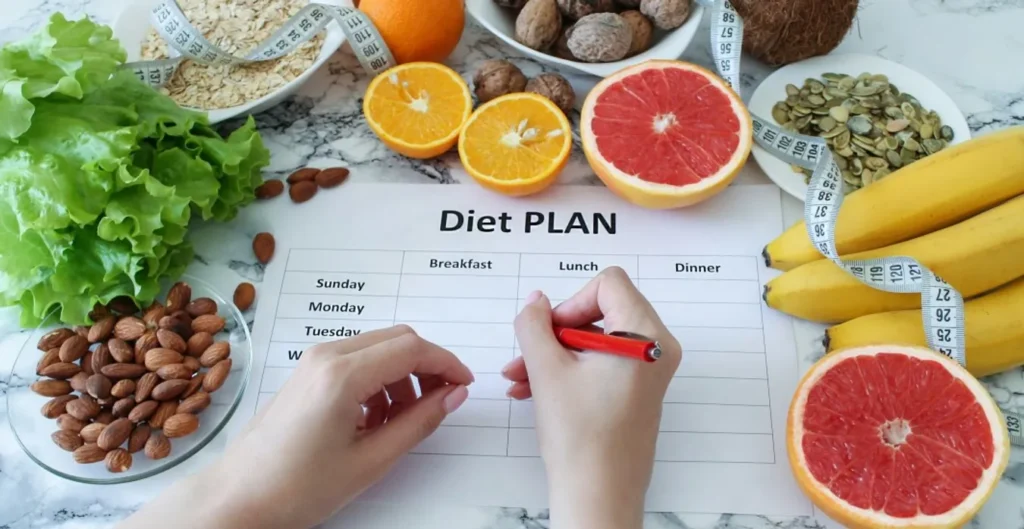
This plan is designed around the science of the female microbiome — high in fiber, fermented foods, and polyphenols, lower in the processed foods and additives that disrupt bacterial balance. It’s realistic, flexible, and genuinely delicious. Each day targets roughly 30g of fiber and includes at least one probiotic source.
Day 1 — Monday: Reset
Breakfast: Greek yogurt parfait with sliced banana, a tablespoon of chia seeds, a handful of blueberries, and a drizzle of raw honey.
Lunch: Large kale and roasted sweet potato salad with chickpeas, pomegranate seeds, pumpkin seeds, and a tahini-lemon dressing.
Dinner: Miso-glazed salmon with steamed broccoli and brown rice. Add a small side of kimchi.
Snack: A small green apple with almond butter.
Gut focus today: You’re hitting probiotics (yogurt, kimchi), prebiotics (banana, garlic in dressing, chickpeas), and polyphenols (blueberries, pomegranate). Strong start.
Day 2 — Tuesday: Fiber Forward
Breakfast: Warm oat porridge cooked with flaxseeds and cinnamon, topped with stewed pear (cook briefly with water and fresh ginger).
Lunch: Lentil and vegetable soup with garlic, onion, carrots, celery, cumin, and turmeric. Serve with a slice of whole-grain sourdough.
Dinner: Tempeh stir-fry with bok choy, edamame, ginger, garlic, and tamari over quinoa.
Snack: Kombucha and a small handful of mixed nuts.
Day 3 — Wednesday: Hormone Support Day
Breakfast: Smoothie — frozen mango, kefir, spinach, ground flaxseed, ginger, turmeric, black pepper, and a squeeze of lemon.
Lunch: Avocado and sauerkraut on whole grain toast with sliced turkey and a side of mixed greens dressed in olive oil and apple cider vinegar.
Dinner: Baked chicken thighs with roasted asparagus, roasted beets, and a drizzle of extra virgin olive oil.
Snack: Carrot sticks with hummus.
Why Wednesday is hormone day: Flaxseeds contain lignans that support healthy estrogen metabolism. Asparagus feeds the estrobolome directly. These aren’t coincidences — they’re strategic.
Day 4 — Thursday: Gut Lining Repair
Breakfast: Two eggs scrambled in olive oil with sautéed shiitake mushrooms (they contain beta-glucan) and spinach on whole grain toast.
Lunch: Bone broth-based vegetable soup with cannellini beans, leeks, kale, garlic, and rosemary.
Dinner: Grass-fed beef and vegetable bowl — lean mince cooked with onion, garlic, diced tomatoes, and spices, served over cauliflower rice with a dollop of plain yogurt.
Snack: A few squares of dark chocolate (70%+) with green tea.
Day 5 — Friday: Fermented Focus
Breakfast: Kefir smoothie with frozen berries, a tablespoon of hemp seeds, and half a banana.
Lunch: Brown rice bowl with miso-tahini dressing, shredded purple cabbage, edamame, avocado, sesame seeds, and pickled ginger.
Dinner: Salmon tacos in corn tortillas with kimchi slaw (shredded cabbage mixed with kimchi), avocado, and lime.
Snack: Plain yogurt with a drizzle of olive oil and a pinch of za’atar.
Day 6 — Saturday: Anti-Bloat Day
Breakfast: Warm lemon water first thing (a habit worth keeping every day). Then: overnight oats with chia seeds, raspberries, and a tablespoon of almond butter.
Lunch: Fennel, cucumber, and arugula salad with sardines, capers, lemon, and olive oil. Fennel is one of the best natural digestive aids — it actively reduces bloating and gas.
Dinner: Herb-roasted chicken with roasted artichoke hearts, green beans, and a side of sauerkraut.
Snack: Sliced apple and ginger tea.
Anti-bloat strategy: Today minimizes common bloat triggers while front-loading digestive aids — fennel, ginger, and the lemon water to stimulate stomach acid production.
Day 7 — Sunday: Replenish and Prep
Breakfast: Golden milk chia pudding — mix chia seeds with coconut milk, turmeric, ginger, cinnamon, black pepper, and a little honey. Set overnight. Top with fresh mango and toasted coconut.
Lunch: Warm grain salad with farro or barley, roasted root vegetables, dried cranberries, walnuts, goat cheese, and a sherry vinegar dressing.
Dinner: Slow-cooked lentil dal with garlic, ginger, onion, diced tomatoes, cumin, coriander, and coconut milk. Serve with brown rice and a spoonful of plain yogurt.
Snack: Kombucha and a handful of mixed berries.
Sunday prep tip: Cook a large batch of grains, portion out chia pudding for Monday, roast two sheet pans of vegetables. You’ve just made next week dramatically easier.
Foods to Avoid for Better Gut Health
This isn’t about creating fear of food. It’s about understanding which foods actively disrupt the microbiome, damage the gut lining, or feed the wrong bacterial species. You don’t need to eliminate everything below permanently — but reducing them consistently makes a real, measurable difference.
- Refined sugars and artificial sweeteners — sucrose and high-fructose corn syrup feed pathogenic bacteria and yeast. Artificial sweeteners, particularly saccharin and sucralose, have been shown to alter microbiome composition negatively even in small amounts
- Ultra-processed foods — emulsifiers like carrageenan and polysorbate-80 (found in many packaged foods) disrupt gut mucus and increase intestinal permeability
- Refined white flour and processed carbohydrates — rapidly fermented by less beneficial bacteria, driving gas and bloating
- Alcohol — disrupts the mucosal lining, reduces microbial diversity, and increases intestinal permeability with regular use
- Conventional red meat in excess — the TMAO pathway (where gut bacteria metabolize carnitine from red meat) is associated with cardiovascular risk and inflammatory dysbiosis
- Fried foods and trans fats — damage gut lining integrity and negatively select for inflammatory bacterial species
- Pasteurized, flavored dairy — heavily processed dairy products with added sugar are very different from plain fermented options
- Gluten (for some women) — non-celiac gluten sensitivity is real and particularly prevalent in women; if you consistently bloat after wheat-heavy meals, a structured elimination trial is worth attempting
- Excessive caffeine — one or two cups of black coffee can support gut motility, but excess caffeine irritates the gut lining and can increase permeability
Supplements for Gut Health (What Actually Works)
The supplement industry around gut health is enormous and, honestly, mixed in quality. Here’s a grounded, evidence-based rundown of what’s worth considering — and what to look for when choosing products.
| Supplement | What It Does | What to Look For | Amazon Pick |
| Probiotic | Replenishes and diversifies gut bacteria | Multi-strain with Lactobacillus & Bifidobacterium; 10–50 billion CFU; guaranteed potency | Garden of Life Dr. Formulated Probiotics for Women |
| Prebiotic Fiber | Feeds beneficial bacteria | Inulin, FOS, or partially hydrolyzed guar gum; start low, increase slowly | NOW Supplements Inulin Powder |
| L-Glutamine | Repairs and maintains gut lining integrity | Pure L-glutamine powder; 5g per day standard dosing | Nutricost L-Glutamine Powder |
| Digestive Enzymes | Supports breakdown of proteins, fats, and carbs | Full-spectrum with protease, lipase, and amylase | Zenwise Digestive Enzymes with Prebiotics & Probiotics |
| Magnesium Glycinate | Supports gut motility; reduces constipation | Glycinate form for absorption and gentleness on digestion | Doctor’s Best High Absorption Magnesium |
| Collagen Peptides | Provides glutamine and glycine for gut wall support | Unflavored, grass-fed bovine collagen; easy to add to smoothies or coffee | Vital Proteins Collagen Peptides |
| Vitamin D3 + K2 | Supports immune regulation and gut barrier function | D3 form (not D2); K2 as MK-7 | NatureWise Vitamin D3 with K2 |
These are affiliate links — meaning if you purchase through them, there may be a small commission at no extra cost to you. All picks are based on ingredient quality and research evidence, not sponsorship.
Always consult your doctor or registered dietitian before starting a new supplement protocol.
Lifestyle Tips for Better Gut Health
Food is foundational, but it’s not the only variable. The gut is deeply responsive to lifestyle — arguably more than almost any other organ system. These habits work alongside your dietary changes to accelerate results.
Manage stress — this one matters most: Chronic stress increases cortisol, which directly damages the gut lining, reduces digestive enzyme production, and kills off beneficial bacteria. Even 10 minutes of diaphragmatic breathing per day has been shown to measurably reduce gut permeability over time.
- Try: daily meditation (Headspace, Calm), yoga, journaling, or a 20-minute walk without your phone
Prioritize sleep: The gut microbiome has its own circadian rhythm. Disrupted sleep measurably reduces microbial diversity within days. Aim for 7–9 hours, ideally at consistent times.
Move your body daily: Exercise increases microbial diversity independently of diet. Even moderate activity — 30 minutes of brisk walking — has been shown to positively shift microbiome composition within weeks.
Eat slowly and chew thoroughly: Digestion starts in the mouth. When you eat too quickly, you swallow air (hello, bloating), under-chew food, and arrive at your stomach with large particles that are harder to process. Actually chew your food.
Hydration: The gut lining requires water to function. Adequate hydration supports the mucous layer that protects the intestinal wall. Aim for 2–2.5 liters per day. Herbal teas — ginger, fennel, peppermint — count and actively support digestion.
Limit late-night eating: The gut’s repair and restoration processes primarily happen during sleep. Eating heavily within two hours of bed interrupts this, slows motility, and contributes to overnight bloating that leaves you waking up puffy and uncomfortable.
Reduce unnecessary antibiotics: A single course of antibiotics can alter gut composition for up to a year. This doesn’t mean refusing them when genuinely needed — it means not requesting them for viral illnesses, and always following a course with a quality probiotic.
FAQ: Gut Health Diet for Women
Q: How long does it take to improve gut health through diet?
A: Most women notice initial improvements in bloating, energy, and digestion within 2–4 weeks of consistent dietary change. More significant shifts in microbiome diversity typically take 6–12 weeks. Symptoms related to hormonal regulation and skin health often improve on a slightly longer timeline of 8–16 weeks.
Q: What causes bloating in women specifically?
A: Bloating in women has multiple potential causes: dysbiosis, low stomach acid, food intolerances (lactose and gluten are common), hormonal fluctuations across the cycle, constipation, and SIBO (small intestinal bacterial overgrowth). The gut health diet addresses most of these root causes simultaneously.
Q: Is Greek yogurt actually good for gut health?
A: Yes — provided it contains live active cultures (check the label) and isn’t loaded with added sugar. Full-fat plain Greek yogurt is one of the most accessible and effective probiotic foods available. The fat content also slows digestion and supports satiety.
Q: Can gut health affect hormones?
A: Directly, yes. The estrobolome — a community of gut bacteria that metabolizes estrogen — plays a significant role in estrogen recirculation and elimination. Poor gut health can lead to excess estrogen reabsorption, contributing to PMS, endometriosis, PCOS, and weight gain around the hips and abdomen.
Q: What are the best foods to reduce bloating fast?
A: Fennel (raw or as a tea), ginger, peppermint tea, cooked and cooled rice, plain kefir, cucumber, and warm lemon water are among the fastest-acting options. These either reduce gas production, support gut motility, or calm inflammation in the gut lining. Avoid raw cruciferous vegetables and carbonated drinks during acute bloating episodes.
Q: Do I need expensive probiotic supplements, or will food sources work?
A: For most healthy women without a specific diagnosed condition, consistently eating fermented foods (kefir, yogurt, kimchi, sauerkraut, miso) will meaningfully support a healthy microbiome. Probiotic supplements are most beneficial after antibiotics, during periods of high stress, or when dealing with a specific digestive issue. Quality matters — look for multi-strain formulas with guaranteed CFU potency at time of use, not just at manufacture.
Q: Is this plan safe during pregnancy?
A: The core principles of this plan — high fiber, fermented foods, whole grains, and vegetables — align with general pregnancy nutrition guidelines. However, avoid unpasteurized fermented foods during pregnancy, and consult your OB or midwife before adding new supplements. A registered dietitian specializing in prenatal nutrition is your best resource.
Closing Thoughts: Your Gut Is Listening
Here’s what I want you to take away from all of this, beyond the meal plan and the supplement table and the foods to avoid.
Your gut is not just a digestive organ. It’s an immune organ, a hormonal organ, and — in a very real sense — a neurological organ. The signals it sends shape your mood, your energy, your skin, your weight, and your capacity to handle stress. It is, in many ways, the center of the whole system.
And it is extraordinarily responsive to how you treat it.
The women who see the most dramatic improvements from gut health work aren’t the ones who follow a perfect diet every single day. They’re the ones who shift their defaults — who make fermented food a normal part of the weekly shop, who sleep enough and stress a little less and chew their food like it actually matters.
Because it does. All of it. More than we were ever taught.
Start with one change this week. Add a serving of kefir. Make a big pot of lentil soup on Sunday. Eat one meal a day without your phone. The microbiome is adaptable — it responds faster than almost any other system in the body to positive change.
Your gut is listening. Start talking to it differently.
This article is for informational purposes only and does not constitute medical advice. If you have a diagnosed digestive condition (IBS, IBD, SIBO, celiac disease), please work with a qualified gastroenterologist or registered dietitian before making significant dietary changes.


Add Comment