
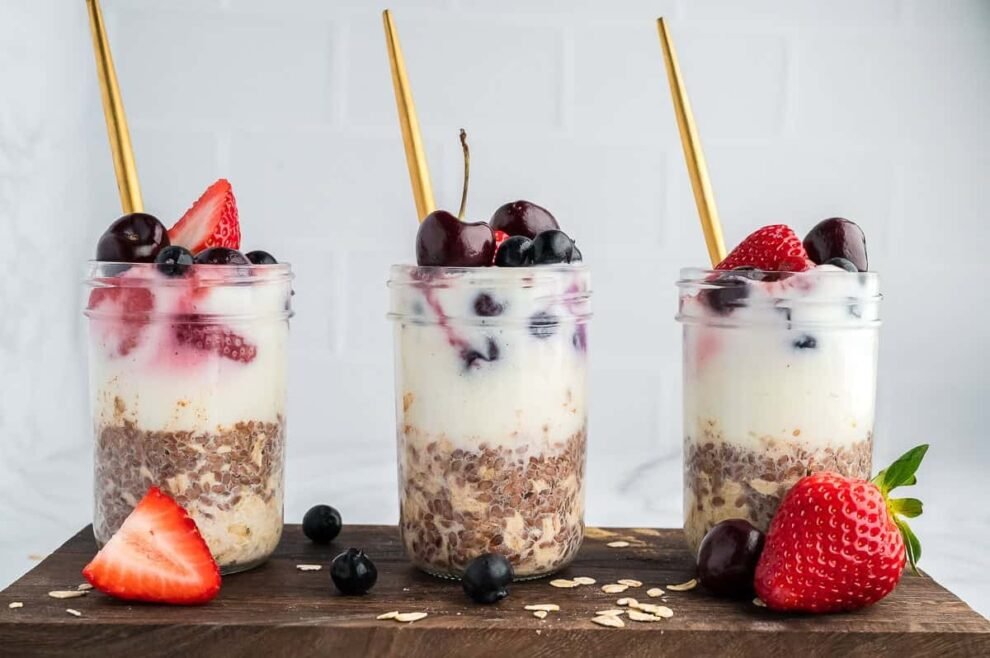
How to make overnight oats thicker and creamier is honestly one of those kitchen questions that sounds almost too simple to deserve a full article — and yet here you are, because you’ve pulled a jar out of the fridge on a busy morning and been greeted by something resembling gray soup instead of the gorgeous, spoonable, Instagram-worthy bowl you were promised.
I’ve been there. Multiple times. I got into overnight oats because I wanted a quick, healthy breakfast that didn’t require me to think before 7am. What I got, for a while, was a runny disappointment I was too stubborn to give up on.
After a lot of testing — genuinely, a lot — I figured out exactly why overnight oats turn watery, what fixes it, and how to get that thick, creamy, almost-pudding-like consistency every single time. That’s what this post is. No fluff, no filler — just everything you actually need to know, including the 10 fixes that make the biggest difference.
Table of Contents
Why Are Overnight Oats Runny? (The Real Reason Nobody Talks About)
Before we get to the fixes, it’s worth understanding why this happens in the first place. Because if you’ve ever followed a recipe exactly and still ended up with watery oats, it’s probably not your fault — it’s just that most recipes leave out some important context.
Oats absorb liquid over time through a process called hydration. Different types of oats absorb at different rates and different amounts. Here’s where people go wrong:
Too much liquid: This is the most common culprit by far. Most beginner recipes suggest a 1:1 ratio of oats to liquid, but that often produces a runny result — especially if you’re using thinner milks like almond or oat milk.
The wrong type of oats: Instant oats and quick oats break down too much and turn mushy. Steel-cut oats don’t soften properly overnight. Neither gives you the right texture.
Not enough soaking time: Less than 6 hours and the oats haven’t fully absorbed the liquid, leaving pools of unabsorbed milk sitting at the bottom.
Low-fat or watered-down dairy: Skim milk and some plant milks are mostly water. There’s simply not enough fat or protein to produce a creamy result — the liquid stays loose.
Skipping thickening agents: Oats alone don’t always thicken to the consistency most people want. A little help from chia seeds, yogurt, or starch makes a significant difference.
Once you understand these variables, fixing the problem becomes very straightforward.
The Best Oats to Use for Thick Overnight Oats
Not all oats are created equal, and this genuinely matters more than most recipes let on.
Old-fashioned rolled oats are the gold standard for overnight oats. They’re thick enough to absorb liquid without disintegrating, they hold their shape through the night, and they give you that satisfying chewy texture in the morning. This is what you want.
Thick-cut rolled oats (sometimes labeled “jumbo oats”) absorb even more liquid and produce an even heartier, chewier result. If you like your oats with a little more bite, these are excellent.
Quick oats absorb liquid fast and break down significantly overnight, which results in a mushy, almost paste-like consistency. Not ideal — though some people actually prefer this if they want their oats on the smoother side.
Instant oats — avoid these for overnight oats. They turn to mush and the texture is genuinely unpleasant by morning.
Steel-cut oats need a much longer soak (18–24 hours minimum) and still tend to have a slightly crunchy, uneven texture without cooking. They work, but they’re not beginner-friendly and don’t naturally get creamy overnight.
The bottom line: reach for old-fashioned rolled oats every time. They’re widely available, affordable, and consistently produce the best texture.
The Perfect Overnight Oats Ratio
This is the single most impactful variable. Get the ratio right and half your problems disappear.
The overnight oats ratio that works best for thick oats is:
½ cup oats to ¾ cup liquid (a roughly 1:1.5 ratio)
This is slightly less liquid than most recipes suggest — and that’s intentional. Oats continue absorbing moisture even after you think they’re done. If you start with a 1:2 ratio (half cup oats, full cup liquid), you’ll almost always end up with something too loose.
If you’re adding yogurt, that changes things slightly. Yogurt adds both creaminess and thickness, so when using it, you can drop the liquid to just ½ cup:
½ cup oats + ¼ cup yogurt + ½ cup liquid
Chia seeds also absorb a significant amount of liquid — roughly 10–12 times their weight — so factor that in:
½ cup oats + 1 tablespoon chia seeds + ¾ cup liquid
These ratios are starting points, not rigid rules. After your first batch, adjust based on your preference. Want it thicker? Use a touchless liquid. Want it a little looser? Add a splash of milk in the morning before eating.
How to Make Overnight Oats Thicker and Creamier — 10 Easy Fixes
Here they are. These are listed roughly in order of impact, but honestly, all of them work — mixing and matching a few gives the best results.
Fix 1: Use Less Liquid (Start at a 1:1.5 Ratio)
Already covered above, but worth reiterating: this is the single most effective change you can make. Drop from a 1:2 ratio to 1:1.5, and your oats will be noticeably thicker. If you’re using a watery plant milk, consider dropping even further to 1:1.25.
Fix 2: Add Chia Seeds
Chia seeds are one of the best natural thickeners that exist, and they happen to be nutritionally excellent — packed with omega-3 fatty acids, fiber, and protein. Add 1 to 2 tablespoons per half cup of oats. They’ll expand overnight and turn the liquid into a lightly gelatinous, creamy base.
The texture they create is similar to tapioca — slightly pudding-like, which most people find very appealing in thick overnight oats. If you’re not using chia seeds yet, start tonight.
Fix 3: Stir In Greek Yogurt
This is the overnight oats with yogurt trick, and it genuinely transforms the texture. Greek yogurt is thick, tangy, protein-dense, and adds a creaminess that milk alone simply can’t replicate.
Use full-fat Greek yogurt for the best results — at least 2–4 tablespoons per serving. Non-fat Greek yogurt still helps but produces a slightly less luxurious texture. For a dairy-free option, coconut yogurt works beautifully and adds a subtle sweetness.
Fix 4: Switch to Full-Fat Milk or Cream
If you’ve been using almond milk, oat milk, or skim milk and your oats keep turning out thin, this might be why. These milks are high in water content and low in the fats that create richness.
Swap to:
- Whole milk — the fat content makes a noticeable difference
- Coconut milk (canned, full-fat) — incredibly creamy, slightly sweet, excellent in tropical-flavored variations
- Heavy cream mixed with water — sounds indulgent, is indulgent, absolutely delicious for a treat
- Cashew milk — naturally creamier than most plant milks due to its fat profile
Even mixing half coconut milk with half water produces a significantly creamier result than straight almond milk.
Fix 5: Add a Tablespoon of Nut Butter
Peanut butter, almond butter, cashew butter — any of these stirred into your oats before refrigerating adds fat, protein, flavor, and thickness. A single tablespoon is enough to change the texture meaningfully.
This also has the practical benefit of making your oats more filling and slowing the blood sugar response from the carbohydrates — a real plus for a breakfast food.
Fix 6: Use Mashed Banana or Pumpkin Puree
Half a mashed ripe banana stirred into overnight oats adds natural sweetness and a velvety thickness that’s hard to replicate otherwise. The natural starches in the banana act as a mild thickener as the oats soak overnight.
Canned pumpkin puree (not pumpkin pie filling — plain puree) works similarly and is excellent for an autumn-spiced variation. Two to three tablespoons is plenty.
Fix 7: Stir in Protein Powder
A scoop of protein powder — vanilla or unflavored works best — does double duty: it boosts the nutritional profile significantly and thickens the mixture as it absorbs liquid overnight. Casein protein thickens more aggressively than whey; if texture is your main goal, casein is the better choice.
Just make sure to reduce your liquid slightly when adding protein powder — it absorbs more than you’d expect.
Fix 8: Let Them Soak Longer
Six hours is the minimum. Eight hours is better. Ten to twelve hours is the sweet spot for genuinely thick, fully-hydrated overnight oats where every oat has absorbed as much liquid as it can hold.
If you’ve been making them right before bed at midnight for a 6am breakfast, try making them the evening before — around 8 or 9pm — to get closer to that 10-hour mark. The difference in texture is real.
Fix 9: Add Flax Meal or Psyllium Husk
Ground flaxseed (flax meal) and psyllium husk are fiber-rich ingredients that absorb liquid and thicken your oats without significantly changing the flavor. One tablespoon of flax meal adds omega-3s and a subtle nuttiness. One teaspoon of psyllium husk creates a noticeably thicker, more gel-like base.
Both are widely available, inexpensive, and add genuine nutritional value — they’re not just textural tricks.
Fix 10: Stir Them Before Sleeping and Again in the Morning
This one is overlooked constantly. When you first make your overnight oats, stir everything well so the oats and any thickening agents are evenly distributed. Then, before you go to sleep, give the jar another stir — this redistributes any pooled liquid before it sets.
In the morning, stir again before eating. Sometimes what looks like a runny jar is actually just separation, and thirty seconds of stirring reveals perfectly thick oats underneath.
Creamy Overnight Oats Recipe (The Base Recipe)
This is the recipe I’ve landed on after months of testing. It’s thick, genuinely creamy, and works as a base for virtually any flavor variation.
Ingredients (1 serving):
- ½ cup old-fashioned rolled oats
- ¾ cup whole milk or full-fat coconut milk
- ¼ cup full-fat Greek yogurt
- 1 tablespoon chia seeds
- 1 tablespoon maple syrup or honey (adjust to taste)
- ½ teaspoon vanilla extract
- Pinch of salt
Instructions:
- Add all ingredients to a jar or container with a lid. Stir well — really well, making sure the chia seeds are distributed throughout rather than clumped at the bottom.
- Cover and refrigerate for at least 8 hours, ideally 10–12.
- In the morning, stir again. The oats should be thick and creamy.
- Add your toppings and eat cold, or warm briefly in the microwave if preferred.
Makes approximately 1.25 lbs of finished oats per double batch when scaled up — great for meal prepping 4–5 jars at once.
Best Toppings for Creamy Overnight Oats
The right toppings make a good bowl genuinely great. Add these in the morning — not the night before — so they maintain their texture.
Fresh fruit: Sliced banana, blueberries, raspberries, strawberries, diced mango. Adds natural sweetness, antioxidants, and color.
Crunchy elements: Granola, toasted coconut flakes, chopped walnuts, sliced almonds, pumpkin seeds. Texture contrast against the creamy oats is genuinely delightful.
Nut butters: A swirl of almond or peanut butter on top looks beautiful and tastes better.
Sweeteners: A drizzle of raw honey, maple syrup, or date syrup. A little goes a long way.
Spices: A dusting of cinnamon, cardamom, or a tiny pinch of sea salt elevates the flavor profile significantly.
Chocolate: A tablespoon of dark chocolate chips or cacao nibs. No further justification needed.
Common Mistakes to Avoid
Using a container that’s too big: In a wide, shallow container, the oats spread thin and dry out unevenly. Use a tall jar or container where the oats sit in a compact column.
Not salting: A pinch of salt — just a pinch — does more for the flavor of overnight oats than almost any other addition. It balances the sweetness and makes the oats taste more complex.
Adding fruit the night before: Fresh fruit releases water as it sits, adding extra liquid to your oats and making them runnier by morning. Add fruit right before eating.
Making them too sweet upfront: Sweetness intensifies slightly overnight. Start with less sweetener than you think you need and adjust in the morning.
Skipping the stir: Already mentioned in Fix 10, but worth repeating — stir before you sleep and again in the morning. It takes ten seconds and makes a real difference.
Amazon Affiliate Picks for Perfect Overnight Oats
These are the tools and ingredients that genuinely make a difference — worth having if you’re going to make overnight oats regularly.
| Product | Why It’s Worth It | Link |
| Bob’s Red Mill Thick Rolled Oats (5 lb bag) | The gold-standard oat for overnight oats — thick-cut, consistent, widely trusted | View on Amazon |
| Bontà Vita Organic Chia Seeds (2 lb bag) | Best value for bulk chia seeds — fresh, high-absorption, great for thickening | View on Amazon |
| Weck Tulip Jar Set (6 x 6oz) | The most satisfying overnight oats jar — airtight, glass, perfectly portioned, beautiful | View on Amazon |
| Stonyfield Organic Whole Milk Greek Yogurt | Full-fat, clean ingredients, thick consistency — exactly what you want for creamy oats | View on Amazon |
| Nutiva Organic Coconut Milk (6-pack) | Full-fat, BPA-free cans — the best plant-based option for making oats genuinely creamy | View on Amazon |
Frequently Asked Questions
Q: Why are my overnight oats still runny after a full night?
A: Almost always too much liquid. Try the 1:1.5 ratio (½ cup oats to ¾ cup liquid) and add 1 tablespoon of chia seeds. Also, check that you’re using old-fashioned rolled oats — quick oats go mushy and can release water.
Q: Can I make overnight oats thicker without chia seeds?
A: Yes. Greek yogurt, nut butter, mashed banana, flax meal, protein powder, and simply using less liquid all thicken oats without chia seeds.
Q: How long should overnight oats soak for the thickest result?
A: 10–12 hours gives the best texture. Six hours is the minimum for edible results; anything under that leaves the oats underhydrated and gritty.
Q: Is it okay to eat overnight oats every day?
A: Yes — oats are one of the most nutritionally complete breakfast options available. They’re high in beta-glucan (a soluble fiber that supports heart health and stable blood sugar), protein, and complex carbohydrates. Rotating your toppings keeps it from getting boring.
Q: Can you warm up overnight oats?
A: Absolutely. Transfer to a microwave-safe bowl and heat in 30-second increments, stirring between each. They’ll thicken slightly more when warm. Add a small splash of milk if they get too thick.
Q: How long do overnight oats last in the fridge?
A: Up to 5 days when stored in an airtight container. They tend to get slightly thicker as the days go on — just add a splash of milk and stir before eating.
Q: What’s the best milk for creamy overnight oats?
A: Whole cow’s milk and full-fat canned coconut milk are the two best options for genuine creaminess. Among plant milks, cashew milk is the creamiest. Almond and oat milk produce thinner results unless you compensate with yogurt or chia seeds.
The Bottom Line
Thick, creamy overnight oats aren’t a matter of luck — they’re a matter of understanding a handful of simple variables and adjusting accordingly. The ratio matters. The type of oats matters. Whether you add Greek yogurt and chia seeds matters. How long you let them soak matters.
Once you get one good batch, you’ll understand exactly how to replicate it — and then adapt it endlessly. A healthy overnight oats recipe that you actually enjoy eating is one of those small, mundane life improvements that genuinely compound over time. Good breakfast, every morning, basically no effort.
Start with the base recipe above tonight. Adjust the next batch based on your preference. Within a week, you’ll have it dialed in.
And then please, add that pinch of salt. You’ll thank me later.
Enjoyed this guide? Bookmark it, share it with someone who keeps complaining about runny oats, or drop a comment below with your favorite overnight oats variation — I genuinely love hearing what combinations people come up with.



Add Comment