
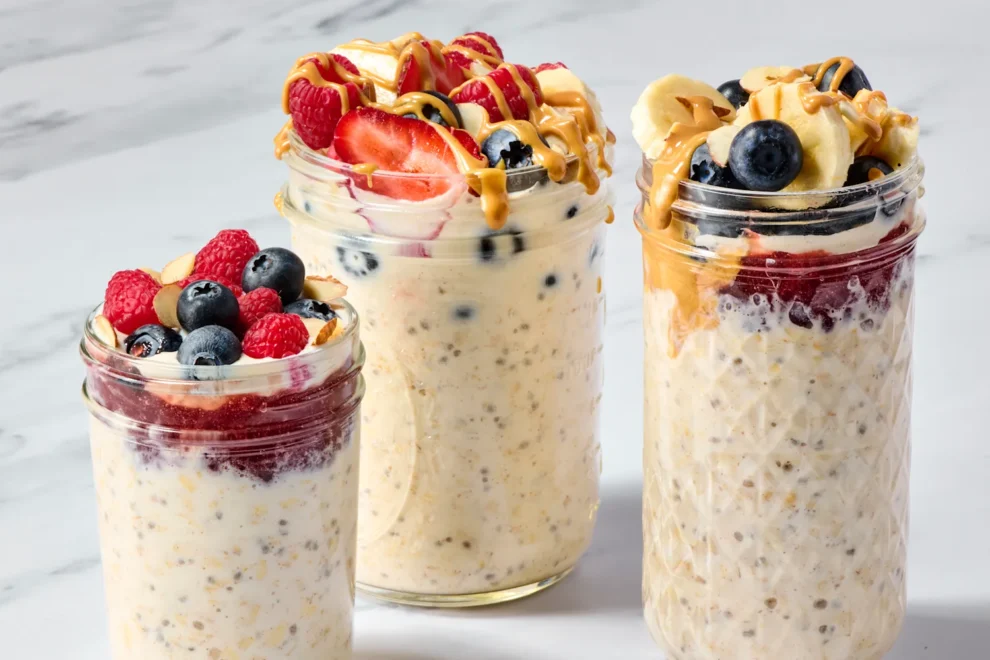
How to make overnight oats with rolled oats is something I genuinely wish someone had shown me years ago — back when my mornings were pure chaos and “breakfast” usually meant a granola bar eaten in the car or, honestly, nothing at all.
I was skipping breakfast about four days a week. Not because I wasn’t hungry — I was starving by 10 am — but because I had exactly zero minutes between waking up and walking out the door to do anything about it. Sound familiar? According to data from the American Journal of Clinical Nutrition, roughly 25% of adults regularly skip breakfast, with “not enough time” being the number one reason cited.
Here’s the thing that changed everything for me: you don’t need time in the morning if you use five minutes the night before.
Overnight oats — specifically made with rolled oats — are the single most practical, genuinely healthy breakfast option I’ve come across in years of writing about food and nutrition. They require no cooking. No special equipment. No culinary skill whatsoever. You make them before bed, and breakfast is waiting for you when you wake up.
This guide covers everything: what rolled oats actually are, why they work better than other types, the exact ingredients you need, step-by-step instructions, pro tips, flavor variations, and the full nutritional picture. By the end of this, you’ll wonder why you ever skipped breakfast in the first place.
Table of Contents
How to Make Overnight Oats with Rolled Oats — Everything You Need to Know
Let’s start at the beginning, because there’s actually a bit of confusion around oats in general. Not all oats work equally well for this recipe — and knowing the difference saves you from ending up with a texture that’s either mushy or weirdly crunchy.
Section 1 — What Are Rolled Oats?
Oats come in several forms and they are not all the same thing. Understanding this will make you a significantly better overnight oats maker, I promise.
The main types of oats:
- Whole oat groats — the most intact form, basically just the oat kernel with the hull removed. Takes 45–60 minutes to cook. Not ideal for overnight oats.
- Steel-cut oats — oat groats that have been chopped into smaller pieces. They take about 20–30 minutes to cook and produce a chewy, nutty texture. They can be used for overnight oats but need a longer soak — usually 12–24 hours — and the result is chewier, not as creamy.
- Rolled oats (old-fashioned oats) — whole oat groats that have been steamed and then pressed flat with large rollers. This process partially pre-cooks them, which is exactly why they absorb liquid so efficiently overnight. They’re the gold standard for this recipe.
- Quick oats (instant oats) — rolled oats that have been rolled even thinner and sometimes pre-cooked further. They absorb liquid faster but can turn mushy and paste-like when soaked overnight.
So why rolled oats specifically? Because the steaming and rolling process opens up the oats’ cellular structure just enough that it absorbs liquid beautifully over several hours — giving you that thick, creamy, pudding-like texture that makes overnight oats genuinely satisfying. They hold their shape without becoming a gluey mess. It really is the sweet spot.
For overnight oats, always reach for old-fashioned rolled oats. The bag should say “old-fashioned” or “rolled oats” — not quick, not instant, not steel-cut.
Section 2 — Ingredients You’ll Need
The beauty of this recipe is that the core ingredient list is short and inexpensive. You probably have most of it already.
The Base Recipe (1 serving)
| Ingredient | Amount | Notes |
| Rolled oats (old-fashioned) | ½ cup (about 1.75 oz) | Bob’s Red Mill or Quaker recommended |
| Milk of choice | ½ cup | Dairy, oat milk, almond milk, or full-fat coconut milk |
| Plain yogurt (optional but recommended) | ¼ cup | Greek yogurt makes it thicker and creamier |
| Chia seeds | 1 tablespoon | Helps thicken and adds omega-3s |
| Sweetener | 1–2 teaspoons | Maple syrup, honey, or a few drops of pure vanilla extract |
| Pinch of salt | Small pinch | Elevates every other flavor — don’t skip it |
That’s it. Six ingredients. Five minutes. Done.
Amazon Affiliate Picks — Products Worth Having
These are the specific products that genuinely improve the overnight oats experience, particularly if you’re making them regularly:
| Product | Why It’s Worth It | Link |
| Bob’s Red Mill Old Fashioned Rolled Oats (5 lb bag) | Consistently thick, clean ingredient list, widely trusted brand | View on Amazon |
| Quaker Old Fashioned Oats (2 lb container) | Widely available, affordable, perfect texture for soaking | View on Amazon |
| Weck 16 oz Glass Jar (set of 6) | Wide mouth, easy to eat from, stackable, looks great | View on Amazon |
| Navitas Organics Chia Seeds (8 oz) | Clean, fresh, properly dried — makes a noticeable difference | View on Amazon |
| OXO Good Grips 3-Piece Angled Measuring Cup Set | Makes portion measuring quick and clean | View on Amazon |
| 365 by Whole Foods Maple Syrup | Pure, not overly sweet, works better than processed syrups | View on Amazon |
Note: As an Amazon Associate, I earn from qualifying purchases at no extra cost to you.
Section 3 — Step-by-Step Instructions
This is embarrassingly simple, which is kind of the whole point.
Step 1: Grab your container: A mason jar works perfectly — the 16 oz wide-mouth size is ideal. You can also use any jar with a lid, a small bowl covered with plastic wrap, or a dedicated meal prep container. The lid matters because you’re storing it overnight.
Step 2: Add the dry ingredients first: Measure ½ cup of rolled oats directly into your jar. Add 1 tablespoon of chia seeds. If you’re adding any dry spices — cinnamon, cardamom, a pinch of nutmeg — add them now and give everything a quick stir.
Step 3: Add the wet ingredients: Pour in ½ cup of your chosen milk, then add ¼ cup of yogurt if you’re using it. Add your sweetener — 1 to 2 teaspoons of maple syrup or honey — and your pinch of salt. If you want vanilla, add ½ teaspoon of pure vanilla extract here.
Step 4: Stir well: Give it a thorough stir, making sure the oats are fully submerged in the liquid and the chia seeds are evenly distributed. Chia seeds clump if they’re not mixed properly, so take 20 extra seconds here.
Step 5: Cover and refrigerate: Seal the jar or cover the bowl and put it in the fridge. That’s it. Walk away.
Step 6: In the morning — add your toppings: After at least 6 hours (overnight is ideal, 8 hours is perfect), pull it out. The oats will have absorbed the liquid and thickened beautifully. If it seems too thick, stir in a splash of milk. Add your toppings — fruit, nut butter, nuts, seeds, granola, whatever you like — and eat it cold straight from the jar, or heat it in the microwave for 60–90 seconds if you prefer it warm.
Total active time: 5 minutes. That’s it. Breakfast is done.
Section 4 — Pro Tips for Perfect Overnight Oats
I’ve made overnight oats hundreds of times at this point, and there are a handful of small things that make a genuinely noticeable difference in the final result.
Use the right oat-to-liquid ratio: The standard starting ratio is 1:1 — equal parts oats to liquid. But if you’re adding yogurt too, drop the milk slightly: try ½ cup oats, ⅓ cup milk, ¼ cup yogurt. Too much liquid and you get soup. Too little and it’s stiff. Once you find your preferred ratio, you’ll make the same proportions every time without even measuring.
Don’t skip the salt: This feels counterintuitive in a sweet breakfast, but a tiny pinch of salt activates and amplifies every other flavor in the jar. Without it, the oats taste flat. With it, everything tastes a bit more intentional.
Always mix the chia seeds thoroughly: Chia seeds absorb liquid and expand significantly. If they clump together (which they will if you just sprinkle them on top without stirring), you end up with weird gel pockets instead of even creaminess. Mix immediately after adding.
Soak for at least 6 hours — 8 is better: I know some recipes say 4 hours is fine. Technically, it is. But 8 hours of soaking produces a significantly creamier, more cohesive texture. Make them before bed and let them go the full night.
Add toppings in the morning, not the night before: Fresh fruit, granola, and anything crunchy should be added right before eating. Added the night before, berries get soggy and granola turns soft. The toppings are where you add freshness and texture contrast — don’t waste that.
Make a batch of 3–5 jars at once: Overnight oats keep well in the fridge for up to 5 days (without fresh fruit toppings). Making a big batch on Sunday evening means breakfast is sorted for the whole week.
Slightly warm them up if you’re not a cold-breakfast person: Cold overnight oats aren’t for everyone. A 60-second microwave blast (remove the lid first if using a metal-capped jar) makes them warm and comforting without losing the texture.
Section 5 — Variations & Flavor Ideas
This is where overnight oats go from practical to genuinely exciting. The base recipe is essentially a blank canvas.
1. Classic Peanut Butter Banana
Add 1 tablespoon of peanut butter and ½ sliced banana to the jar before refrigerating. Top in the morning with a drizzle of more peanut butter and a few banana slices. Simple, satisfying, kids love it.
2. Blueberry Lemon
Stir the zest of half a lemon into the base mixture. Add ¼ cup of fresh or frozen blueberries to the jar before refrigerating. Top with more fresh blueberries and a teaspoon of honey in the morning. Tastes like a muffin. But healthy.
3. Chocolate Peanut Butter (Dessert-for-Breakfast Version)
Add 1 tablespoon of unsweetened cocoa powder and 1 tablespoon of peanut butter to the base. Sweeten a little more generously with maple syrup. Top with a few dark chocolate chips in the morning. This one is dangerous. You’ll make it every week.
4. Mango Coconut
Replace regular milk with full-fat canned coconut milk. Add ¼ cup of diced mango (fresh or frozen) to the jar. Top with toasted coconut flakes and more mango in the morning. Tastes like a tropical holiday in a jar.
5. Apple Cinnamon (Fall Version)
Add 1 teaspoon of cinnamon and ¼ teaspoon of nutmeg to the dry ingredients. Stir in a tablespoon of unsweetened applesauce. Top in the morning with diced apple, a drizzle of maple syrup, and a few walnuts. Tastes like apple pie. Not even slightly exaggerating.
6. Strawberries and Cream
Use a base of half regular milk, half heavy cream or full-fat coconut cream. Add ¼ cup of sliced strawberries. Top with fresh strawberries and a tiny pinch of flaky sea salt in the morning. Elegant, surprisingly.
7. High-Protein Power Bowl
Use high-protein milk (like Fairlife) and full-fat Greek yogurt. Add a scoop of vanilla protein powder to the wet ingredients and mix well before adding oats (this prevents clumping). Top with hemp seeds, almond butter, and sliced almonds. Ideal for post-workout mornings.
Section 6 — Nutrition & Health Benefits
Overnight oats aren’t just convenient — they’re genuinely good for you, and the nutritional profile of rolled oats specifically is worth understanding.
Base recipe nutrition (approximate, without toppings):
| Nutrient | Amount (per serving) |
| Calories | ~300–350 kcal |
| Protein | ~10–14g (higher with Greek yogurt) |
| Carbohydrates | ~45–50g |
| Dietary Fiber | ~6–8g |
| Fat | ~7–10g |
| Sugar (natural) | ~8–12g |
| Calcium | ~20% of daily value |
| Iron | ~15% of daily value |
Key health benefits of rolled oats:
- Beta-glucan fiber — oats contain a specific type of soluble fiber called beta-glucan, which has strong evidence for reducing LDL (bad) cholesterol, stabilizing blood sugar, and supporting a healthy gut microbiome
- Sustained energy — the complex carbohydrates in rolled oats digest slowly, meaning energy is released gradually, and you’re not crashing by 10am
- Magnesium and manganese — both are crucial for energy metabolism, bone health, and hundreds of enzymatic reactions in the body
- Antioxidants (avenanthramides) — compounds unique to oats that have anti-inflammatory and anti-itching properties
- Supports weight management — the combination of fiber, protein (especially with Greek yogurt), and fat creates strong satiety signals, reducing the likelihood of overeating later in the day
- Resistant starch — when oats are soaked cold rather than cooked, some of the starch converts to resistant starch, which feeds beneficial gut bacteria and has a lower glycemic impact than cooked oats
If you’re using chia seeds (and you should), you’re also adding a meaningful hit of omega-3 fatty acids, additional fiber, and calcium. Greek yogurt adds protein and probiotics. The nutritional profile of a well-made jar of overnight oats is genuinely impressive for something that takes 5 minutes to prepare.
Frequently Asked Questions
Q: Can I use quick oats instead of rolled oats?
You can, but the texture will be noticeably mushier — almost paste-like after soaking overnight. Rolled (old-fashioned) oats hold their structure much better. If quick oats are all you have, reduce soaking time to 4 hours max and use slightly less liquid.
Q: How long do overnight oats last in the fridge?
Up to 5 days, sealed in a jar or airtight container — without fresh fruit mixed in. Add fruit toppings each morning to keep things fresh. After 5 days, the texture starts to break down.
Q: Do I have to eat them cold?
Nope. Microwave for 60–90 seconds, stir, and they’re warm. Some people prefer them cold in summer and warm in winter. Both are completely fine, and the recipe works either way.
Q: Can I make overnight oats without yogurt?
Yes. Just increase the milk to ¾ cup instead of ½ cup. The result is slightly less thick and creamy, but still good. You can also use a dairy-free yogurt — coconut yogurt works particularly well.
Q: Are overnight oats gluten-free?
Oats are naturally gluten-free, but they’re often processed in facilities that also handle wheat, barley, and rye. If you have celiac disease or serious gluten sensitivity, look specifically for certified gluten-free rolled oats (Bob’s Red Mill makes a reliable version).
Q: Can I add protein powder to overnight oats?
Yes, and it works well. Mix the protein powder into the liquid ingredients before adding the oats — this prevents dry clumps. Vanilla or unflavored protein powder integrates most naturally. Expect the texture to be slightly thicker.
Q: What’s the best container for overnight oats?
A 16-oz wide-mouth mason jar is the classic choice — it’s the right size, easy to stir in, easy to eat from, and the lid seals perfectly. Any jar or airtight container of a similar size works fine.
Conclusion — Your Easiest Morning Starts Tonight
Here’s the truth about overnight oats: they’re not revolutionary. They’re oats. Soaked in milk. But the combination of simplicity, versatility, genuine nutritional value, and the fact that breakfast is literally ready the moment you open the fridge — that combination is kind of remarkable when you start living it.
I still make them most nights. Sometimes I do the classic peanut butter banana. Sometimes, the chocolate version when I need something that feels like a small treat. On Sunday evenings, I’ll make four jars at once and feel unreasonably proud of myself for the rest of the week.
The investment is five minutes and six ingredients. The return is a breakfast that’s filling, nutritious, endlessly customizable, and requires literally zero thought or effort in the morning.
Make a jar tonight. I promise you’ll keep going.
What you’ll need to get started:
- Bob’s Red Mill Old Fashioned Rolled Oats (5 lb) — View on Amazon
- Wide-Mouth Mason Jars (set of 12) — View on Amazon
- Navitas Organics Chia Seeds — View on Amazon
As an Amazon Associate, I earn from qualifying purchases at no additional cost to you.
Nutritional values are approximate and will vary based on specific ingredients and brands used. Consult a registered dietitian for personalized nutritional guidance.


Add Comment