
7-day body recomposition diet plan for women. That’s the exact phrase I typed into Google at like 11:30 on a random Thursday night, sitting on my bathroom floor after stepping off the scale for the third time that week — as if the number might change if I just tried again with slightly different posture.
It didn’t change.
I was 34. About 147 pounds. I’d been doing everything I thought I was supposed to do — four cardio sessions a week, sad desk lunches of spinach and grilled chicken, cutting out wine most nights (which honestly was the hardest part). Eight months of that. And my body looked… the same. Genuinely the same. Not slightly different. Not “almost there.” The exact same as when I started.
I wasn’t just frustrated. I was confused. Because all the rules said this should be working.
A few weeks later, I was complaining about it to a friend who happens to be a personal trainer, and she stopped me mid-sentence. Said: “I think you’re trying to do the wrong thing. You’re not trying to lose weight. You’re trying to recomp. Those are actually completely different goals.”
I didn’t know what recomp meant. I asked. She explained. And something clicked in a way that months of calorie counting hadn’t managed to do.
That conversation changed how I eat, how I train, and honestly, how I think about my body. This guide is everything she told me — plus the research I’ve dug into since — laid out in a way that you can actually use starting this week.
Table of Contents
What Body Recomposition Really Means (And Why It Hits Different for Women)
Okay, so here’s the thing that nobody explains clearly enough: body recomposition means losing fat and building muscle at the same time. Simultaneously. Not alternating between them, not “cutting then bulking.” Both are happening together.
If you’ve been around fitness spaces for a while, that probably sounds either impossible or confusing. The traditional advice — the stuff that’s been repeated forever in gyms and magazines — says you need a caloric surplus to build muscle and a caloric deficit to lose fat. And they’re not the same thing, so how can you do both?
Here’s the nuance that often gets left out: that conventional wisdom applies most strictly to men, particularly experienced male athletes who’ve already built significant muscle mass. Women’s bodies work differently, and the research increasingly backs this up.
A few reasons why women actually have an edge here:
- Women are better at burning fat as fuel during exercise — which means even while building muscle, the body can simultaneously be pulling energy from fat stores
- Anyone new to resistance training (or coming back after a long break) experiences what people call “newbie gains” — a window where the body builds muscle unusually fast because the stimulus is completely novel
- Women who carry a higher percentage of body fat are essentially walking around with a built-in fuel reserve that the body can tap into during muscle-building phases
- The hormonal landscape across the menstrual cycle directly influences how the body stores and uses energy, which means for women, consistency and nutrient timing matter more than rigid caloric math on any given day
Body recomposition is not fast. I want to be upfront about that. It’s slower than a crash diet that strips you down to nothing, and slower than a dedicated “bulk” phase. But what you end up with is completely different — a body that’s actually reshaped, not just lighter. Clothes fit differently. You feel stronger. And you don’t have to spend six months being miserable to get there.
The Diet Principles That Make a Body Recomposition Meal Plan Actually Work
Before we get into the food, I want to talk about the principles underneath it — because the specific meals matter way less than understanding why you’re eating them. Once the logic clicks, the whole plan makes intuitive sense.
Protein is not negotiable — it’s the whole mechanism.
I cannot overstate this. If there is one thing that separates women who successfully recomp from women who spin their wheels, it’s protein intake. Building muscle while simultaneously losing fat requires a constant, substantial supply of amino acids for your body to actually do the building part. The research on this is pretty consistent: aim for somewhere between 0.7 and 1 gram of protein per pound of bodyweight per day. For a 150-pound woman, that’s roughly 105 to 150 grams daily. If you’ve been eating 60-70g a day and wondering why your body isn’t changing, there’s your answer.
Eat near your maintenance calories, not way below them.
This one messes with people because we’ve been so conditioned to think that eating less is always better. It’s not — not for this goal anyway. When you drop calories too aggressively, your body prioritizes survival. It holds onto fat, breaks down muscle for energy, and slows your metabolism. The sweet spot for recomposition is usually 200–300 calories below your total daily energy expenditure. Enough of a nudge toward fat loss, not enough to trigger your body’s defense mechanisms.
Carbs are fuel, and you need fuel to train hard.
A fat loss and muscle gain diet still includes carbohydrates — don’t let anyone convince you otherwise. Your muscles run on glycogen, which comes from carbs. When you train hard (which you need to do for this to work), you deplete those stores. If they’re never adequately replenished, your training suffers, your recovery suffers, and eventually your results suffer. Eat your biggest carb servings before and after workouts. That’s when your body uses them best.
The most important principle is the boring one.
Consistency. Genuinely, over everything else. You could have a perfectly designed macro split and blow it by being inconsistent for half the month. Or you could have a slightly imperfect plan and totally transform your body over six months by showing up consistently. This process rewards showing up more than it rewards being perfect.
The Foods That Drive Body Recomposition
Your body recomposition meal plan needs to be built on foods that are actually doing something — high-quality protein, complex carbohydrates that fuel training, fats that support hormonal function, and vegetables that give you the micronutrients to hold the whole thing together.
Your protein anchors:
- Chicken breast and thighs — cooked breast is around 26g protein per 3.5 oz, and thighs are more flavorful if you’re making the same thing every week and getting bored
- Eggs and egg whites — cheap, versatile, and genuinely one of the best protein sources in terms of amino acid profile
- Greek yogurt (full-fat or 2%) — 20g protein per cup plus probiotics; it also works as a base for sauces and dressings so you’re getting protein without thinking about it
- Cottage cheese — wildly underrated. 27g protein per cup, mild flavor, works sweet or savory
- Canned tuna and salmon — quick, cheap, shelf-stable. Wild-caught when the budget allows
- Ground turkey or lean beef (90–95% lean) — practical for batch cooking; you can make it stretch across multiple meals
- Tofu and edamame — excellent on plant-forward days; don’t underestimate them
- Protein powder — not a magic supplement, just a convenient way to hit your protein targets on busy days when real food isn’t happening
Carbohydrates worth eating:
- Rolled oats — filling, steady blood sugar, high in beta-glucan fiber that genuinely keeps you full
- Sweet potatoes — one of the best pre-workout carb sources. Natural sweetness, nutrient density, and they reheat well
- Brown rice and quinoa — quinoa pulls double duty as it has more protein than most grains
- Whole grain bread and wraps — because you’re a human person with a life and you need practical options
- Fruit — bananas before workouts, berries everywhere else; don’t fear fruit sugar in the context of an active lifestyle
Fats you actually want:
- Avocado — monounsaturated fat, fiber, potassium. Basically, a perfect food
- Extra virgin olive oil — use it as your primary cooking fat
- Nuts and nut butters — almonds, walnuts, natural peanut butter. Calorie-dense, so watch portions, but genuinely good fat
- Salmon and mackerel — high protein and high omega-3; two birds, one fish
- Whole eggs — eat the yolk. The fat-soluble vitamins are in there, and dietary cholesterol is far less scary than it was made out to be
Vegetables (eat more of these than anything else):
- Leafy greens: spinach, kale, arugula — essentially free calories with a huge micronutrient payoff
- Broccoli, cauliflower, zucchini, cucumber
- Bell peppers, cherry tomatoes, mushrooms
- Asparagus — especially useful when you’re feeling bloated; it’s a natural diuretic
7-Day Body Recomposition Diet Plan for Women
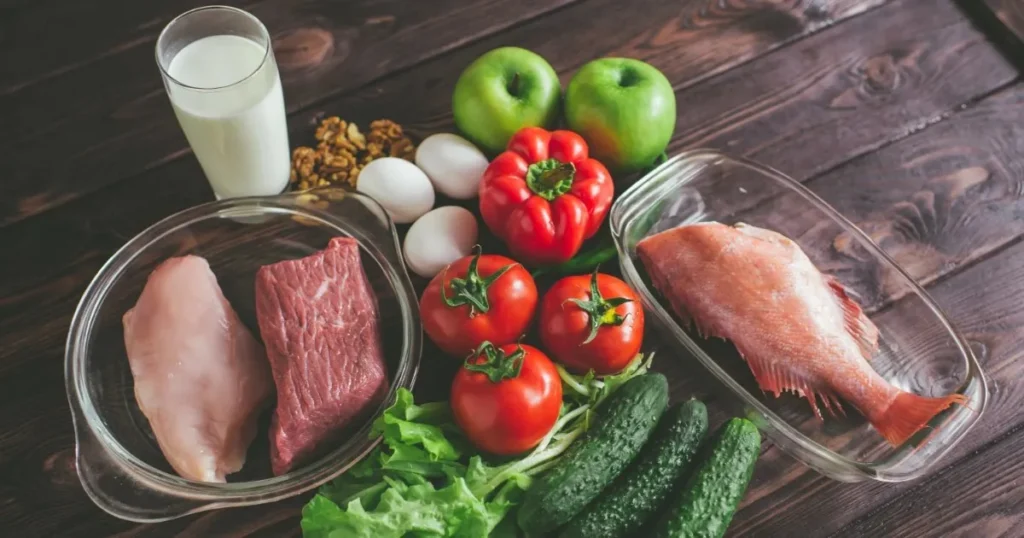
This plan runs roughly 1,600–1,800 calories a day with 130–150g protein, moderate carbohydrates timed around training, and enough fat to keep hormones happy. If you’re heavier or more active, scale portions up a bit. If you’re lighter or more sedentary, scale slightly down. The framework is what matters more than hitting the exact numbers every single day.
Day 1 — Monday
Breakfast | ~400 cal / 38g protein Greek yogurt parfait: 1 cup full-fat Greek yogurt layered with ½ cup blueberries, ¼ cup low-sugar granola, 1 tbsp chia seeds, and a small drizzle of raw honey. Takes about four minutes to make, and you will not be hungry by 10 am.
Lunch | ~450 cal / 40g protein Grilled chicken bowl: 5 oz grilled chicken breast over ½ cup cooked brown rice, roasted broccoli, ¼ avocado, and a lemon-tahini dressing (tahini, lemon juice, garlic, water — shake it in a jar).
Snack | ~180 cal / 20g protein 1 cup cottage cheese with sliced cucumber and a good pinch of sea salt. Simple and surprisingly satisfying.
Dinner | ~480 cal / 38g protein Baked salmon fillet (5 oz) alongside a medium roasted sweet potato and sautéed spinach done in olive oil with a squeeze of lemon at the end. This dinner feels fancy and takes maybe 25 minutes.
Day total: ~1,510 cal | ~136g protein
Day 2 — Tuesday (Lighter Training Day)
Breakfast | ~390 cal / 28g protein Protein oatmeal: 1 cup rolled oats cooked with water, then stir in 1 scoop vanilla protein powder while it’s still hot (this actually works really well — don’t add it before cooking), ½ banana sliced on top, 1 tbsp almond butter.
Lunch | ~420 cal / 30g protein Big salad that actually keeps you full: 3 cups mixed greens, ½ cup chickpeas, 2 hard-boiled eggs, cherry tomatoes, cucumber, dressed with 2 tbsp olive oil and a splash of red wine vinegar. Add salt and pepper — it needs it.
Snack | ~200 cal / 14g protein: About 20 almonds and 1 medium apple. Classic, boring, works.
Dinner | ~500 cal / 36g protein Stir-fried tofu and edamame with bok choy, garlic, fresh ginger if you have it, and a low-sodium tamari sauce. Serve over ½ cup of quinoa. Takes under 20 minutes if your mise en place is halfway decent.
Day 3 — Wednesday
Breakfast | ~380 cal / 30g protein Three-egg omelet with wilted spinach, sliced mushrooms, and a small handful of crumbled feta. Cooked in olive oil. One slice of whole grain toast on the side — you can skip it if you’re not hungry, keep it if you have a workout later.
Lunch | ~440 cal / 42g protein Tuna salad wrap that doesn’t taste like sad desk food: 1 can wild tuna mixed with 2 tbsp Greek yogurt (instead of mayo — trust me), chopped celery, a squeeze of Dijon, salt, and pepper. Wrap it in a whole-grain tortilla with a handful of arugula.
Snack | ~150 cal / 25g protein One scoop of protein powder blended with unsweetened almond milk and ice. Not exciting. High protein. Does the job.
Dinner | ~500 cal / 38g protein Ground turkey taco bowl (this one gets requested repeatedly once people try it): 5 oz of 93% lean ground turkey cooked with cumin, smoked paprika, garlic powder, and a little chili flakes. Serve over cauliflower rice with canned black beans, salsa, and ¼ avocado.
Day 4 — Thursday (Higher Carb / Training Day)
Breakfast | ~420 cal / 30g protein Training day smoothie: 1 banana, 1 cup frozen mango, 1 scoop protein powder, 1 tbsp peanut butter, 1 cup unsweetened almond milk, a big handful of spinach (you cannot taste it, I promise). Blend. Drink. Go.
Pre-workout snack | ~120 cal / 5g protein Two rice cakes with a thin smear of honey right before your workout. Fast carbs, quick energy.
Lunch | ~460 cal / 40g protein Chicken and sweet potato bowl again, because it works, and batch-cooked chicken makes this a 5-minute lunch: 5 oz baked chicken thigh (thighs over breast for flavor here), 1 medium roasted sweet potato, steamed green beans, olive oil drizzled over the top.
Dinner | ~480 cal / 42g protein Sheet pan shrimp: 6 oz raw shrimp tossed with olive oil, minced garlic, cherry tomatoes, and broccoli on a sheet pan. Roast at 400°F for about 15 minutes. Squeeze lemon over everything right before serving. Serve over ½ cup of brown rice. This is genuinely delicious, and the cleanup is almost nothing.
Day 5 — Friday
Breakfast | ~400 cal / 32g protein Two scrambled eggs plus two turkey sausage links plus ½ cup sautéed bell peppers, all cooked together, served alongside one slice of whole grain toast spread with ¼ avocado. Friday breakfast should feel like a small reward. This does.
Lunch | ~450 cal / 38g protein Salmon salad: 4 oz canned salmon tossed with olive oil, a few capers, fresh dill if you have it, lemon juice, and black pepper. Served over a big bed of mixed greens with a hard-boiled egg and sliced cucumber. Better than it sounds on paper.
Snack | ~200 cal / 18g protein ½ cup cottage cheese with ½ cup pineapple chunks. Sweet-savory combo that some people love and some people need a minute to warm up to.
Dinner | ~490 cal / 40g protein Grass-fed beef burger (5 oz, 90% lean) — skip the bun or use a whole grain one depending on your workout load today. Lettuce, thick slice of tomato, red onion. Served alongside roasted asparagus (toss it in olive oil, salt, and a little lemon zest — 12 minutes at 425°F).
Day 6 — Saturday
Breakfast | ~360 cal / 26g protein Overnight oats from last night (Saturday morning energy is precious — use it): ½ cup oats mixed with ½ cup Greek yogurt, ½ cup almond milk, 1 tbsp chia seeds. Shake, refrigerate, and top with ¼ cup raspberries in the morning.
Lunch | ~430 cal / 35g protein Turkey and vegetable soup — either homemade or a good low-sodium store-bought version. Lean ground turkey, carrots, celery, diced tomatoes, and white beans. Serve with one slice of real sourdough bread and a bit of olive oil for dipping.
Snack | ~170 cal / 12g protein 1.5 tbsp natural peanut butter on a rice cake plus one small banana. Good pre-gym snack if you’re training this afternoon.
Dinner | ~510 cal / 44g protein Baked chicken breast (6 oz) marinated for even 15 minutes in lemon juice, olive oil, garlic, and dried oregano. Served with roasted Brussels sprouts (halved, tossed in olive oil and balsamic, roasted at 400°F until the edges get crispy) and ½ cup quinoa.
Day 7 — Sunday (Prep Day)
Breakfast | ~410 cal / 34g protein Egg white scramble that actually feels like a treat: 4 egg whites plus 2 whole eggs, cooked in olive oil with smoked salmon, a few capers, thinly sliced red onion, and dill. Pile it high. Take your time with Sunday breakfast.
Lunch | ~440 cal / 36g protein Grain bowl: ½ cup cooked farro as the base (nuttier and chewier than rice — worth trying), topped with roasted zucchini and red pepper, 4 oz grilled chicken, 3 tbsp hummus on the side, lemon squeezed over everything.
Snack | ~180 cal / 20g protein Protein shake with water or almond milk plus a small handful of walnuts.
Dinner | ~480 cal / 38g protein Turkey chili made in a slow cooker or on the stovetop: ground turkey, kidney beans, canned tomatoes, bell peppers of any color, chili powder, cumin, smoked paprika, garlic. Make a big batch — this freezes perfectly. Top with a dollop of Greek yogurt instead of sour cream. It’s better, honestly.
Sunday task: While the chili cooks, hard-boil a batch of eggs, portion out snacks, and cook a pot of grains for the week. Twenty minutes of prep makes Monday through Wednesday dramatically easier.
The Workout Side of Things — Because Diet Alone Won’t Do It
I want to spend some real time on this because I see women pair a solid nutrition plan with the wrong training approach and then wonder why their body isn’t changing.
Cardio is not your primary tool here. I know, I know — that’s the thing most of us default to because it feels productive and burns calories in the moment. But for body recomposition, cardio is a supplement to the main event, not the main event itself.
Resistance training is the main event. 3 to 4 sessions per week, built around compound movements: squats, deadlifts, hip thrusts, Romanian deadlifts, bench press, rows, overhead press. These exercises recruit the most muscle mass at once, create the hormonal environment that supports recomposition, and they’re what actually reshape your body rather than just making it smaller.
Aim for 3 to 4 sets of 8 to 12 reps per exercise at a weight that challenges you on the last few reps. Progressive overload — increasing the weight, the reps, or the volume gradually over time — is the actual mechanism of muscle growth. Your body adapts to a stimulus and then needs a slightly bigger stimulus to keep adapting. That’s the whole game.
Cardio: Two or three sessions a week at low-to-moderate intensity. Walking is genuinely one of the best things you can do — it supports fat oxidation, it’s low-stress on the body, and it doesn’t compete with your recovery from lifting. A 30 to 45-minute walk counts. You don’t need to be running sprints.
Sleep and recovery: This part gets treated like an optional add-on, and it absolutely isn’t. Muscle is literally built while you sleep — specifically during deep sleep when growth hormone is released. Skimping on sleep increases cortisol, which promotes fat storage and impairs muscle protein synthesis. 7 to 9 hours isn’t a luxury; it’s part of the program.
Tools and Supplements Worth Having
| Product | Why It Actually Helps | Link |
| Whey Protein Powder | Easiest way to close the protein gap on busy days; ideal post-workout | View on Amazon |
| Digital Food Scale | One week of weighing food will permanently change how you think about portions | View on Amazon |
| Resistance Bands Set | Excellent for home workouts, warm-ups, and glute activation before lifting | View on Amazon |
| Adjustable Dumbbells | Space-efficient, versatile, and more cost-effective than a full rack over time | View on Amazon |
| Meal Prep Containers | The logistics of eating well live and die by having the right containers | View on Amazon |
| Creatine Monohydrate | One of the most well-researched supplements in existence; supports strength, muscle, and recovery in women | View on Amazon |
Heads up: some links above are Amazon affiliate links, which means I earn a small commission if you buy through them — at zero extra cost to you.
Mistakes That Actually Stall Body Recomposition (And How to Avoid Them)
Eating too little protein and not really knowing it: Most women have no idea how far under their protein target they actually are until they track for a week. I was eating maybe 70–80g a day while wondering why nothing was changing. Get a real number before assuming you’re eating enough.
Going into too big a caloric deficit: 1,200 calories gets thrown around like it’s the number for weight loss, but for most active women trying to build muscle, it’s actively counterproductive. You need fuel to train, and you need training to recomp. Don’t cut so deep that you undermine the whole process.
Doing all cardio and no lifting: If your weekly workout plan is five spin classes and two runs with zero resistance training, you will lose weight — but you’ll lose it from muscle as much as from fat. The result is a smaller version of the same body shape, not a different one. Pick up something heavy. Consistently.
Using the scale as your only progress metric: During recomposition, it is completely normal to lose 5 pounds of fat and gain 4 pounds of muscle and have the scale barely move. That’s actually a massive win — but it looks like failure if you’re only watching the number. Take monthly photos. Measure your waist, hips, and arms. Note how your jeans fit. These tell the real story.
Starting over every time you have a bad week: The stop-start cycle is one of the most common progress killers. Life is messy, and weeks go sideways. An imperfect week doesn’t erase the weeks before it — unless you decide it does by quitting. Seventy percent consistency for six months will outperform 100% perfection for six weeks, followed by giving up.
Treating stress and sleep as an afterthought: Chronic stress keeps cortisol elevated, and elevated cortisol tells your body to store fat, particularly in the abdominal area, and break down muscle. Poor sleep does the same thing through a slightly different pathway. You can nail the diet and training and still stall if you’re sleeping five hours a night and running on anxiety. These things aren’t soft wellness advice — they’re real physiological variables.
FAQ: Body Recomposition for Women
Q: How long before I see actual results from a body recomposition diet plan?
Most women notice things shifting — clothes fitting differently, more definition, more energy — somewhere between 6 and 10 weeks of consistent effort. Full body recomposition unfolds over months. If you’re expecting a dramatic change in two weeks, you’ll be disappointed. If you commit to three months, you’ll be genuinely amazed.
Q: Can I do this as a complete beginner?
You’re actually in the best position as a beginner. Newbie gains are a real and well-documented phenomenon — the body responds to resistance training stimulus most dramatically when it’s brand new. The simultaneous fat loss and muscle gain that characterizes true recomposition is most pronounced in the early months of training.
Q: Do I need to track macros strictly?
Not strictly, not forever. But tracking honestly for 2 to 4 weeks at the start is one of the most valuable things you can do. Most people discover significant protein gaps and hidden calorie surpluses they weren’t aware of. Even rough awareness changes behavior in meaningful ways.
Q: What if I can’t get to a gym?
Home-based resistance training with dumbbells or resistance bands can absolutely drive recomposition, especially for beginners. It’s harder to progressively overload without heavier equipment, but it’s genuinely doable. The bigger limiting factor is usually not equipment but consistency.
Q: Is this different from just going on a diet?
Very different. A regular diet focuses on reducing the number on the scale — often at the expense of muscle, energy, and long-term sustainability. Body recomposition focuses specifically on changing what your body is made of. The goal isn’t to be lighter. It’s to be leaner, stronger, and fundamentally different in how your body looks and feels.
Start This Week — Not Next Monday
Here’s the thing about body recomposition for beginners: the hardest part isn’t the plan. The plan is just food, lifting, and sleep. The hardest part is accepting that it’s going to take longer than you want, and doing it anyway.
That version of yourself you’ve been working toward — the one who feels strong, and walks into a room differently, and doesn’t dread trying on clothes — she doesn’t arrive in a week. But she does arrive. She arrives somewhere around the three-month mark if you actually show up, eat your protein, lift consistently, and stop starting over every time a week goes sideways.
Start Monday. Not because Monday is magic, but because you’ve spent enough time reading about this, and it’s time to eat dinner and move on.
You already know enough to begin.
Please talk to your doctor or a registered dietitian before making big changes to your diet or exercise routine, especially if you have any underlying health conditions or take medication.
Leave a Reply