
Transform your weeknight dinner with this incredible one-pot meal featuring juicy pork tenderloin bathed in a sweet and savory honey garlic glaze, nestled over a bed of tender carrots and potatoes. It’s hearty and satisfying, and the whole family will be asking for seconds!
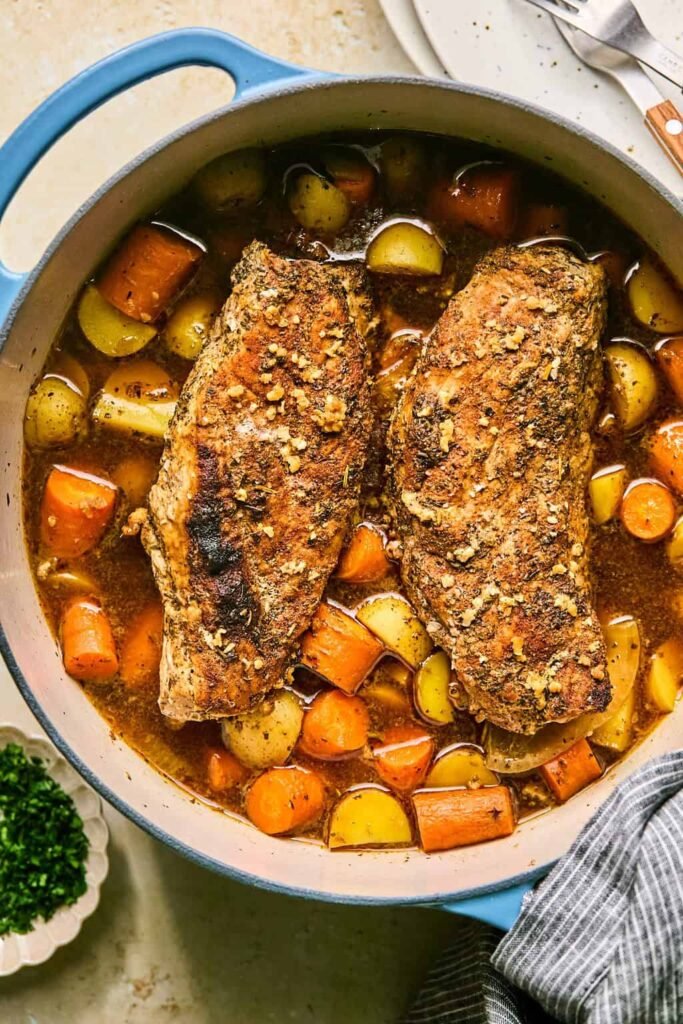
Table of Contents
Why You Will Love This Dutch Oven Pork Tenderloin Dinner:
Incredibly moist and flavorful meat. The secret lies in the two-step cooking method — searing first to lock in flavor, then slow-roasting inside a covered Dutch oven. The trapped steam creates a self-basting environment that keeps every bite succulent and tender.
One pot, zero stress. Nobody enjoys a sink full of dishes after a long day. This recipe gives you a complete, balanced meal using a single pot — meaning minimal cleanup and maximum satisfaction.
A leaner protein option. Surprisingly, pork tenderloin rivals chicken breast when it comes to leanness. It’s a fantastic way to keep meals nutritious while bringing exciting variety to your dinner table.
What You’ll Need
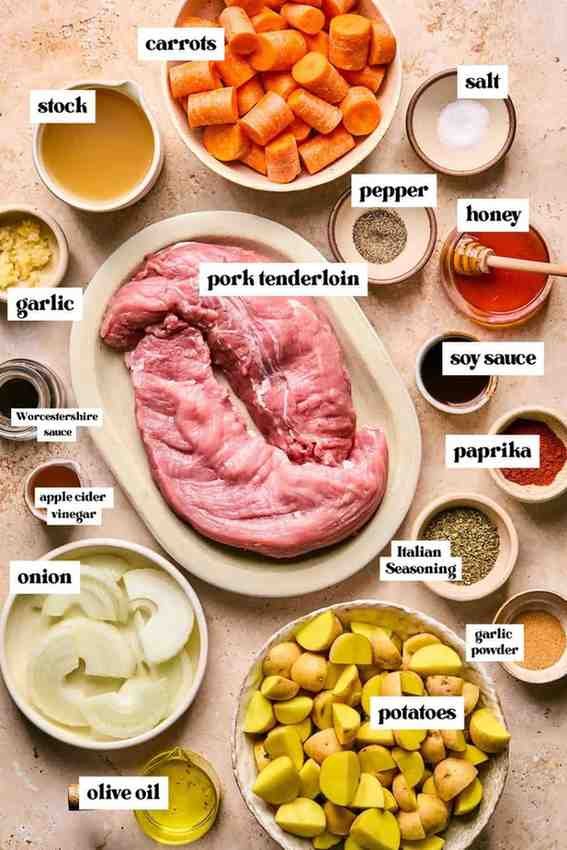
- Pork tenderloin – Always double-check the label! You want tenderloin, not pork loin — they behave very differently in the kitchen.
- Petite or fingerling potatoes – These hold their shape beautifully during cooking and need minimal prep. Red potatoes also work wonderfully.
- Chicken stock – Adds depth to the base. Broth works fine, too, if that’s what you have.
- Spices – A blend of Italian seasoning, paprika, and garlic powder creates a bold, aromatic rub.
- Fresh garlic – Minced and used in the glaze for maximum punch.
- Worcestershire sauce – Brings a deep, umami-rich layer to the dish that’s hard to replicate.
- Soy sauce – Low-sodium is recommended. Tamari is a great gluten-free alternative.
- Apple cider vinegar – Balances the sweetness of the honey. White wine vinegar, red wine vinegar, or even balsamic vinegar can step in as substitutes.
Tenderloin vs. Loin — Know the Difference
These two cuts are often confused, but they are not the same thing:
| Pork Tenderloin | Pork Loin | |
| Shape | Long and slender | Short and wide |
| Best cooking method | Sear + oven roast | Grill or slow-roast |
| Texture | Very tender | Firmer |
| Interchangeable? | ❌ No | ❌ No |
Always verify your cut before cooking — using the wrong one will affect your results significantly.
Step-By-Step Cooking Instructions
Prepare your oven and glaze. Preheat to 400°F. Whisk together all the honey garlic glaze ingredients in a bowl and set aside.
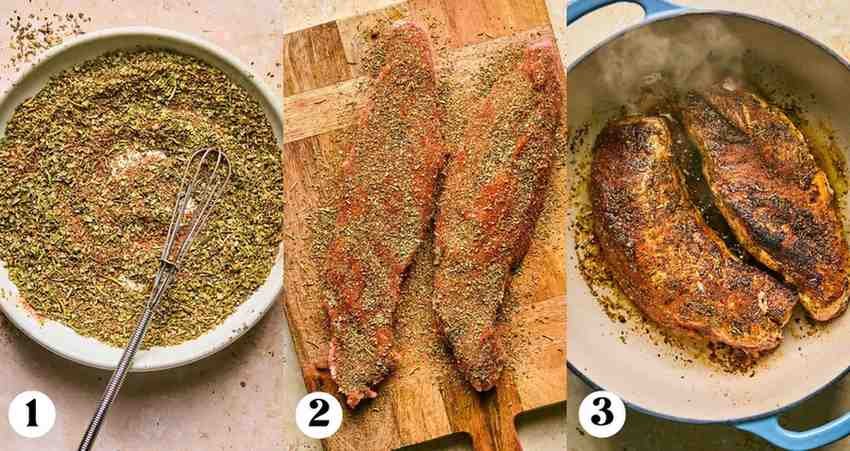
Season the pork. Trim off the silver skin (the whitish membrane on the surface of the meat) using a sharp knife. Combine salt, pepper, Italian seasoning, paprika, and garlic powder, then coat all sides of the pork generously.
Search for color and flavor. Heat olive oil in your Dutch oven over medium-high heat. Add the seasoned pork and sear for 1–2 minutes per side until lightly browned all around.
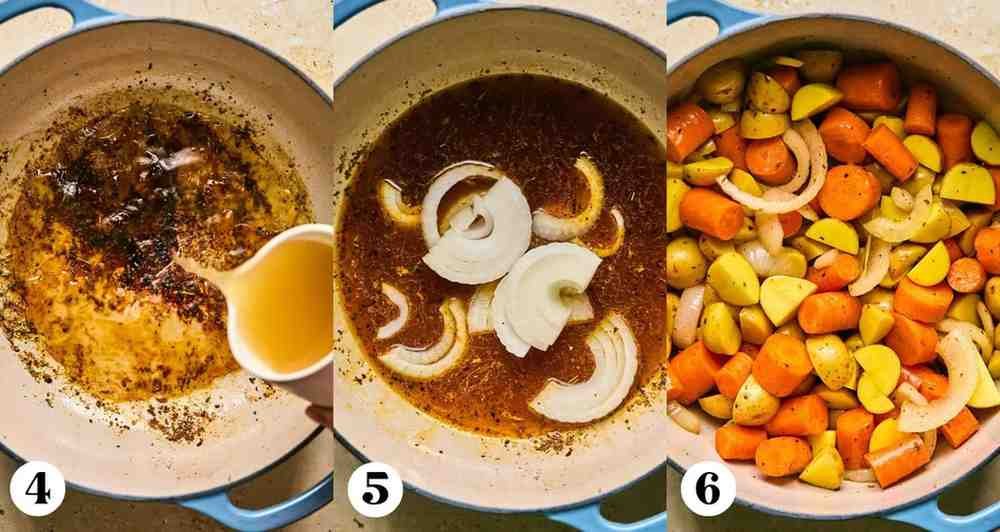
Build the base. Remove the pork and set it aside temporarily. Pour chicken stock into the pot and use a wooden spoon to scrape up any browned bits from the bottom — that’s pure flavor. Add onion and cook for 2–3 minutes, then stir in the carrots and potatoes.
Glaze and roast. Generously brush the honey garlic glaze over the pork, then pour any remaining glaze over the vegetables. Place the pork on top, cover the pot with the lid, and transfer to the oven.
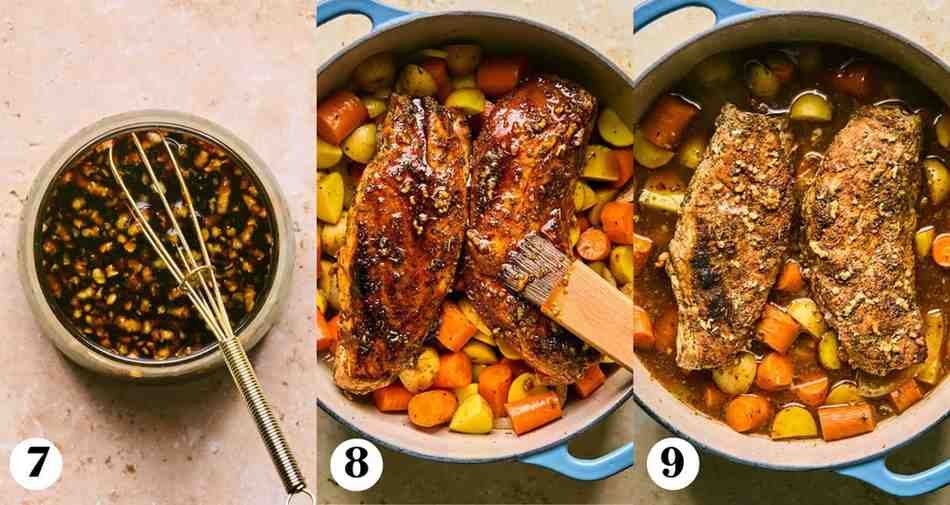
Cook to perfection. Roast for 25–35 minutes, checking with a meat thermometer. Once the pork hits an internal temperature of 145°F, remove it from the pot, tent with foil, and let it rest. Continue cooking the vegetables for another 10 minutes or until fork-tender.
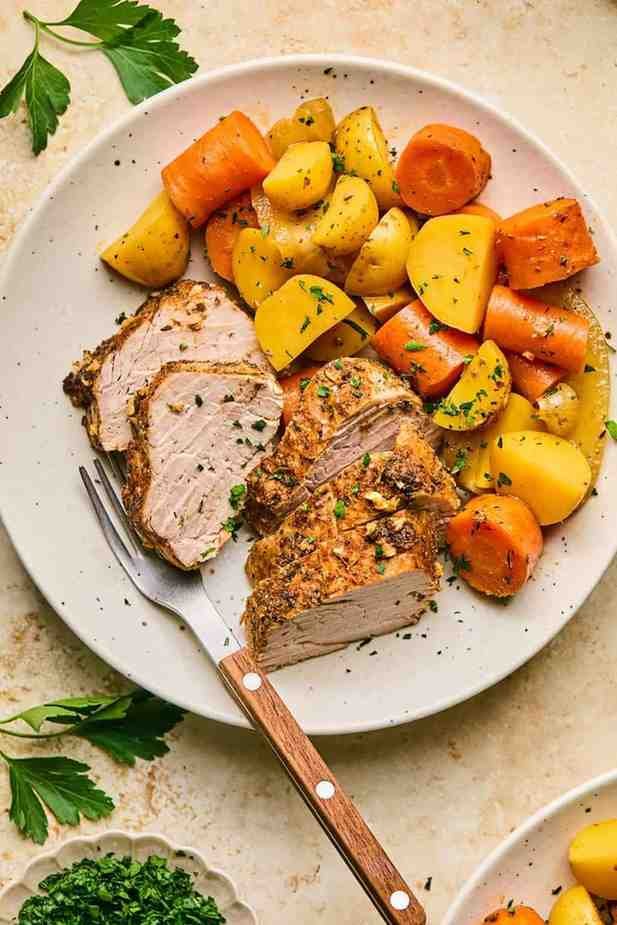
Slice and serve. Cut the pork into medallions and plate alongside the vegetables. Spoon the pan juices generously over everything before serving.

Why a Dutch Oven is the Ideal Tool Here
A Dutch oven is a kitchen powerhouse — cast iron construction means excellent heat retention, and the tight-fitting lid traps steam during roasting. This creates an environment where the pork self-bastes, the vegetables cook evenly, and flavors meld together beautifully. It also goes seamlessly from stovetop to oven, making the sear-to-roast method effortless.
Pro Tips for the Best Results
- Pull the pork at exactly 145°F. Going beyond this temperature is the #1 cause of dry, tough pork tenderloin. Use a reliable instant-read thermometer and don’t skip this step.
- Always remove the silver skin. This tough membrane shrinks during cooking, causing the meat to curl and creating an unpleasant chewy texture. Take two minutes to remove it beforehand — you’ll be glad you did.
- Choose uniform-sized tenderloins. Even thickness means even cooking. When possible, buy from a butcher who can help you select matching pieces. One tenderloin is roughly one pound, and this recipe uses two.
- Pre-cook veggies if you want everything done simultaneously. If you prefer your vegetables done at the same time as the pork rather than needing extra time after, sauté the carrots and potatoes on the stovetop for 5–7 minutes before transferring everything to the oven.
Storage Guidelines
| Storage Method | Duration |
| Refrigerator (airtight container) | 3–4 days |
| Freezer (freezer-safe container) | Up to 3 months |
Always allow the pork and vegetables to cool completely before freezing to preserve texture and flavor.
Frequently Asked Questions
Q: Can I use pork loin instead of pork tenderloin?
No — these are entirely different cuts and are not interchangeable. Pork loin is much thicker and requires a longer, different cooking process. Using loin in this recipe will likely result in undercooked or unevenly cooked meat.
Q: What if I don’t have a Dutch oven?
A deep, oven-safe skillet or braising pan with a tight-fitting lid will work as a substitute. The key is having a vessel that can go from stovetop to oven and has a lid to trap steam during roasting.
Q: How do I know when the pork is done without a thermometer?
While a meat thermometer is strongly recommended for accuracy, you can also check by cutting into the thickest part — the juices should run clear, and the center should no longer be pink. That said, investing in a basic thermometer is worth it for consistently perfect results.
Q: Can I prepare this recipe ahead of time?
Yes! You can season the pork and prep your vegetables the night before and store them separately in the refrigerator. When ready to cook, let the pork come to room temperature for about 20 minutes before searing for more even cooking.
Q: My vegetables aren’t cooked through when the pork is done. What should I do?
This is totally normal. Simply remove the pork to rest under foil and return the pot (uncovered or covered) to the oven for another 10–15 minutes until the vegetables reach your desired tenderness.
Q: Can I substitute the honey in the glaze?
Maple syrup makes an excellent swap and gives a slightly different but equally delicious flavor profile. Brown sugar dissolved in a little warm water can also work in a pinch.

Dutch Oven Honey Garlic Pork Tenderloin
Ingredients
For the Spice Rub:
- 2 lbs Pork tenderloin (2 pieces, ~1 lb each)
- 1 tsp salt
- ½ tsp Black pepper
- 1 tsp Italian seasoning
- 1 tsp Paprika
- 1 tsp Garlic powder
- 2 tbsp Olive oil
For the Honey Garlic Glaze:
- 4 cloves Fresh garlic, minced
- 2 tbsp Soy sauce (low sodium)
- 1 tbsp Worcestershire sauce
- 1 tbsp Apple cider vinegar
For the Vegetables:
- 3 Large carrots, cut into chunks
- 1 Medium onion, diced
- ½ cup Chicken stock
Instructions
- 1. Preheat the oven to 400°F. Whisk together all the honey garlic glaze ingredients in a small bowl and set aside.2. Trim the pork by removing the silver skin using a sharp knife. Mix together salt, pepper, Italian seasoning, paprika, and garlic powder. Rub the spice mixture evenly over all sides of both pork tenderloins.3. Sear the pork by heating olive oil in the dutch oven over medium-high heat. Add the pork and sear for 1–2 minutes per side until lightly browned on all sides. Remove and set aside.4. Deglaze the pot by pouring in the chicken stock and scraping up any browned bits from the bottom using a wooden spoon.5. Cook the aromatics and vegetables by adding the diced onion to the pot and cooking for 2–3 minutes. Stir in the carrots and potatoes and mix to combine.6. Glaze the pork by brushing the honey garlic glaze generously over the seared pork tenderloins. Pour any remaining glaze over the vegetables in the pot.7. Roast covered by placing the glazed pork on top of the vegetables, putting the lid on the dutch oven, and transferring to the preheated oven. Cook for 25–35 minutes, or until the pork reaches an internal temperature of 145°F (63°C).8. Rest the pork by removing it from the pot and tenting loosely with foil. Return the vegetables to the oven uncovered for an additional 10 minutes or until fork-tender.9. Slice and serve the pork into medallions alongside the carrots and potatoes. Spoon the pan juices over everything and enjoy!
Notes
- Always cook pork tenderloin to an internal temperature of 145°F — no more, or it risks drying out.
- Remove the silver skin before cooking to prevent the meat from curling and becoming chewy.
- For vegetables and pork to finish at the same time, sauté carrots and potatoes on the stovetop for 5–7 minutes before transferring to the oven.
- Substitutions: Tamari for gluten-free, maple syrup instead of honey, and balsamic vinegar instead of apple cider vinegar.
- Leftovers keep in the fridge for 3–4 days or in the freezer for up to 3 months.
- Calories: 340 kcal
- Protein: 34g
- Carbohydrates: 28g
- Fat: 9g
- Saturated Fat: 2g
- Sodium: 480mg
- Fiber: 3g
- Sugar: 13g
Leave a Reply