
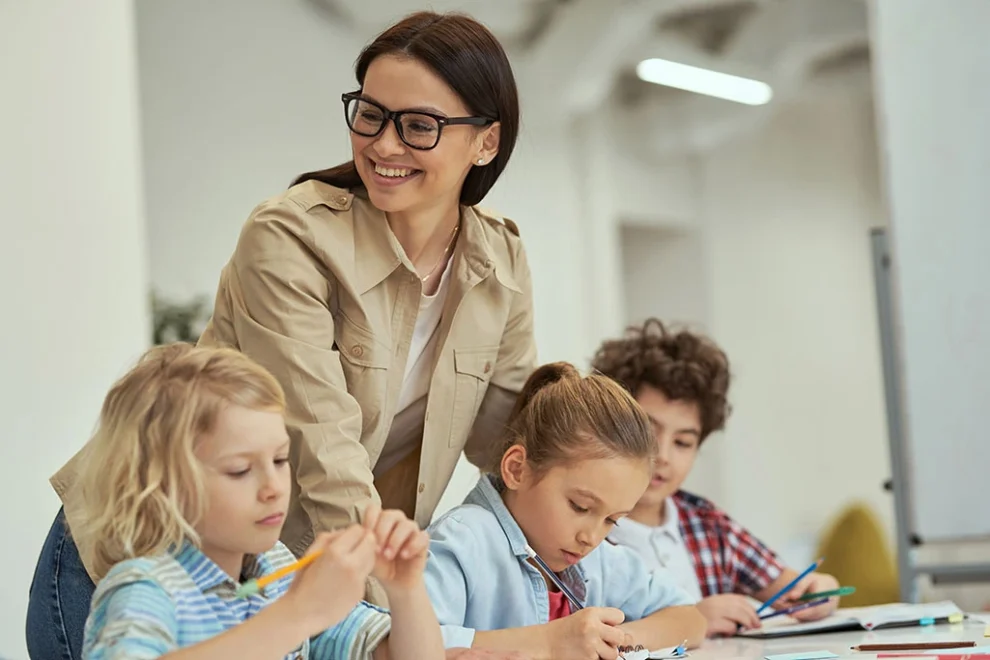
Building relationships with students isn’t about being the “cool” teacher or having all the right answers. It’s about connection—those small, everyday moments where a student feels noticed, heard, and valued. A simple “How are you really doing?” or remembering a student’s interest can change how safe they feel in your classroom.
In today’s fast-paced, high-pressure education system, students don’t just need instruction—they need trust. When students believe their teacher genuinely cares, learning stops feeling like a requirement and starts feeling possible. Confidence grows. Participation increases. Even struggling students begin to show up differently.
This guide explores how to build strong, respectful relationships with students in ways that feel natural, ethical, and sustainable—no matter where or how you teach. Because when relationships come first, everything else follows.
Table of Contents
Why Building Relationships With Students Matters More Than Ever
Students today deal with social disconnection, mental health issues, digital overload, and academic pressure. Relationships become the cornerstone of successful teaching in this situation.
Strong student-teacher relationships lead to:
-
Increased motivation and involvement among students
-
Improved academic outcomes
-
Better classroom behavior
-
Increased student confidence and self-worth
-
Lower dropout and absenteeism rates
Students are more inclined to ask questions, take chances, and persevere through difficulties when they have faith in you.
What Does a Strong Student Relationship Look Like?
A healthy relationship with students is professional, respectful, and supportive, not overly personal or authoritative.
It includes:
-
Mutual respect
-
Clear boundaries
-
Emotional safety
-
Open communication
-
Consistent support
Students don’t need you to be their friend—they need you to be present, fair, and genuinely invested in their growth.
1. Get to Know Students as Individuals
Trust doesn’t start with lesson plans or assessments—it starts when students realize they’re seen as people, not just names on a roster or numbers on a grade sheet. When you take the time to understand who your students are beyond academics, you send a powerful message: you matter here.
This doesn’t require deep personal conversations. Small, consistent efforts make the biggest difference.
Practical ways to build personal connections:
-
Learn and pronounce students’ names correctly—it signals respect immediately
-
Ask about their interests, goals, or hobbies during casual moments
-
Use quick “get-to-know-you” surveys or low-pressure icebreaker activities
-
Reference their interests in lessons, examples, or class discussions
When students feel recognized as individuals, they’re more willing to participate, take risks, and show respect. Connection builds confidence—and confidence fuels learning.
2. Practice Active Listening (Not Just Hearing)
Students can tell in an instant when an adult is distracted, rushed, or simply going through the motions. Active listening isn’t just hearing words—it’s showing that their thoughts and feelings truly matter. When students feel genuinely listened to, it creates a sense of assurance and trust that opens the door to learning and growth.
How to Listen Effectively:
-
Maintain eye contact (when culturally appropriate) to show focus and presence.
-
Avoid interrupting, even if you think you know what they’ll say next. Patience speaks volumes.
-
Reflect what they say, e.g., “It sounds like you’re feeling frustrated about this assignment.” This demonstrates understanding
-
Validate emotions, even if the situation can’t be immediately fixed: “I get that this is tough; anyone would feel that way.”
Remember, listening doesn’t mean approving. It means acknowledging their point of view, letting them feel seen, and creating a safe atmosphere where they can convey themselves without worry of judgement.
3. Create a Safe and Inclusive Learning Environment
Students can’t truly connect if they’re worried about being ashamed, judged, or left out. A classroom that feels safe and welcoming is the foundation for trust and meaningful relationships.
Ways to foster safety and inclusivity:
-
Normalize mistakes as part of learning: Show students that errors are chances to grow, not reasons for resentment. Share your own learning moments to model this.
-
Address bullying or exclusion immediately: Step in consistently and fairly when conflicts arise. Students notice when adults protect them—it builds trust instantly.
-
Use inclusive language and diverse examples: Celebrate diversity in perspectives, cultures, and abilities. This makes every student feel seen and valued.
-
Set clear expectations for respect: Let students know that every voice matters and disrespect has no place. Consistent boundaries create a sense of security.
When students feel safe, respected, and included, relationships flourish naturally—learning becomes a shared journey rather than a solo challenge.
4. Be Consistent and Fair
Nothing breaks trust faster than inconsistency. Students notice—even subconsciously—when rules, expectations, or consequences seem unpredictable.
Pay attention to how you:
-
Enforce rules: Apply them equally to everyone, every time.
-
Grade assignments: Be transparent and consistent in your criteria.
-
Respond to behavior: Address issues calmly and predictably.
-
Treat different students: Avoid favouritism; fairness is visible in small gestures.
When you are consistent, students feel safe and know what to expect. This communicates fairness, which builds credibility. And credibility? It’s the foundation for genuine, lasting student relationships.
5. Show Empathy Without Lowering Standards
Showing empathy isn’t about giving students a free pass—it’s about understanding the challenges they face and encouraging them in overcoming those difficulties. Students respond to teachers who care about both their well-being and their growth.
How to balance empathy and accountability:
-
Acknowledge real challenges: Recognize when students are struggling academically, socially, or emotionally.
-
Offer reasonable flexibility: Allow extensions or alternative approaches when necessary, without compromising learning outcomes.
-
Maintain high standards: Keep expectations clear so students know what success looks like.
-
Guide problem-solving: Help students find solutions and develop perseverance instead of excusing lack of effort.
Students respect you more and are inspired to take on challenges when they perceive that you are aware of their difficulties but still have faith in their abilities.
6. Communicate Clearly and Openly
Strong relationships thrive on communication that feels honest, predictable, and respectful. Students need to understand not just what you expect, but why you expect it. When communication is clear, it reduces confusion, builds trust, and makes students feel secure in the learning environment.
How to communicate effectively:
-
Be honest: Share information transparently and avoid vague instructions.
-
Be predictable: Keep routines, rules, and responses consistent so students know what to expect.
-
Use age-appropriate language: Tailor your explanations so they can easily understand.
-
Be respectful: Speak in a way that validates feelings and opinions, even when giving feedback.
What to explain clearly:
-
Why rules exist: Help students see the purpose behind expectations rather than just enforcing them.
-
How grading works: Transparency in assessment prevents frustration and builds fairness.
-
What success looks like: Give concrete examples so students know the standards they’re aiming for.
When students understand expectations and feel heard, their anxiety decreases, confidence grows, and trust deepens—laying the foundation for a strong, positive relationship.
7. Be Approachable (Without Crossing Boundaries)
Students are more likely to connect with teachers who feel human and relatable, not intimidating figures behind a desk. Being approachable doesn’t mean lowering standards—it means creating an environment where students feel comfortable seeking help, asking questions, or sharing ideas.
Ways to be approachable:
-
Greet students warmly each day; even a simple smile or “Good morning” goes a long way.
-
Use light, professional humor to make lessons enjoyable and reduce stress.
-
Share small, relevant personal stories—like a learning mistake you made—to show them it’s okay to be imperfect.
-
Encourage questions and curiosity without judgement, making it clear that no question is “stupid.”
By upholding professional boundaries, you can keep your classroom courteous, secure, and welcoming at the same time. Students are more likely to trust you and fully interact with you when they sense this balance.
8. Give Meaningful, Constructive Feedback
Feedback is more than just pointing out errors; it’s an opportunity to demonstrate to students your concern for their development. When done carefully, it fosters improvement and increases trust.
Effective feedback should:
-
Focus on growth, not failure: Highlight what can be improved rather than what went wrong.
-
Be specific and actionable: Give clear steps or suggestions that students can actually use.
-
Separate behavior from identity: Critique the work or actions, not the student as a person.
-
Recognize effort as well as outcomes: Celebrate perseverance, creativity, and progress—not just the final grade.
Students feel supported rather than judged when they receive constructive, accurate, and fair feedback, and that support strengthens your bond with them.
9. Encourage Student Voice and Choice
Relationships thrive when students feel that their ideas and opinions truly matter. Giving students a sense of ownership over their learning shows that you respect their viewpoints and value their individuality.
Practical ways to empower students:
-
Invite input on projects or lesson topics – Ask students what they want to explore or how they’d like to approach an assignment.
-
Offer choices in assignments or formats – Let them decide between writing, presenting, or creating a visual project
-
Encourage respectful discussion and debate – Create space for students to share differing viewpoints without fear of judgement.
-
Validate diverse perspectives – Recognize and appreciate unique ideas, experiences, and cultural backgrounds.
When students have a voice, they develop ownership over their learning—and that ownership naturally strengthens trust, involvement, and connection. It’s not just about letting them choose; it’s about showing them that their opinions truly matter.
10. Build Trust Over Time, Not Through Perfection
You don’t need to be flawless to earn students’ trust—what matters most is authenticity, consistency, and reliability. Students connect with teachers who are real, approachable, and willing to show that they’re human too.
If you make a mistake:
-
Acknowledge it openly instead of ignoring it
-
Apologize if needed, showing that accountability matters
-
Model growth by demonstrating how to learn from errors
By doing this, you teach more than content—you show students how to handle challenges with honesty and humility. Over time, these small, consistent actions build a foundation of respect and trust that lasts far longer than any single lesson.
How Long Does It Take to Build Relationships With Students?
There’s no magic formula or fixed timeline. Some students open up right away, while others may take weeks—or even months—to feel comfortable and trust you. The key isn’t speed; it’s how you show up consistently.
What really matters is:
-
Consistency: Regular, predictable actions build trust over time. Small gestures repeated daily often matter more than a single big effort.
-
Genuine effort: Students can tell when you’re being authentic. Taking a real interest in their thoughts, feelings, and successes makes a lasting impression.
-
Patience: Relationships can’t be rushed. Give students space to respond at their own pace, and don’t get discouraged if progress feels slow.
Remember, relationships grow through repeated, positive interactions—whether it’s a quick word of encouragement, listening actively, or celebrating small wins. One grand show of affection might be memorable, but consistent care is what truly builds connection.
Common Challenges (and How to Handle Them)
“What if a student doesn’t respond?”
Not every student will connect immediately. Stay consistent, respectful, and patient.
“How do I manage difficult behaviour?”
Address behaviour calmly and privately when possible, and focus on solutions rather than punishment.
“Can relationships affect authority?”
Healthy relationships increase authority by building mutual respect.
Building Relationships With Students in Online or Hybrid Learning
Connecting with students online can feel tricky, but strong relationships are just as important in a virtual classroom as they are in person. In fact, small, intentional gestures go a long way when students can’t see you face-to-face every day.
Tips for connecting virtually:
-
Use students’ names often – it shows you see them as individuals, even through a screen.
-
Encourage participation – invite students to turn on cameras or contribute in chat, but never force it.
-
Offer virtual office hours – create space for one-on-one conversations and questions.
-
Send personalized messages or feedback – a short note recognizing effort or progress can make students feel valued.
Even simple actions—like remembering a student’s comment from last week—can strengthen trust and engagement in online or hybrid learning environments.
Long-Term Impact of Strong Student Relationships
When students feel genuinely supported and understood by their teachers, the benefits extend far beyond the classroom. They often:
-
Develop higher self-esteem: Feeling seen and respected gives students the confidence to trust themselves and their abilities.
-
Build resilience: Positive connections provide a safe base from which students can face challenges and recover from setbacks.
-
Improve communication skills: Being heard encourages them to express thoughts, ask questions, and engage in meaningful dialogue.
-
Carry a love of learning into adulthood: When learning feels personal and supported, students are more likely to approach future challenges with curiosity rather than fear.
The effects may not always be instantly visible, but strong teacher-student relationships leave lasting impressions—shaping not just academic growth, but character and life trajectories.
Frequently Asked Questions (People Also Ask)
How do educators establish rapport with their pupils?
By being empathetic, dependable, respectful, attentive, and genuinely interested in the lives and education of students.
Why do relationships matter in the classroom?
They enhance behaviour, academic performance, emotional health, and engagement.
Can educators be cordial with pupils?
Yes—professionally cordial, respectful of one another, and with defined boundaries.
How do you gain students’ trust?
By being fair, truthful, and consistent in both your words and deeds.
Final Thoughts: Relationships Are the Heart of Education
Yes, curriculum matters. Yes, technology matters. Yes, assessments matter.
But what truly makes learning stick is the relationships we build along the way.
When students feel seen, respected, and supported, they don’t just absorb information—they gain confidence, resilience, and a sense of belonging. They grow not only as learners but as people.
Building relationships with students isn’t an “extra” part of teaching.
It is teaching.
What effect do those connections have? It extends well beyond the classroom and occasionally lasts a lifetime.




Add Comment