
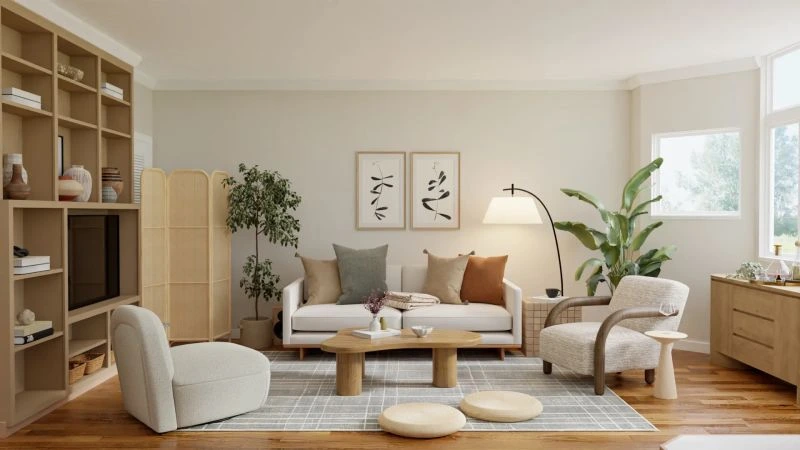
Minimalist lifestyle home organization ideas aren’t about owning nothing. They’re about owning the right things — what you love, use, and value — and letting the rest go. A minimalist home doesn’t feel empty; it feels calm. It feels intentional. It feels like breathing out after holding your breath for too long.
If your house feels crowded, your closets fight back when you open them, your drawers are overflowing, or your mind feels noisy just looking around the room… You are in the right place.
This long-form guide walks you through practical, realistic, human-tested minimalist lifestyle home organization ideas that work in real life — busy households, apartments, family homes, and small spaces. You’ll learn:
-
How to declutter without being overwhelmed
-
How to organize each room step-by-step
-
mindset shifts that stop clutter from coming back
-
smart minimalist storage ideas
-
What to keep vs what to let go
-
How to design a home that feels light, peaceful, and visually quiet
This is your deep dive — stick with it, and by the end, you won’t just have tips; you’ll have a plan that feels doable.
Table of Contents
What Minimalism Really Means (and What It Doesn’t)
Minimalism is often misunderstood.
It doesn’t mean white walls, one chair, and living like a monk.
Minimalism simply means this:
Keep what adds value. Release what doesn’t.
Value can be:
-
emotional value
-
functional value
-
aesthetic value
-
life-improving value
Minimalism does not mean:
-
throwing away things you love
-
living uncomfortably
-
refusing to own beautiful things
-
never buying anything again
It is about intentional ownership. And intentional organization.
When your environment is cluttered, your brain works harder. Decision fatigue increases. You clean constantly, but the house never feels “done.”
Minimalist lifestyle home organization ideas solve that problem at the root.
The Foundation: Decluttering Before Organizing
Organizing clutter is still clutter.
Buying more bins, baskets, and storage boxes doesn’t solve anything if the volume of items is the real issue.
So before we talk systems, we declutter.
The “Four-Box Declutter Method”
Grab four boxes or bags labeled:
-
Keep
-
Donate
-
Trash/Recycle
-
Unsure
Work one small area at a time:
-
one drawer
-
one shelf
-
one corner
Ask yourself:
-
Do I use this regularly?
-
Would I buy this again today?
-
Does this support my current life, not my past life or imaginary future?
-
Do I actually love this?
If it doesn’t meet at least one — let it go.
The 20/20 Rule
If it costs less than $20
And you can replace it within 20 minutes
you don’t need to keep it “just in case.”
This eliminates a massive amount of backup clutter.
One-Touch Rule
Every item you pick up should go to its final home — not onto another surface to be moved again later. This habit alone can transform your home.
Minimalist Lifestyle Home Organization Ideas
This is where strategy meets action. Below is your room-by-room guide to implementing minimalist lifestyle home organization ideas that simplify your entire space, not just isolated corners.
You don’t have to do everything at once. Progress beats perfection.
1. Entryway: Create Calm From the First Step
Your entryway sets the tone. If it is chaotic, your brain absorbs “chaos” before you even take your shoes off.
Keep this area ruthlessly simple:
-
One drop zone for keys
-
one shoe storage solution
-
one hook or rack per family member
-
a small tray for mail — empty daily
-
neutral colors for visual calm
Avoid:
-
piles of coats
-
stacks of packages
-
endless décor pieces
Minimalism thrives on surface space.
2. Living Room: Less Visual Noise, More Breathing Room
The living room is the heart of the home. It’s also where clutter loves to gather — magazines, kids’ toys, remote controls, blankets, and endless décor.
Try this:
-
Remove one decorative item from every surface
-
Limit throw pillows and blankets to what you actually use
-
Store remotes in a single basket
-
Hide cords — cord channels are your friend
-
Choose furniture with built-in storage
Your goal is not to make the room bare.
Your goal is to make it intentional.
Every item should have a purpose.
3. Kitchen: Function Over “Drawer of Doom”
Minimalist kitchens are powerful because the kitchen is where clutter easily becomes chaos.
Step 1: Clear countertops
Countertops are not storage.
Leave out only what is used daily:
-
coffee maker
-
frequently used appliance
-
fruit bowl
Everything else? Put away.
Step 2: Declutter duplicates
Most homes contain multiples of:
-
spatulas
-
serving spoons
-
mismatched containers
-
coffee mugs
Ask: How many do I realistically need?
Step 3: Use zones
Organize by function, not by type.
-
baking zone
-
coffee zone
-
prep and cutting station
-
kids’ snacks area
Zoning reduces mental effort and makes the kitchen flow.
4. Bedroom: Minimalism for Better Sleep
Your bedroom should feel like a sanctuary, not a storage unit.
Visual clutter = mental stimulation = poor sleep quality.
Create a minimalist bedroom by:
-
clearing nightstands
-
removing piles of clothes (chair of doom included)
-
limiting décor above the bed
-
using closed storage rather than open shelving
-
creating a capsule wardrobe
Capsule Wardrobe Minimalist Tip
Keep:
-
what fits
-
what you love
-
What you wear often
Let go of:
-
“just in case I lose weight”
-
“I might wear this someday”
-
uncomfortable clothes you avoid
Fewer clothes = faster mornings = less stress.
5. Bathroom: Small Space Minimalist Magic
Bathrooms collect half-used products like magnets collect paper clips.
Do this sweep:
-
Discard expired skincare and medication
-
Combine half-empty duplicates
-
Reduce product count to what you truly use
Store like with like:
-
skincare
-
haircare
-
daily essentials
Minimize items on countertops — they look cluttered fast.
6. Closet Organization: Where Real Transformation Happens
Minimalist lifestyle home organization ideas shine brightest inside closets.
Key principles:
-
same-style hangers for visual harmony
-
clothes organized by category
-
vertical space fully utilized
-
storage bins labeled clearly
Ask brutally honest questions:
-
Am I keeping this out of guilt?
-
Does this represent the person I am now?
-
Would I wear this tomorrow?
Your closet should inspire you — not overwhelm you.
7. Paper & Digital Clutter: The Hidden Chaos
Clutter is not just physical.
Paper clutter includes:
-
random receipts
-
old bills
-
flyers
-
warranties
-
school papers
Go digital wherever possible.
Create three paper categories:
-
Action items
-
To file
-
Recycle
Then schedule a weekly 10-minute paper reset.
Digital Minimalism Tips:
-
Delete unused apps
-
clear desktop icons
-
Organize files into folders
-
unsubscribe from email clutter
Minimalism is peace on screen, too.
8. Kids & Family Minimalism (Yes, It’s Possible)
Minimalism with kids is not a fantasy. It just looks different.
Focus on:
-
fewer toys, better toys
-
open shelving so kids can put things away
-
toy rotation — not everything out at once
-
teaching “one thing out, one thing away”
Children thrive in calm spaces, just like adults do.
9. Storage Ideas That Support Minimalism (Not Hide Clutter)
Minimalism is not hiding things in prettier containers.
Storage should:
-
simplify access
-
Limit how much you keep
-
fit the space, not overflow it
Great minimalist storage solutions include:
-
under-bed drawers
-
ottomans with storage
-
wall-mounted shelves
-
vertical organizers
-
drawer dividers
Labelling helps everyone maintain the system — not just you.
10. The Mindset Shift: Stop Re-Cluttering Your Home
Decluttering once is easy. Living minimally is a mindset.
Adopt these habits:
-
one-in, one-out rule
-
conscious purchasing (no impulse décor hauls)
-
weekly 15-minute reset
-
seasonal declutter sessions
Ask before buying anything:
-
Where will this live?
-
Do I already own something similar?
-
Am I buying to fill emotional space?
Minimalism is emotional as much as physical.
It’s about releasing obligation, guilt, and “someday.”
Benefits of a Minimalist Lifestyle Home Organization Ideas
When your home simplifies, everything shifts.
You’ll notice:
-
less stress
-
faster cleaning
-
more mental clarity
-
more time for people and hobbies
-
easier decision-making
-
financial savings
Your home becomes a tool that supports your life — not a project you manage full-time.
Common Minimalism Mistakes to Avoid
People new to minimalism often:
-
declutter too fast and regret discarding items
-
Go extreme, then rebound hard
-
Focus only on aesthetics, not function
-
Compare their home to staged social media
-
think it must look a certain way
Minimalism is personal.
Your version is the right version.
Daily Minimalist Habits That Keep Your Home Organized
Organization isn’t a one-day event. It’s daily micro-actions.
Try these:
-
make the bed every morning
-
do a 10-minute evening reset
-
wash dishes before bed
-
empty the car daily
-
never leave a room empty-handed
-
keep flat surfaces clear
Clutter grows silently. Habits prevent it.
Frequently Asked Questions
Is minimalism realistic for families?
Yes. It’s not about living with nothing — it’s about setting limits and systems.
Do I have to get rid of décor?
No. Keep pieces that spark joy and meaning. Remove filler décor.
How long does it take?
Minimalism is ongoing. Start small. Consistency wins.
What if someone I live with loves stuff?
Lead by example. Don’t declutter other people’s belongings. Let your peace speak for itself.
Final Thoughts: Your Home Can Feel Light Again
Minimalist lifestyle home organization ideas are not trends or aesthetics. They’re a reset — for your home, your schedule, your brain.
You deserve a space that:
-
supports your goals
-
feels calm to walk into
-
doesn’t drain your energy
-
reflects who you are today
Start with one drawer.
Then one room.
Then your whole life quietly shifts.
Minimalism isn’t about less for the sake of less.
It’s about more space, more clarity, more living.




Add Comment