
This isn’t your average boxed mac and cheese. By swapping a few key ingredients, you get a deeply satisfying, creamy pasta dish that delivers 25 grams of protein per serving — without sacrificing any of the comfort food magic.
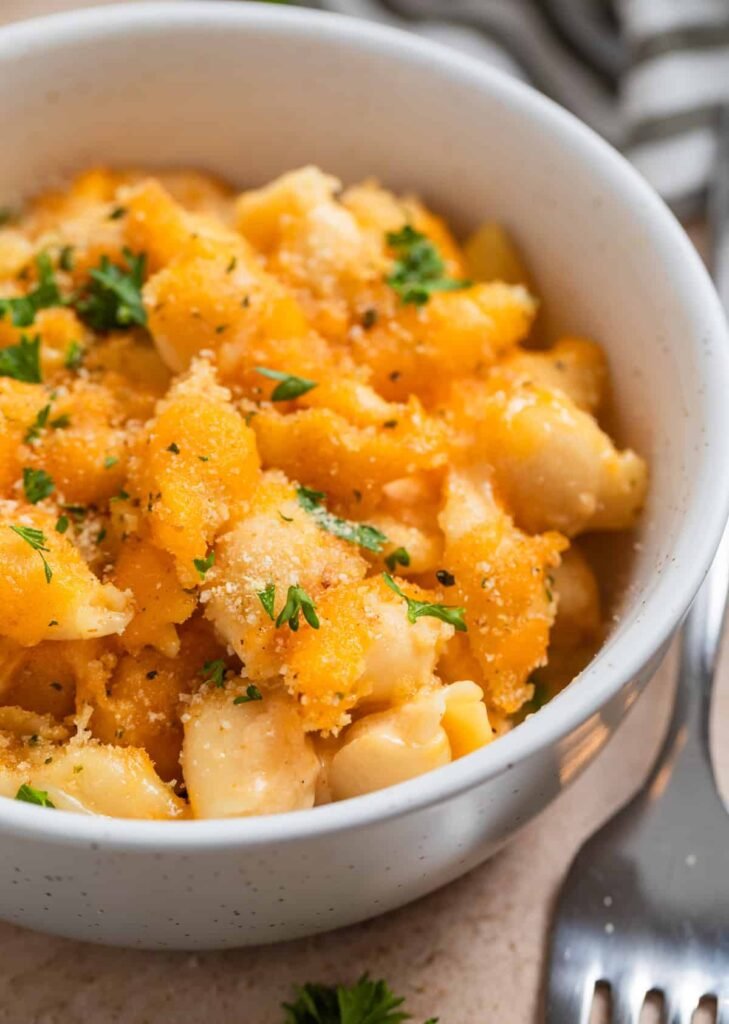
Table of Contents
WHY YOU WILL LOVE THIS PROTEIN MAC AND CHEESE:
- Uses just a handful of straightforward, everyday ingredients.
- A dish the whole family will love, kids included!
- Quick and effortless to pull together.
- Rich, cheesy, and packed with a satisfying tangy flavor.
- A smart way to boost your protein intake and transform a simple side into a well-rounded meal!
WHAT CHEESES ARE HIGHEST IN PROTEIN?
Cheese often gets unfairly labeled as an indulgence to avoid, but it’s actually a surprisingly solid source of protein. Parmesan and Romano lead the pack with the most protein per ounce, and cheddar isn’t far behind, delivering around 7 grams per ounce.
That’s exactly why cheddar is the star of this recipe — it brings bold, familiar flavor while quietly pulling its weight on the nutrition front.
WHY YOU’LL KEEP COMING BACK TO THE RECIPE
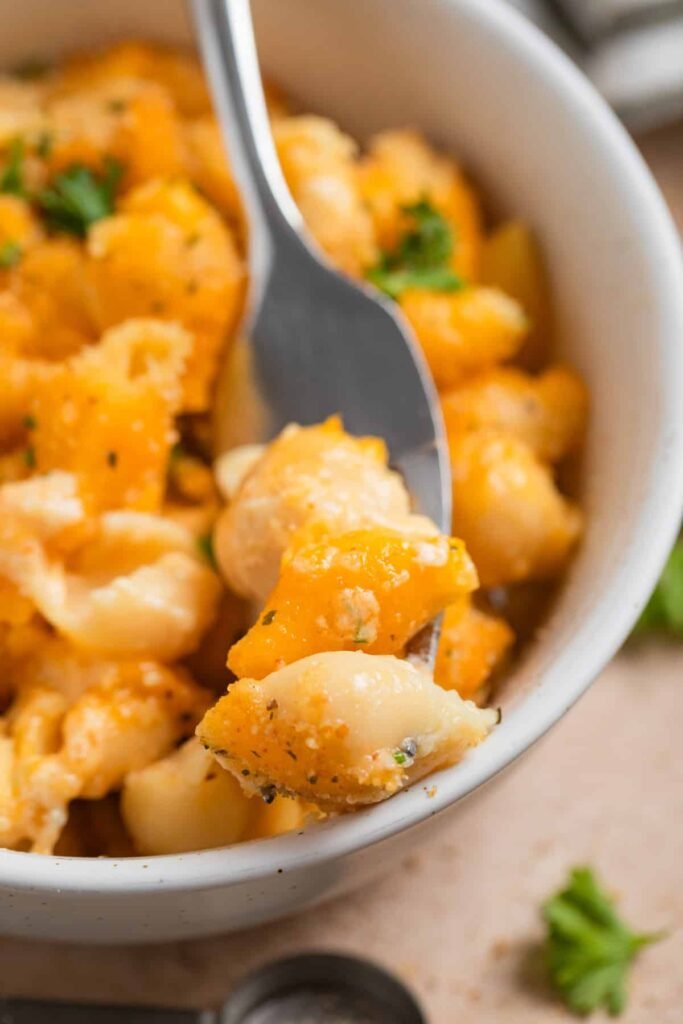
Classic macaroni and cheese is already wonderful, but this version pulls double duty. Greek yogurt lends a subtle tang and a creamy richness to the sauce, while protein-forward pasta turns a typically carb-heavy side dish into something that can genuinely fuel your day. It’s budget-friendly, uses pantry staples, and kids love it just as much as adults do.
THE PROTEIN POWERHOUSE IN THIS DISH
Every ingredient in this recipe was chosen with both flavor and nutrition in mind:
Protein pasta — Chickpea-based pastas like Banza can carry up to 23 grams of protein per serving, roughly double what regular wheat pasta offers. If you prefer something that cooks more predictably and aren’t avoiding gluten, Barilla’s protein pasta is a reliable alternative that holds its shape beautifully.
Greek yogurt — A single serving packs anywhere from 12 to 17 grams of protein. Stick with full-fat for the best texture — lower-fat versions are more prone to curdling when heated, which can ruin the sauce.
Cheddar cheese — Beyond its sharp, satisfying flavor, cheddar brings about 7 grams of protein per ounce. It melts smoothly and gives the sauce that classic pull. For even more protein, Parmesan and Romano actually rank highest among common cheeses by protein per ounce.
Whole milk — Contributes about 8 grams of protein per cup and helps achieve the right sauce consistency.
STEP-BY-STEP INSTRUCTIONS
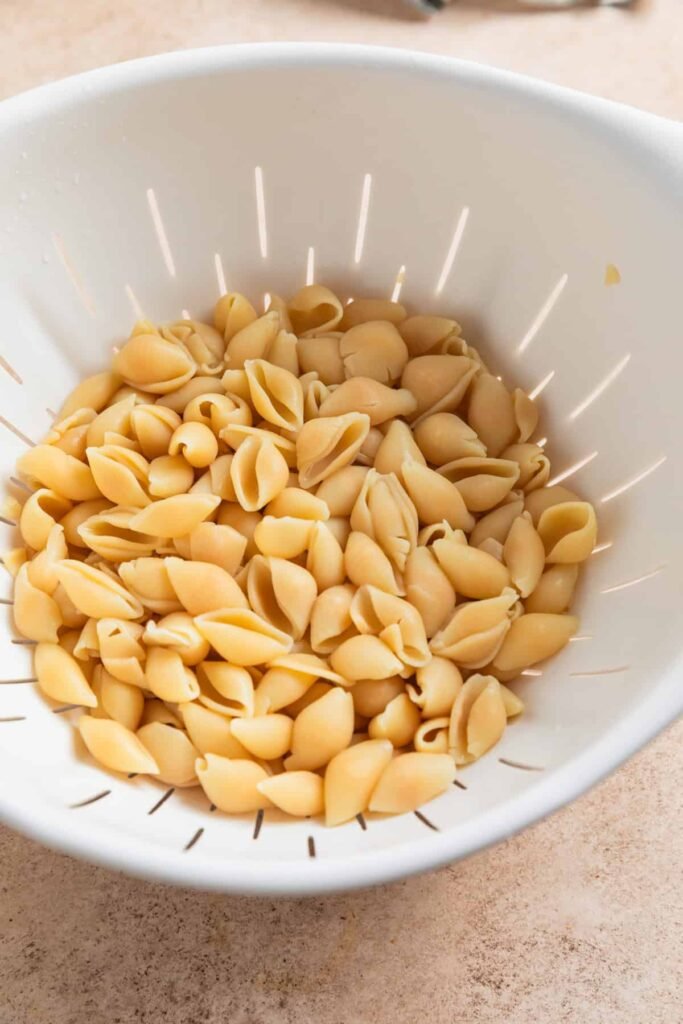
Cook the pasta. Bring a pot of salted water to a boil and cook your pasta until just al dente. If you’re using chickpea pasta, watch it closely — it can go from perfectly cooked to mushy faster than wheat pasta. Drain and set aside.
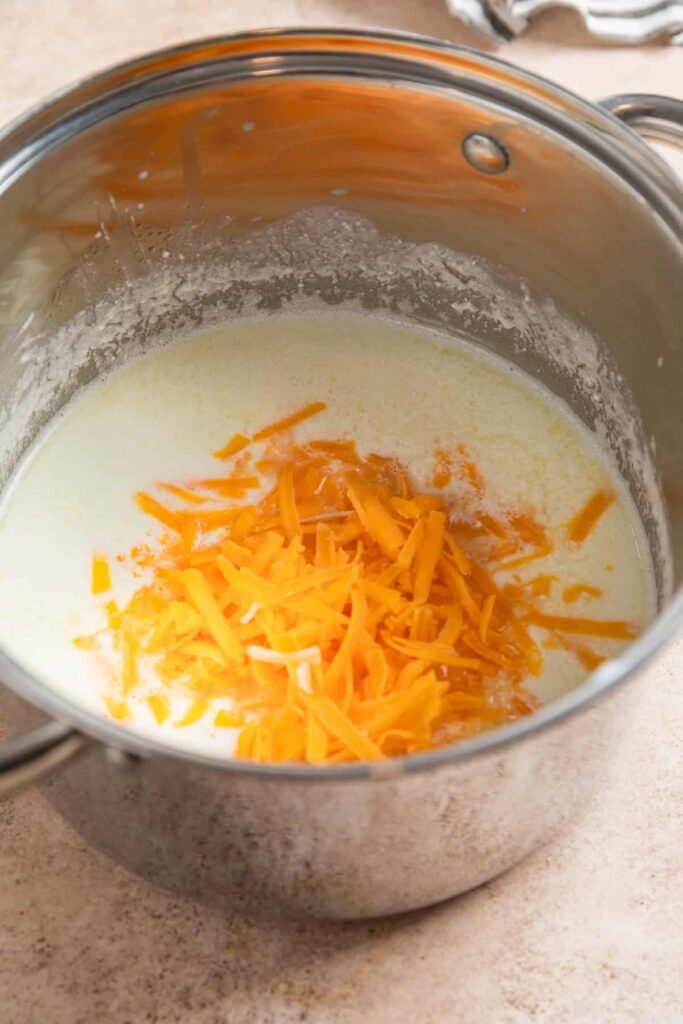
Build the sauce. In a saucepan over low heat, whisk together the Greek yogurt, butter, and milk until smooth and combined. Add one cup of freshly shredded cheddar and stir until melted. Add another half cup and repeat. Season with salt, pepper, and any other spices you like (garlic powder and a pinch of paprika work beautifully).
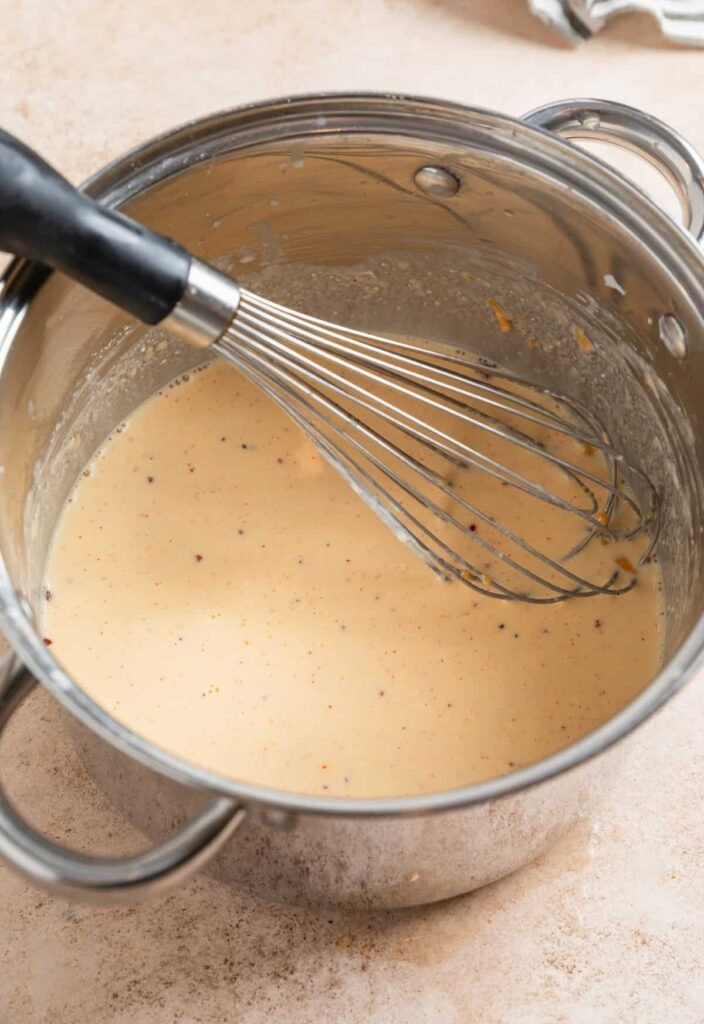
Adjust and smooth. Continue whisking the sauce until it’s velvety and uniform. Taste and adjust seasoning.
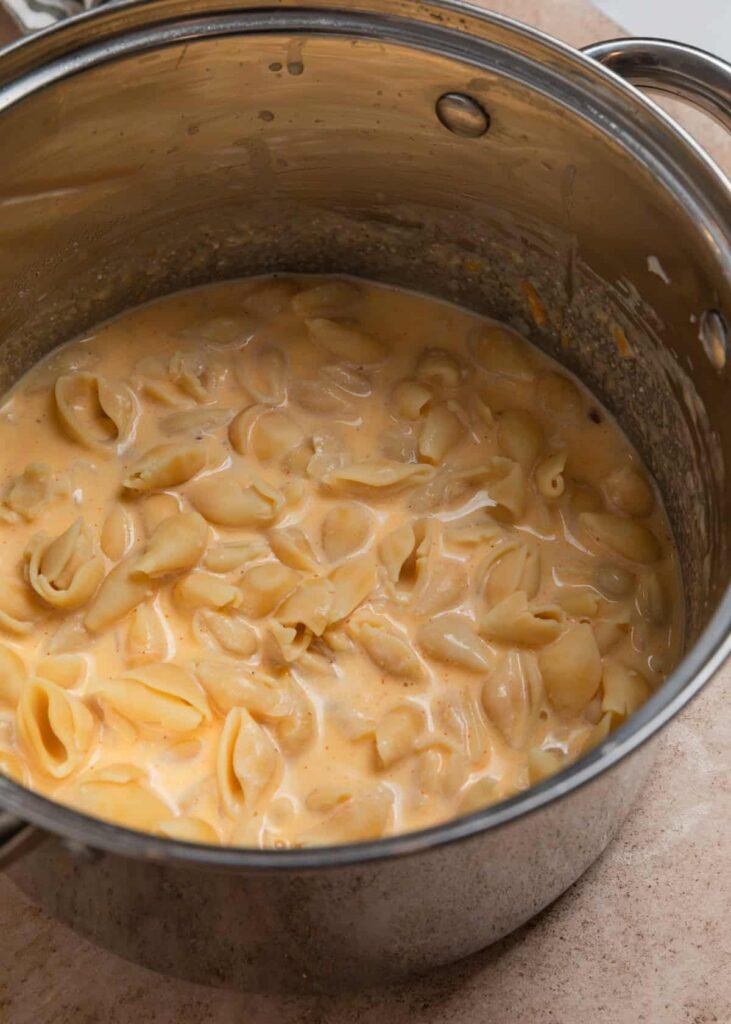
Combine. Toss the cooked pasta into the sauce and stir to coat every piece evenly. At this point, you can serve it straight from the pot or move on to baking.
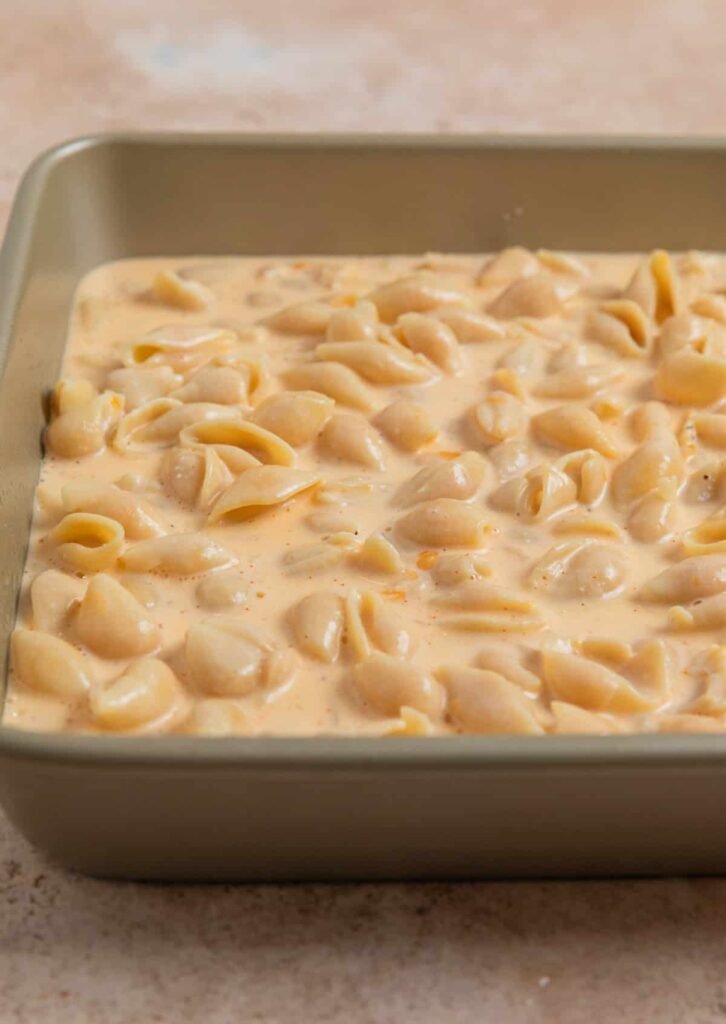
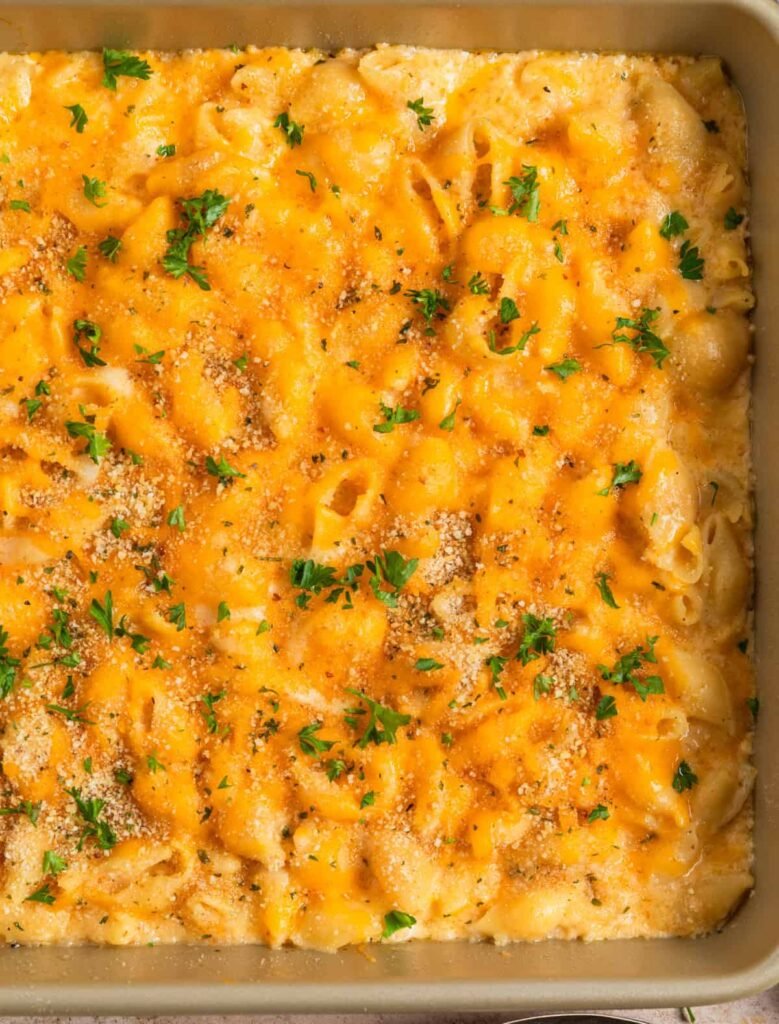
Optional bake prep. Lightly grease an 8×8 or 9×9-inch baking dish. Transfer the mac and cheese into the dish and spread it into an even layer. Top with the remaining shredded cheese and breadcrumbs if you’d like a crunchy topping.
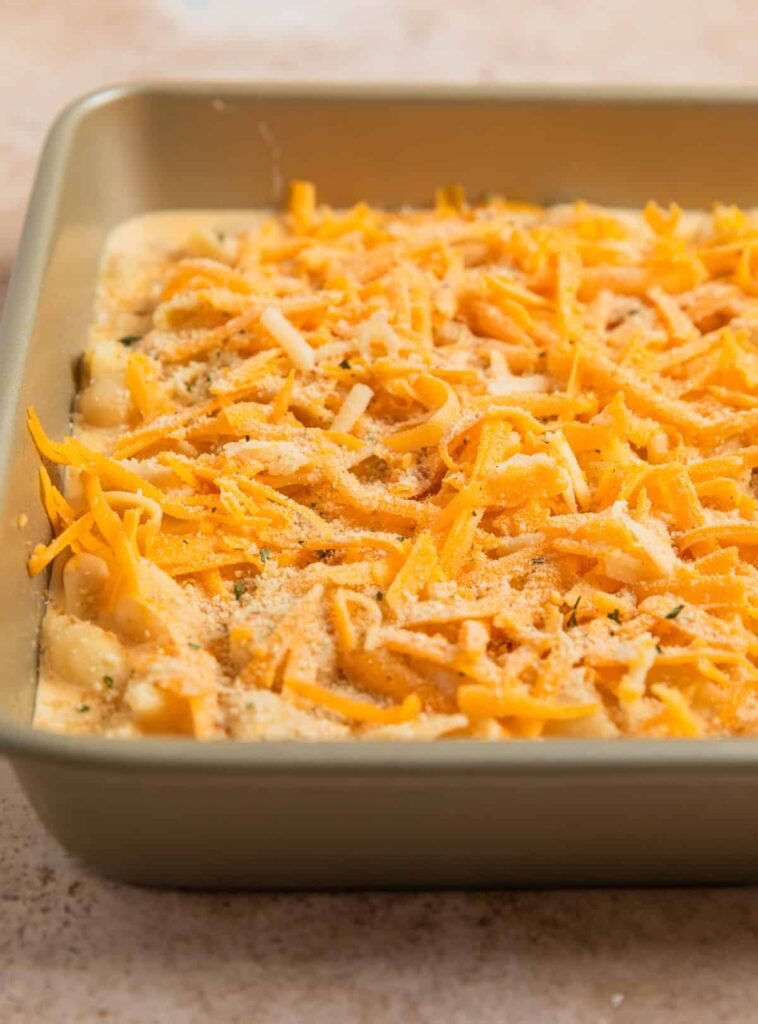
Bake. Cook at 375°F for 15–20 minutes, until the top is golden and bubbly. Let it rest for about 10 minutes before serving so the sauce can settle.
TIPS FOR THE BEST RESULTS
- Always shred your cheese from a block. Pre-shredded cheese contains anti-caking agents that interfere with melting and can make your sauce grainy.
- Full-fat dairy is non-negotiable for a stable, creamy sauce. The extra fat prevents the Greek yogurt from breaking when heated.
- Slightly undercook the noodles if you’re baking — they’ll continue to cook in the oven and absorb some of the sauce.
- Pasta shape matters more than you’d think. Shells, cavatappi, or elbow macaroni all trap cheese in their curves and cavities, giving you more flavor in every bite.
WHAT TO SERVE WITH THIS RECIPE:
This protein mac and cheese is filling enough to stand alone as a complete meal, but it also pairs wonderfully with a variety of sides and mains if you want to go all out:
- Slow-cooked pulled BBQ chicken makes an unbeatable pairing — toss it in the slow cooker and let it do its thing while your mac and cheese comes together.
- Burgers and mac and cheese are a match made in comfort food heaven. Sun-dried tomato and feta turkey burgers or smoky cilantro lime black bean burgers both complement it beautifully.
- Flaky, herb-buttered Instant Pot salmon is a lighter yet equally satisfying option to serve on the side.
- Grilled chicken or a juicy steak alongside roasted maple balsamic Brussels sprouts balances the richness of the cheese sauce with something earthy and slightly sweet.
- Crispy cornmeal-crusted chicken tenders are a crowd-pleaser that turns this dish into the ultimate comfort food spread — a guaranteed hit with kids and adults alike.
Frequently Asked Questions
Can I make this recipe gluten-free?
Yes. Use a chickpea-based pasta like Banza, which is naturally gluten-free and also high in protein. Just note that Barilla’s protein pasta does contain gluten, so opt for the chickpea variety if you have a sensitivity or intolerance.
Can I substitute the Greek yogurt with something else?
Greek yogurt is a key ingredient both for protein and for creating the creamy sauce texture. In a pinch, you could try sour cream (full-fat), but it will slightly change the flavor. Cream cheese blended with a splash of milk can also work. Plant-based Greek-style yogurts may work, though the sauce may be slightly less stable.
Why did my sauce turn grainy or curdle?
This usually happens when low-fat or nonfat dairy is used, or when the heat is too high. Always use full-fat Greek yogurt and whole milk, and keep the heat at low to medium-low throughout the sauce-making process. Adding the cheese gradually — rather than all at once — also helps keep the sauce smooth.
Can I make this ahead of time?
Absolutely. You can assemble the mac and cheese up to the baking step, cover it tightly, and refrigerate it for up to 24 hours. Add a splash of milk before baking to loosen the sauce, and add about 5 extra minutes to the baking time since it’ll be going in cold.
How do I store and reheat leftovers?
Store cooled leftovers in an airtight container in the fridge for up to 4 days. When reheating, add a small splash of milk and warm it on the stovetop over low heat, stirring frequently, or microwave it in 30-second intervals with a bit of milk to restore creaminess.
Can I freeze protein mac and cheese?
You can, but dairy-based sauces sometimes separate after freezing and thawing. If you do freeze it, let it cool completely first, then freeze in individual portions. Thaw overnight in the refrigerator and reheat slowly with a little added milk, stirring well to bring the sauce back together.
PROTEIN MAC AND CHEESE
Ingredients
- 8 oz Protein pasta Banza chickpea or Barilla Protein+
- 1 cup Greek yogurt Full-fat recommended
- 1 tbsp Butter Unsalted
- ½ cup Whole milk
- 1 ½ cups Sharp cheddar cheese Freshly shredded, divided
- ½ tsp Garlic powder
- ¼ tsp Paprika
- ¼ cup Breadcrumbs Optional, for baking topping
Instructions
- 1. Bring a large pot of salted water to a boil. Cook protein pasta according to package directions until just al dente. Drain and set aside. Do not overcook — especially if using chickpea pasta.2. In a saucepan over low heat, whisk together the Greek yogurt, butter, and whole milk until smooth and well combined.3. Add 1 cup of shredded cheddar cheese and stir until fully melted. Add another ½ cup and stir again. Slightly increase heat to medium-low if needed to help the cheese melt.4. StrIn garlic powder, paprika, salt, and black pepper. Whisk until the sauce is smooth and creamy. Taste and adjust seasoning as needed.5. Add the drained pasta to the cheese sauce and toss until every piece is well coated. Serve immediately, or continue to the next step for a baked version.6. (Optional — Baked Version) Preheat oven to 375°F. Grease an 8×8 or 9×9 inch baking dish. Pour in the mac and cheese and spread evenly. Top with remaining cheese and breadcrumbs if desired.7. Bake for 15–20 minutes until the top is golden and bubbly. Rest for 10 minutes before serving.
Notes
- Always use freshly shredded cheese from a block — pre-shredded cheese contains anti-caking agents that prevent smooth melting.
- Full-fat Greek yogurt and whole milk are strongly recommended. Low-fat versions are more likely to curdle when heated.
- Slightly undercook the pasta if baking, as it will continue to cook in the oven.
- Pasta shapes with pockets or ridges — like shells or cavatappi — hold more sauce and give you more flavor in every bite.
- To make ahead, assemble through Step 5, refrigerate covered for up to 24 hours, and add a splash of milk before baking.
- Calories: ~420 kcal
- Protein: 25g
- Carbohydrates: 38g
- Fat: 16g
- Fiber: 4g
- Calcium: ~280mg
[…] importantly, homemade pumpkin mac and cheese tastes like something made for a cozy family dinner rather than something pulled straight from a […]