
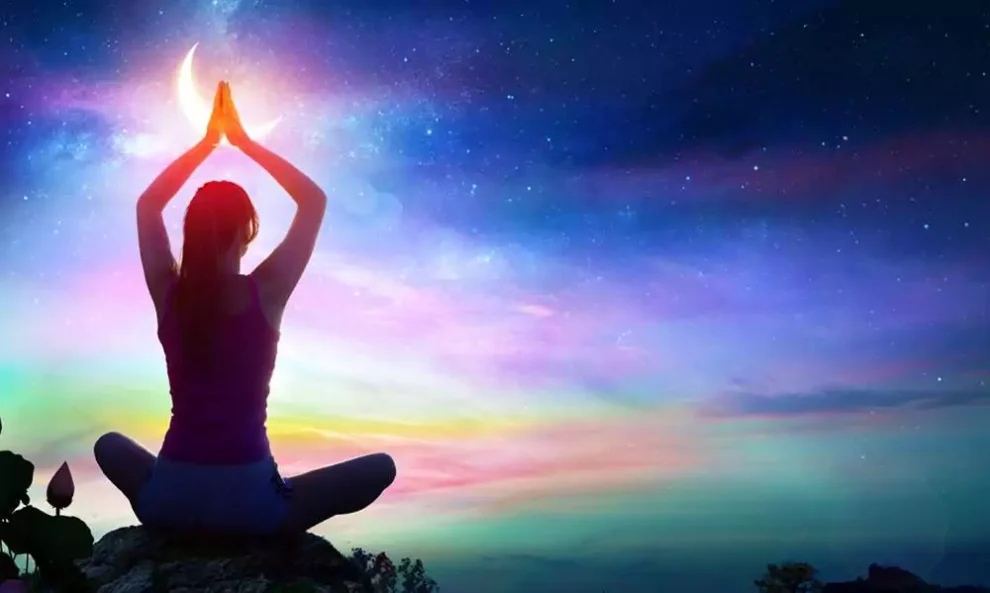
What does it mean to be spiritual not religious is a question people usually ask quietly—often after life shakes them a little. Sometimes after a loss. Sometimes after disappointment. Sometimes after realizing that the beliefs they were handed no longer fit the person they’ve become.
It’s not a rejection of faith. And it’s not rebellion for the sake of rebellion. For most people, it’s simply an honest pause followed by a deeper search.
Table of Contents
What Does It Mean to Be Spiritual Not Religious?
At a very human level, what does it mean to be spiritual not religious comes down to this: believing there is more to life than routines, roles, and rules—without needing a religious label to explain it.
People who describe themselves this way usually feel a connection to something deeper. That “something” isn’t always easy to name. It could be a sense of purpose. A feeling of unity. A quiet inner knowing. Or simply the belief that life has meaning beyond survival and success.
They don’t necessarily follow the scriptures. They don’t attend religious services out of obligation. Instead, their beliefs are shaped by lived experience, reflection, and inner awareness.
Spirituality, for them, is personal. Private. And often evolving.
Why Spirituality Feels Different From Religion
Religion tends to be external. It has structure, traditions, leaders, and shared belief systems. For many people, that structure is comforting. For others, it eventually feels restrictive.
Spirituality moves inward.
Instead of asking, What am I supposed to believe?
It asks, What feels true to me right now?
Instead of focusing on obedience, it focuses on awareness. Instead of certainty, it allows curiosity. Doubt isn’t seen as failure—it’s part of growth.
That difference alone explains why so many people drift away from religion while still holding onto spirituality.
Why So Many People Say “I’m Spiritual, Not Religious”
This shift didn’t happen overnight.
Many people grew up religious. They followed the rules. They believed what they were taught. But over time, cracks appeared—questions without satisfying answers, experiences that didn’t fit doctrine, or values that felt out of sync with rigid teachings.
Others never felt at home in religion at all, yet still sensed there was something meaningful beneath everyday life.
Spirituality gives them room to breathe.
It allows people to:
-
Question without guilt
-
Believe without fear
-
Grow without punishment
And in a world that feels increasingly complex, that flexibility matters.
What Spiritual Belief Often Looks Like Without Religion
There’s no single belief system here, which is why it’s hard to define neatly.
Some people believe in a higher power but don’t define it. Others speak of the universe, energy, or consciousness. Some don’t focus on belief at all—they focus on awareness, kindness, and how they live.
Common threads still appear:
-
A sense that life is connected
-
An emphasis on inner truth
-
A belief that growth comes from self-understanding
For many, spirituality isn’t about answers. It’s about paying attention.
How Spirituality Shows Up in Daily Life
Being spiritual, not religiou,s isn’t about dramatic rituals. It shows up quietly.
In moments of stillness.
In how someone listens instead of reacting.
In choosing compassion when it would be easier not to.
Some people meditate. Others walk in nature. Some journal. Some just sit with their thoughts without trying to fix them.
There’s no checklist. No right way. The intention matters more than the method.
Is Being Spiritual Not Religious Anti-Faith?
No—and this is often misunderstood.
Many spiritual people still respect religion. Some even borrow wisdom from multiple traditions. They simply don’t want one institution deciding what their faith should look like.
It’s less about rejection and more about responsibility—taking ownership of one’s inner life instead of outsourcing it.
The Upside—and the Tension—of This Path
Freedom is the biggest gift of being spiritual, not religious. But freedom comes with uncertainty.
There’s no roadmap. No authority to lean on when things feel confusing. That can feel unsettling, especially during difficult seasons of life.
Still, many people prefer honest uncertainty over borrowed certainty.
Spirituality asks more of the individual—but it also gives more back.
Do You Need to Believe in God to Be Spiritual?
Not necessarily.
Some people do. Some don’t. Some redefine what “God” even means. Others find spirituality in presence, ethics, connection, or wonder.
Spirituality doesn’t demand belief. It invites experience.
Final Thoughts: What Does It Mean to Be Spiritual Not Religious Today?
So, what does it mean to be spiritual not religious in today’s world?
It means choosing meaning over labels.
Curiosity over certainty.
Connection over conformity.
It means trusting that your inner life matters—even if it doesn’t fit into a traditional box.
For many people, spirituality isn’t about finding the truth.
It’s about living closer to it.




Add Comment