
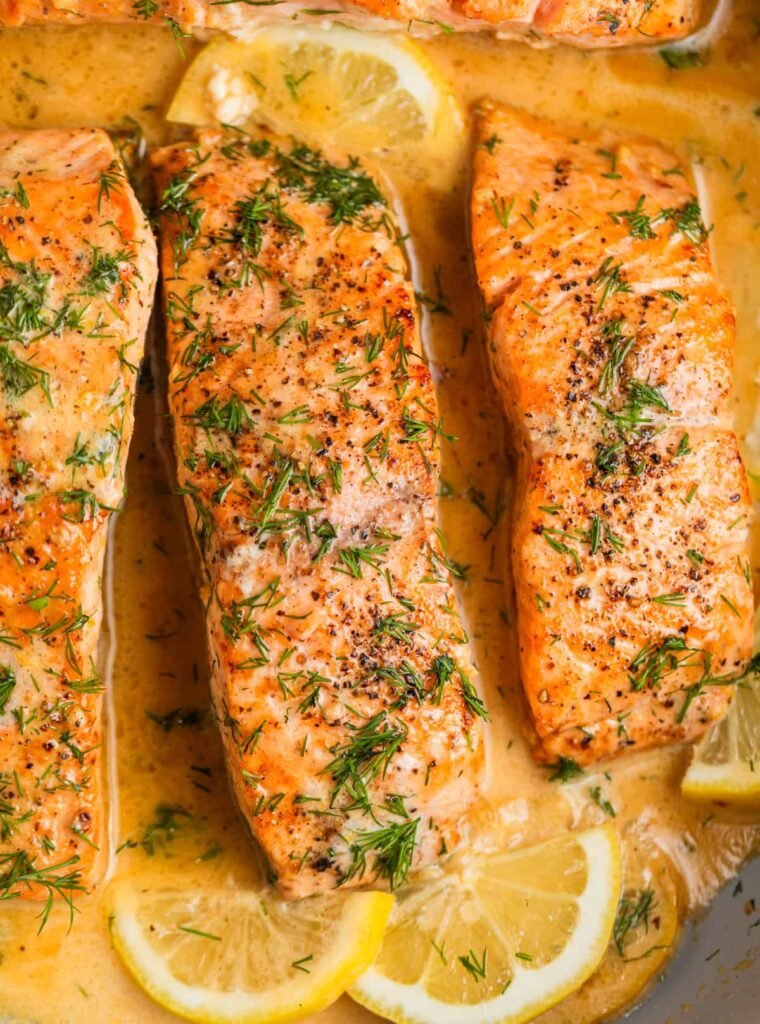
When you need a dinner that feels special but takes almost no time, 10-Minute Pan-Seared Lemon Dill Salmon is the kind of recipe worth keeping close. It has a beautifully golden, lightly crisped exterior, tender flaky salmon inside, and a bright lemon-dill flavor that makes every bite feel fresh and satisfying.
The best part is that you don’t need a complicated marinade or a long list of ingredients. A hot skillet, fresh salmon, lemon, dill, garlic, and a few pantry staples are enough to turn an ordinary weeknight into a delicious seafood dinner.
This quick salmon recipe is especially useful for busy evenings when you want something nutritious without spending an hour in the kitchen. Serve it with roasted vegetables, rice, potatoes, or a crisp salad, and you have a complete meal with very little effort.
Table of Contents
Why You’ll Love This 10-Minute Pan-Seared Lemon Dill Salmon
- Ready in About 10 Minutes: This recipe is perfect when dinner needs to happen quickly. The salmon cooks fast while still developing a deliciously browned exterior.
- Bright, Fresh Flavor: Lemon and fresh dill give the salmon a clean, refreshing flavor that keeps the dish from feeling heavy or overly rich.
- Golden Outside, Tender Inside: A properly heated skillet helps create a beautifully seared surface while keeping the center moist, flaky, and delicate.
- Simple Ingredients, Big Flavor: You don’t need an elaborate sauce or marinade. A handful of everyday ingredients creates a restaurant-style result at home.
- Perfect for Busy Weeknights: Fast, versatile, and satisfying, this salmon pairs easily with vegetables, rice, potatoes, pasta, or a simple green salad.
What Makes Homemade Better?
Making pan-seared salmon at home gives you much more control over the final result. You can choose fresh salmon fillets, adjust the amount of lemon and dill to your taste, and cook the fish exactly how you like it.
The skillet also gives the salmon something you don’t always get from other cooking methods: a flavorful golden crust. When the fish meets a properly heated pan, the outside develops a lightly caramelized texture while the inside stays juicy.
Homemade also means you can serve the salmon immediately. That matters with seafood because freshly cooked salmon has a wonderful tenderness and aroma that can get lost when it sits for too long.
Ingredients You’ll Need
- Salmon fillets – Choose fresh, evenly sized fillets so they cook at roughly the same rate. Skin-on salmon works particularly well for pan-searing because the skin can become wonderfully crisp.
- Fresh lemon – Lemon juice brings brightness to the salmon, while a little zest can add even more citrus aroma without making the dish overly sour.
- Fresh dill – Dill gives the salmon its signature fresh, slightly grassy flavor. Fresh dill is especially good here because it complements seafood beautifully.
- Garlic – Fresh garlic adds savory depth and works naturally with the lemon and dill.
- Olive oil – A little olive oil helps the salmon brown nicely in the skillet while adding subtle richness.
- Butter – Butter creates a silky finish and helps carry the garlic, lemon, and dill flavors across the surface of the fish.
- Salt – Salt enhances the natural flavor of the salmon and helps bring the other ingredients together.
- Black pepper – Freshly ground black pepper adds a gentle warmth and balances the bright lemon.
Step-By-Step Direction
Step 1: Prepare the Salmon
Pat the salmon fillets thoroughly dry with paper towels. Removing excess moisture is important because dry salmon sears much better than wet salmon.
Season both sides with salt and freshly ground black pepper.
Step 2: Heat the Skillet
Place a large skillet over medium-high heat and allow it to become properly hot before adding the oil.
Add the olive oil and swirl it around the pan. The oil should look fluid and shimmering but should not be smoking heavily.
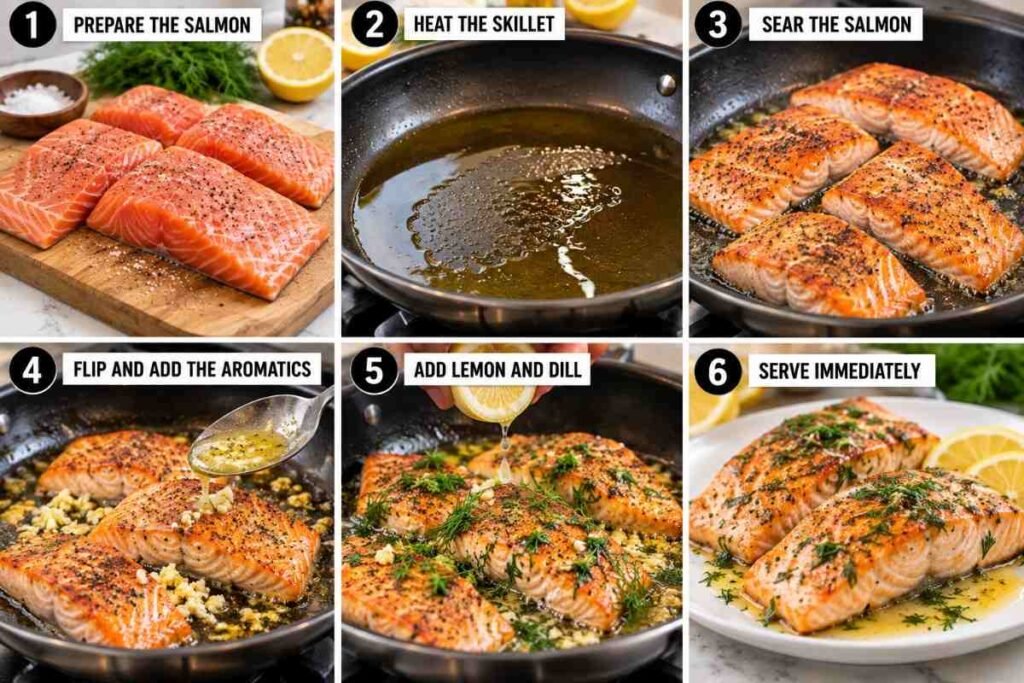
Step 3: Sear the Salmon
Carefully place the salmon into the hot skillet, presentation side down first. Leave enough space between the fillets so they sear rather than steam.
Cook without constantly moving the fish. Letting it sit against the hot surface is what helps create that attractive golden crust.
Step 4: Flip and Add the Aromatics
Once the first side is golden and releases easily from the skillet, carefully flip the salmon.
Add the butter and garlic to the pan. As the butter melts, spoon some of the fragrant mixture over the salmon.
Step 5: Add Lemon and Dill
Squeeze fresh lemon juice over the salmon and scatter fresh dill around the fillets.
Continue cooking briefly until the salmon is cooked through and flakes easily with a fork. Avoid overcooking, as salmon can quickly become dry.
Step 6: Serve Immediately
Transfer the salmon to serving plates and spoon a little of the buttery lemon pan juices over the top.
Finish with additional fresh dill and a small squeeze of lemon if desired.
Cooking note: Salmon thickness varies, so cooking time can change slightly. Rather than relying only on the clock, check the thickest part of the fillet for doneness.
Serving Suggestions
- With roasted vegetables – Pair the salmon with roasted broccoli, asparagus, zucchini, or green beans for an easy balanced dinner.
- Over rice – Spoon the lemony pan juices over fluffy white rice, brown rice, or your favorite grain.
- With roasted potatoes – Crispy potatoes provide a wonderful contrast to the tender salmon.
- Alongside a fresh salad – A simple cucumber, tomato, or mixed-green salad keeps the meal light and refreshing.
- With pasta – Toss your favorite pasta with a little lemon, butter, herbs, and the salmon pan juices for a satisfying dinner.
- With steamed vegetables – Steamed broccoli or green beans are excellent when you want a quick meal without extra preparation.
Tips for the Best Results
- Dry the Salmon Before Cooking
Moisture is the enemy of a good sear. Patting the fillets dry helps them develop a deeper golden crust instead of releasing water into the skillet. - Preheat the Skillet Properly
Give the pan time to heat before adding the salmon. Starting with a properly heated skillet helps prevent sticking and encourages better browning. - Don’t Move the Fish Too Soon
Let the salmon sear undisturbed. Trying to flip it before the crust has formed can cause the fish to stick or break apart. - Use Fresh Lemon and Dill
Fresh ingredients make a noticeable difference. Fresh lemon provides sharper brightness, while fresh dill gives the salmon a cleaner and more aromatic finish. - Avoid Overcooking
Salmon should remain moist and tender. Watch the thickest part of the fillet and remove it from the heat as soon as it reaches your preferred level of doneness.
Storage Tips
Refrigerator
Allow leftover salmon to cool before transferring it to an airtight container. Refrigerate promptly and enjoy it within 3 to 4 days for the best quality.
Keep the salmon separate from fresh garnishes when possible. Add fresh dill and lemon after reheating for a brighter flavor.
Freezer
For longer storage, place cooled salmon in a freezer-safe airtight container or wrap it tightly before freezing. Properly packaged cooked salmon can generally be kept frozen for up to 2–3 months for best quality.
Thaw frozen salmon in the refrigerator rather than leaving it at room temperature.
Reheating
For the best texture, reheat the salmon gently rather than using very high heat. A covered skillet over low heat with a small splash of water can help prevent the fish from drying out.
You can also reheat it in the microwave in short intervals, preferably covered loosely to help retain moisture. Avoid repeatedly reheating the salmon, as this can make it tough and dry.
Final Thoughts
10-Minute Pan-Seared Lemon Dill Salmon proves that a quick dinner doesn’t have to feel ordinary. With a hot skillet, a few fresh ingredients, and the right cooking technique, you can create salmon with a golden exterior, tender center, and bright lemon-dill flavor in remarkably little time.
It’s an especially useful recipe for busy weeknights because it pairs with so many different sides. Keep it simple with steamed vegetables and rice, or turn it into a more substantial meal with roasted potatoes and a fresh salad.
Once you’ve made it a few times, you’ll likely find yourself returning to this recipe whenever you want a fast, flavorful, restaurant-style salmon dinner without the restaurant wait.

Lemon Dill Salmon
Ingredients
- 4 salmon fillets
- 1 tablespoon olive oil
- 1 tablespoon butter
- 2 cloves garlic minced
- 1 lemon juiced, plus wedges for serving
- 2 tablespoons fresh dill chopped
- ½ teaspoon salt
- ¼ teaspoon freshly ground black pepper
Instructions
- Pat the salmon fillets completely dry with paper towels. Season both sides evenly with salt and freshly ground black pepper.
- Place a large skillet over medium-high heat. Add the olive oil and let it heat until shimmering but not smoking.
- Carefully place the salmon fillets into the hot skillet. Cook without moving them until the first side is golden brown and releases easily from the pan.
- Carefully flip the salmon. Add the butter and minced garlic to the skillet. Once the butter melts, spoon the garlic butter over the salmon.
- Squeeze fresh lemon juice over the salmon and add the fresh dill. Continue cooking briefly until the salmon is tender, flaky, and cooked through.
- Transfer the salmon to serving plates. Spoon the lemon-butter pan juices over the top and garnish with additional fresh dill and lemon wedges.
Notes
- Pat the salmon dry: Removing excess moisture before seasoning helps the fillets develop a beautiful golden-brown crust instead of steaming in the skillet.
- Don’t overcrowd the pan: Give each salmon fillet enough room so hot air and oil can circulate around it. Cook in batches if necessary.
- Use fresh lemon and dill: Fresh lemon juice and dill give this quick salmon recipe its bright, refreshing flavor and make the finished dish taste much fresher.
- Avoid overcooking: Salmon cooks quickly, so keep an eye on the thickest part of each fillet. Remove it from the heat once it is tender and flakes easily.
Nutrition Facts
- Calories: 330 kcal
- Protein: 35 g
- Carbohydrates: 2 g
- Fat: 20 g
- Saturated Fat: 5 g
- Cholesterol: 95 mg
- Sodium: 430 mg
- Fiber: 0 g
- Sugar: 1 g
Nutrition values are estimates and can vary depending on the salmon size, brand, and exact ingredients used.
Leave a Reply