
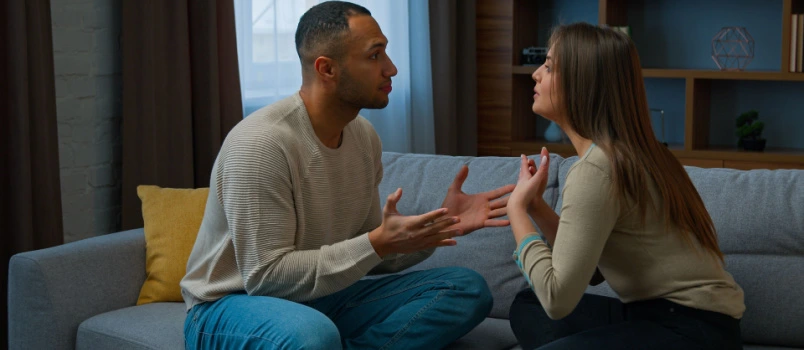
How do you get respect back in a relationship when it feels like your voice no longer matters, your boundaries are ignored, or your partner no longer values your presence? This is one of the most emotionally difficult questions to ask, because it often comes after feeling dismissed, taken for granted, or emotionally minimized.
Losing respect in a relationship doesn’t happen suddenly. It builds quietly through repeated misunderstandings, unmet needs, unresolved conflicts, and unhealthy patterns. When respect fades, communication weakens, emotional safety disappears, and resentment slowly takes over.
Understanding how do you get respect back in a relationship requires more than fixing surface-level problems. It involves rebuilding self-respect, resetting boundaries, improving communication, and changing behavioural patterns that allowed disrespect to exist in the first place.
This guide focuses on practical, emotionally healthy strategies that restore mutual respect naturally—without manipulation, power struggles, or emotional games. Real respect is rebuilt through consistency, clarity, and self-worth, not fear or control.
Table of Contents
How do you get respect back in a relationship?
Rebuilding respect starts with understanding that respect is rooted in how you treat yourself and how you allow others to treat you. If respect has been lost, it’s often because boundaries were crossed, needs were ignored, or unhealthy patterns went unchecked.
To truly understand how do you get respect back in a relationship, you must shift your focus from controlling outcomes to changing behaviours and energy.
Key principles to remember:
-
Respect grows from consistency, not words alone
-
You can’t demand respect—you demonstrate it
-
Self-respect always comes before partner respect
-
Emotional safety is the foundation of mutual respect
When you act with clarity, confidence, and emotional responsibility, your partner naturally begins to respond differently. Respect isn’t rebuilt by fear of loss—it’s rebuilt by strength, self-awareness, and healthy boundaries.
Understand Why Respect Was Lost
Before learning how do you get respect back in a relationship, you must identify why it faded. Avoiding this step leads to repeated mistakes and shallow fixes.
Common reasons respect disappears:
-
Repeatedly tolerating disrespectful behavior
-
Over-apologizing or people-pleasing
-
Poor emotional regulation during conflict
-
Breaking trust through lies or inconsistency
-
Ignoring personal values to keep the peace
When one partner feels ignored, undervalued, or in danger emotionally, respect is undermined. When you stop upholding your own standards, it may also wane.
Reflection questions to ask yourself:
-
Did I stop enforcing my boundaries?
-
Did I compromise my self-worth?
-
Did I communicate clearly or react emotionally?
You gain power when you comprehend the underlying cause. Respect cannot be restored unless the root cause of its collapse is addressed.
Rebuild Self-Respect First
If you’re wondering how do you get respect back in a relationship, start by looking inward. No partner can respect you more than you respect yourself.
Self-respect is visible through behaviour, tone, and decisions. When you value yourself, others adjust accordingly.
Ways to rebuild self-respect:
-
Stop tolerating behavior that hurts you
-
Keep your word and follow through
-
Speak honestly instead of suppressing feelings
-
Prioritize your emotional and mental health
-
Detach from needing constant validation
When you rebuild self-respect:
-
Your confidence increases naturally
-
You stop chasing approval
-
Your partner feels your emotional stability
This shift often changes the relationship dynamic without you saying a word. Respect grows when your presence reflects inner strength, not fear of abandonment.
Set Clear and Healthy Boundaries
One of the most practical answers to how do you get respect back in a relationship is boundary-setting. Boundaries define what is acceptable and what is not.
Healthy boundaries are not ultimatums—they are standards.
Examples of boundaries:
-
“I won’t continue conversations that turn disrespectful.”
-
“I need honesty to feel secure in this relationship.”
-
“I won’t accept being ignored during conflict.”
Effective boundary-setting involves:
-
Calm communication, not emotional reactions
-
Consistency in enforcement
-
Willingness to walk away from disrespect
When boundaries are respected:
-
Trust begins to rebuild
-
Emotional safety improves
-
Power imbalance decreases
When boundaries are ignored:
-
It’s a clear signal to reevaluate the relationship
Respect cannot exist without boundaries. They protect both partners and create space for healthier communication.
Improve the Way You Communicate
Communication plays a major role in how do you get respect back in a relationship. It’s not just what you say—it’s how you say it.
Disrespect often grows from:
-
Defensive responses
-
Passive-aggressive behavior
-
Yelling or stonewalling
-
Avoiding difficult conversations
Respectful communication includes:
-
Speaking calmly, even when emotions are high
-
Using “I feel” instead of accusations
-
Listening without interrupting
-
Responding thoughtfully, not reactively
Effective communication habits:
-
Address issues early instead of bottling them up
-
Validate feelings without agreeing to disrespect
-
Stay focused on the issue, not past mistakes
When communication improves:
-
Misunderstandings decrease
-
An emotional connection strengthens
-
Mutual respect becomes easier to maintain
Respect thrives where communication feels safe, honest, and balanced.
Stop Over-Giving and Over-Apologizing
Many people lose respect in relationships by giving too much and expecting too little. If you’re asking how do you get respect back in a relationship, examine whether you’ve been over-functioning.
Signs of over-giving:
-
Always initiating effort
-
Apologizing even when you’re not wrong
-
Sacrificing needs to avoid conflict
-
Trying to “earn” love
Why does this hurt respect?
-
It creates an imbalance
-
It signals low self-worth
-
It reduces emotional attraction
What to do instead:
-
Match effort instead of overcompensating
-
Apologize only when necessary
-
Allow your partner to take responsibility
-
Let silence replace over-explaining
Respect grows when both partners contribute equally. Pulling back from over-giving allows space for balance, appreciation, and mutual effort.
Be Consistent With Your Actions
Consistency is one of the strongest answers to how do you get respect back in a relationship. Words alone don’t rebuild respect—actions do.
Inconsistency creates doubt, while consistency builds trust.
Ways to show consistency:
-
Follow through on what you say
-
Maintain boundaries even when it’s uncomfortable
-
Show emotional maturity during conflict
-
Stay aligned with your values
Consistency also means:
-
Not changing standards based on fear
-
Not reverting to old patterns under pressure
-
Being predictable in healthy ways
When your actions align with your words:
-
Your partner feels secure
-
Trust begins to return
-
Respect slowly rebuilds
Respect isn’t rebuilt in a week—it’s earned through repeated, reliable behaviour over time.
Address Disrespect Directly (Without Blame)
Avoiding uncomfortable conversations often leads to deeper resentment. If you truly want to know how do you get respect back in a relationship, you must be willing to address disrespect calmly and clearly.
How to address disrespect:
-
Choose a calm moment
-
Describe behavior, not character
-
Express impact instead of blame
Example approach:
-
“When this happens, I feel dismissed. I need mutual respect to feel connected.”
Key points:
-
Stay grounded, not emotional
-
Avoid threats or manipulation
-
Be clear about expectations
Addressing disrespect directly:
-
Sets emotional standards
-
Prevents silent resentment
-
Shows self-respect
Silence teaches people how to treat you. Speaking up teaches them what you will and won’t accept.
Address Disrespect Directly (Without Blame)
Avoiding uncomfortable conversations often leads to deeper resentment. If you truly want to know how do you get respect back in a relationship, you must be willing to address disrespect calmly and clearly.
How to address disrespect:
-
Choose a calm moment
-
Describe behavior, not character
-
Express impact instead of blame
Example approach:
-
“When this happens, I feel dismissed. I need mutual respect to feel connected.”
Key points:
-
Stay grounded, not emotional
-
Avoid threats or manipulation
-
Be clear about expectations
Addressing disrespect directly:
-
Sets emotional standards
-
Prevents silent resentment
-
Shows self-respect
Silence teaches people how to treat you. Speaking up teaches them what you will and won’t accept.
Know When Respect Cannot Be Rebuilt
Sometimes, the hardest answer to how do you get respect back in a relationship is accepting that it may not be possible.
Signs of respect may not return:
-
Repeated boundary violations
-
Mocking or belittling behavior
-
Lack of accountability
-
Emotional or verbal abuse
In these cases:
-
Your self-respect matters more than saving the relationship
-
Staying may cause deeper emotional harm
-
Walking away can be an act of self-respect
Respect is not optional—it’s essential. A relationship without respect will always feel unsafe, exhausting, and unbalanced.
Final Thoughts
How do you get respect back in a relationship? You start by respecting yourself, communicating clearly, setting boundaries, and staying consistent. Respect isn’t rebuilt through fear, begging, or control—it’s rebuilt through emotional strength, honesty, and self-worth.
When you change how you show up, the relationship either rises to meet you—or reveals the truth you need to see.




Add Comment