
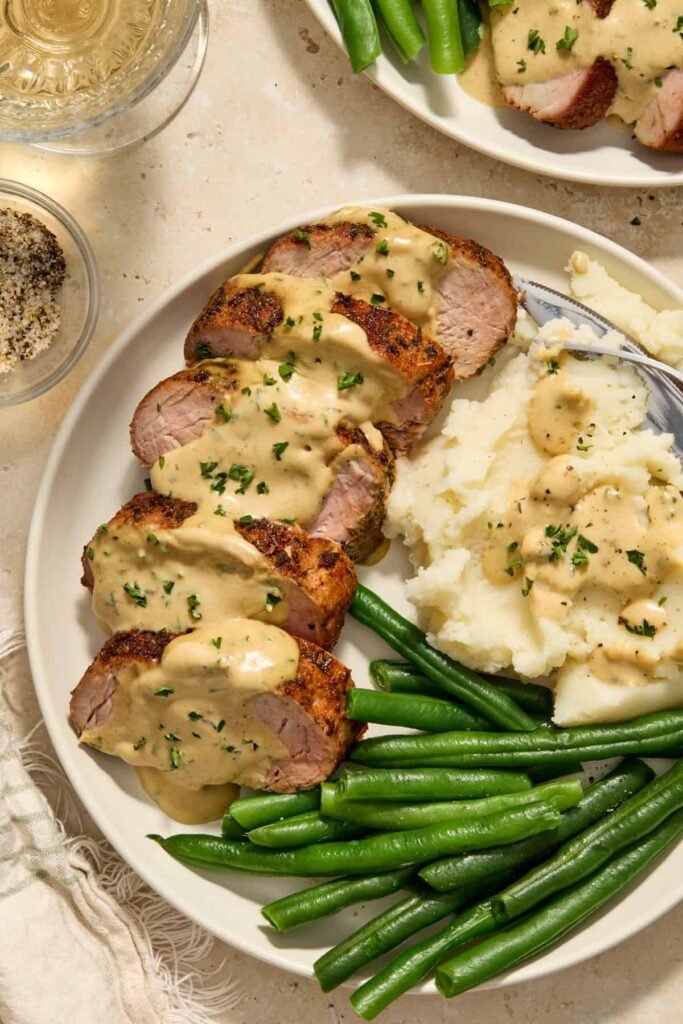
If there’s one dish that earns a standing ovation at our dinner table every single time, it’s this Pork Tenderloin With Mustard Sauce. It’s the kind of meal that looks like you spent hours in the kitchen — but the truth is, it comes together in under 45 minutes, start to finish. We’re talking golden-seared pork with a smoky spice crust, finished with a luxurious sauce built right in the same pan. Weeknight dinner? Absolutely. Holiday centerpiece? Without question.
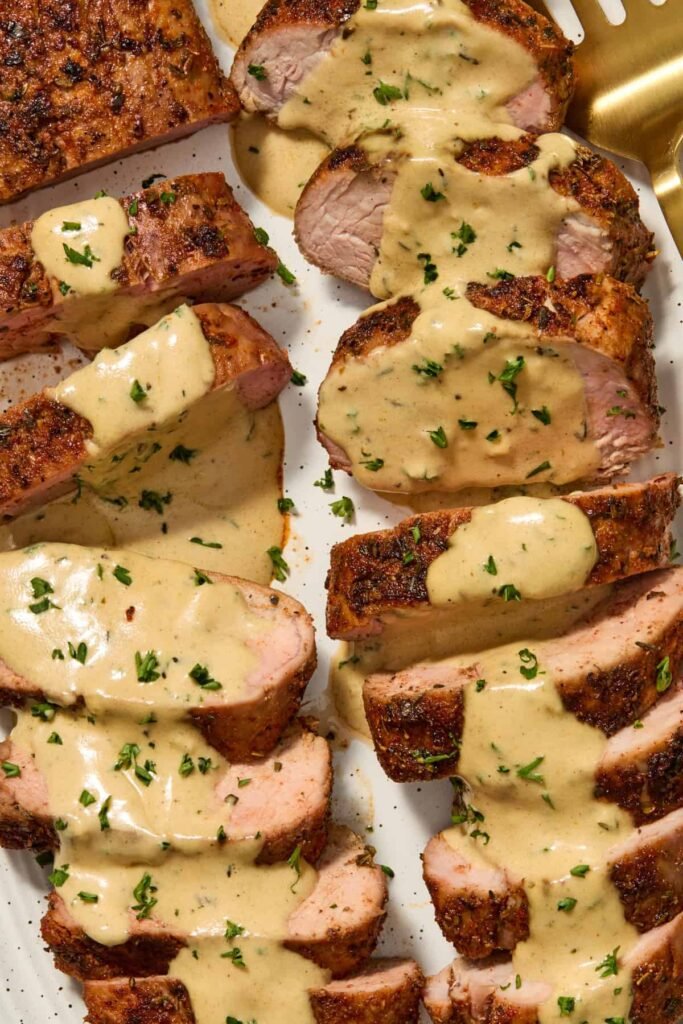
And while roasted ham gets all the glory during spring celebrations, we’d take a perfectly cooked tenderloin over it any day of the week.
Table of Contents
Why This Recipe Belongs in Your Regular Rotation
- No fuss, big reward. The ingredient list is short and the steps are straightforward — but the flavors are anything but simple.
- A surprisingly lean cut. Pork tenderloin is one of the leanest proteins you can cook, rivaling boneless, skinless chicken breast in fat content.
- Looks impressive, cooks fast. Guests will think you trained under a chef. You’ll know it took less than an hour.
- That pan sauce, though. Built from the caramelized drippings left behind in the skillet, the mustard cream sauce carries a depth of flavor you simply can’t fake.
How to Pick the Right Pork Tenderloin
This step matters more than people think. A good cut of meat makes everything easier.
- Look for tenderloins with a deep pinkish-red hue and light marbling throughout — that fat is where the flavor lives.
- Skip anything pale or discolored. Dark spots in the fat or grey-tinged meat are signs of age.
- Aim for two tenderloins around 1 pound each, similar in shape and thickness, so they cook at the same rate.
- Triple-check the label: you want pork tenderloin, not pork loin. These are entirely different cuts, and swapping them will throw off your cook times completely.
Ingredient Notes
(Full measurements are listed in the recipe card below.)
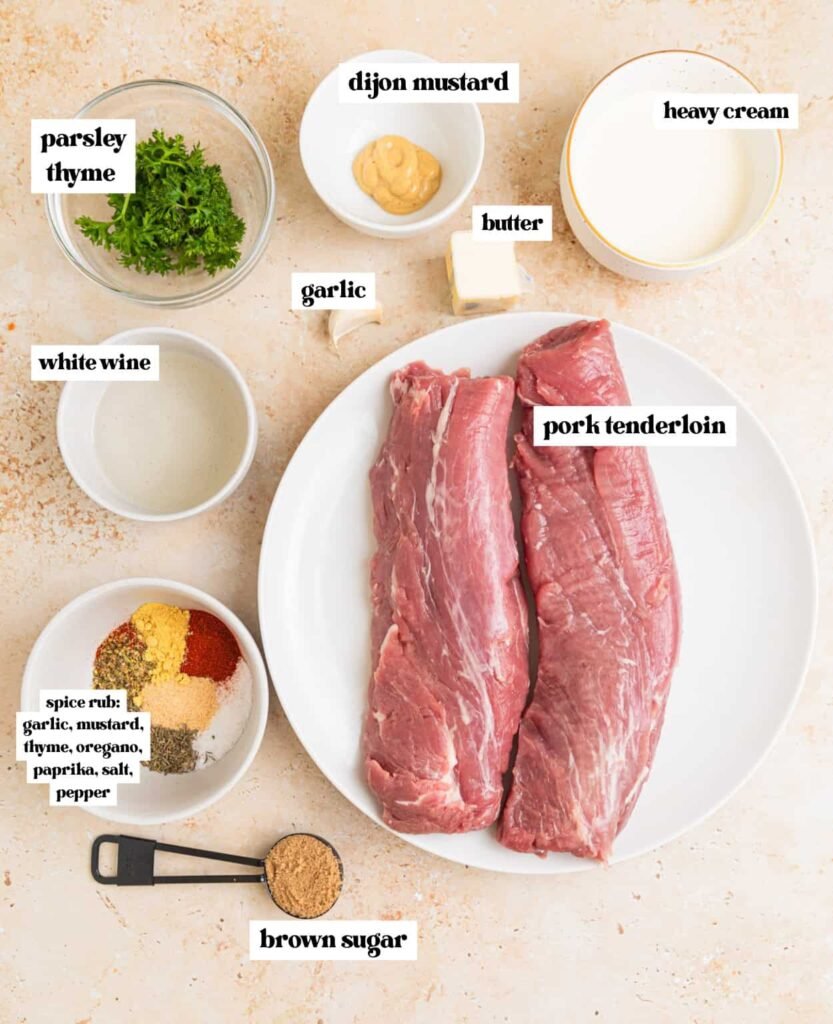
- Pork tenderloin — Follow the selection tips above. Two uniform, 1-pound tenderloins are ideal.
- Spice rub — A homemade blend of brown sugar, ground mustard, garlic powder, paprika, thyme, oregano, salt, and pepper. Want more heat? A pinch of cayenne or smoked paprika goes a long way.
- White wine — A dry white wine adds brightness and complexity to the sauce. Prefer to skip the alcohol? Chicken broth works perfectly in its place.
- Heavy cream — Go with heavy whipping cream, not half-and-half. The higher fat content gives the sauce its signature silky body.
- Fresh herbs — Dried thyme works beautifully here, but fresh thyme takes it up a notch. Finish with a generous scatter of fresh parsley before serving.
Ways to Make It Your Own
- Switch up the mustard. Honey Dijon will add a gentle sweetness; grainy whole-grain mustard gives a rustic texture and bolder punch.
- Bulk up the sauce. Stir in caramelized onions or sautéed mushrooms for something heartier.
- Play with the spice rub. Pork is incredibly versatile — try adding a pinch of cinnamon, a touch of cumin, dried rosemary, or chili powder for a completely different flavor profile.
How to Make It
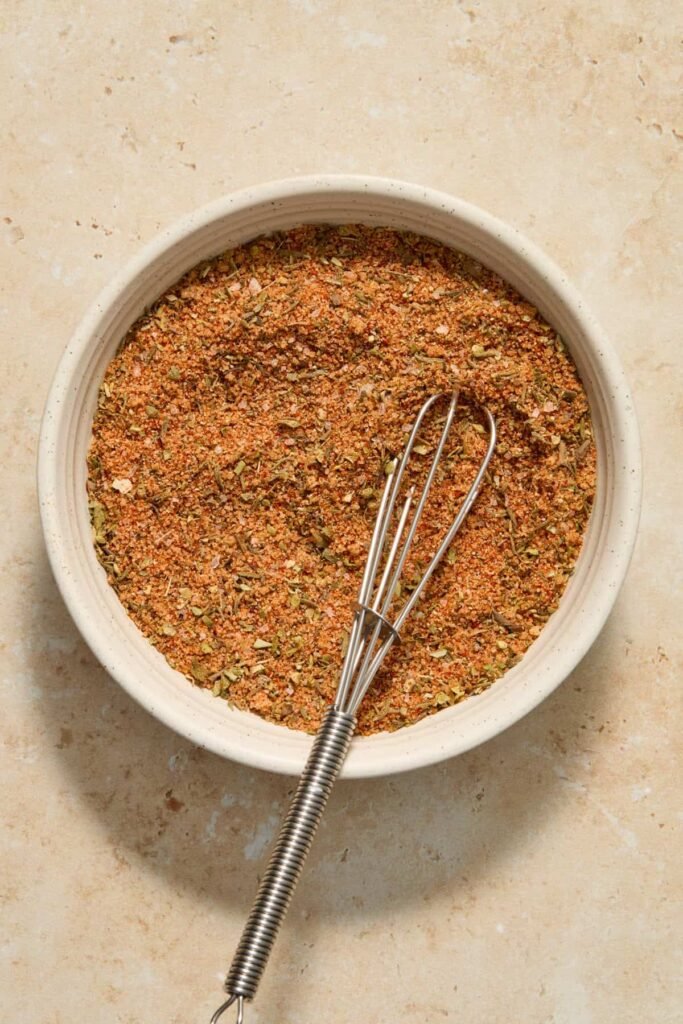
Step 1 — Prep the pork. Mix the spice rub in a small bowl. Before seasoning the meat, trim away the silver skin (the thin, silvery membrane along the side) — it turns tough during cooking. Let the tenderloins rest at room temperature for 30 minutes before you begin.
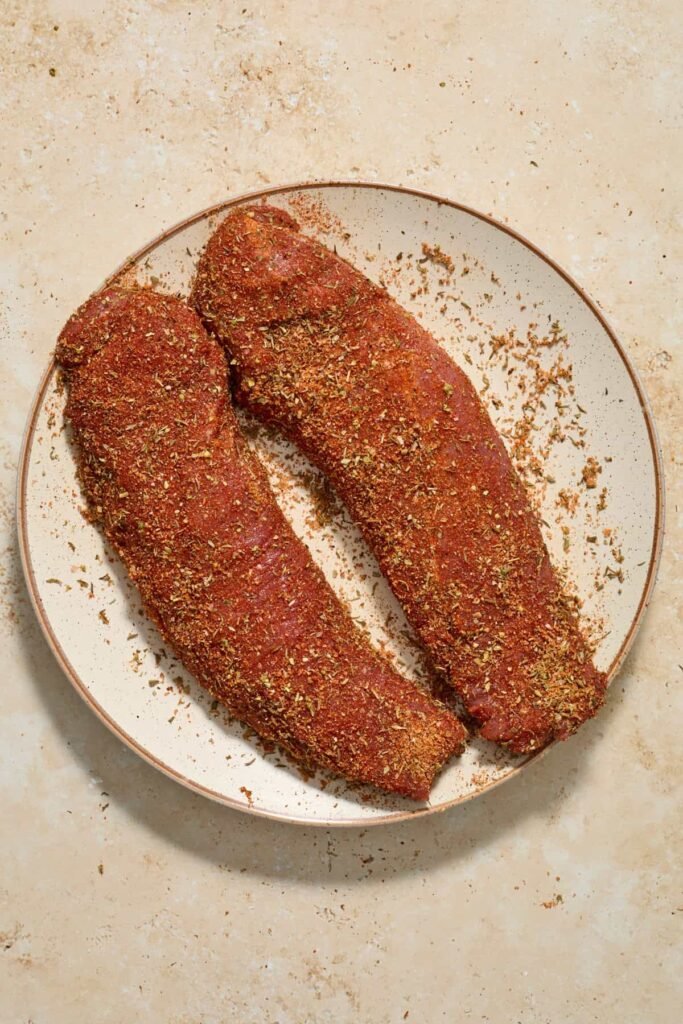
Step 2 — Season generously. Preheat your oven to 400°F. Pat the pork completely dry with paper towels — moisture is the enemy of a good sear. Press the spice rub firmly onto all sides of each tenderloin.
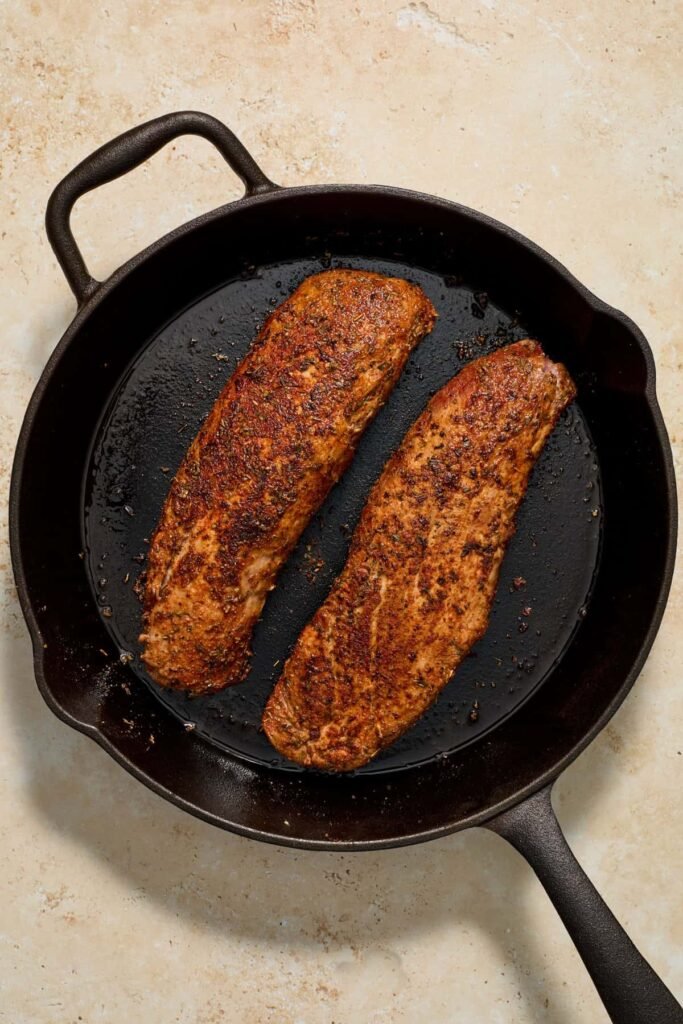
Step 3 — Sear until golden. Heat a large, oven-safe skillet over medium-high heat until it’s genuinely hot. Add a tablespoon of olive oil and let it shimmer. Lay the tenderloins in the pan and leave them alone — resist the urge to move them. Let each side develop a deep golden crust, about 3–5 minutes per side, until the meat releases naturally from the pan.
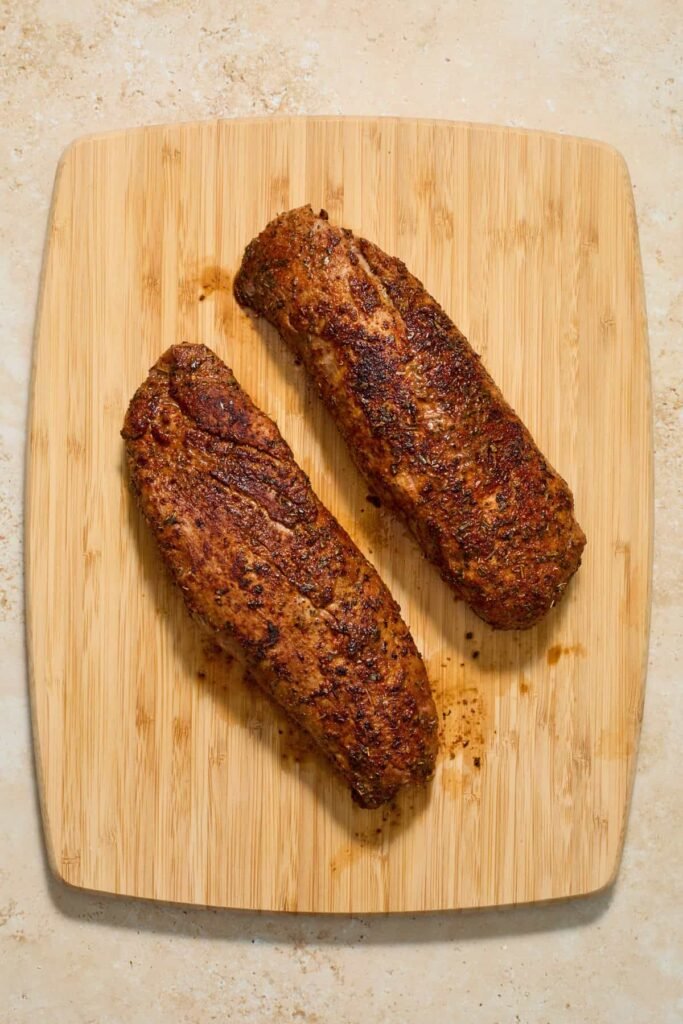
Step 4 — Finish in the oven. Transfer the entire pan into the preheated oven. Roast for 10–15 minutes, or until an instant-read thermometer reads 145°F in the thickest part. Pull it just before it hits that mark — carryover heat will do the rest. A blush of pink in the center is perfectly safe and actually ideal.
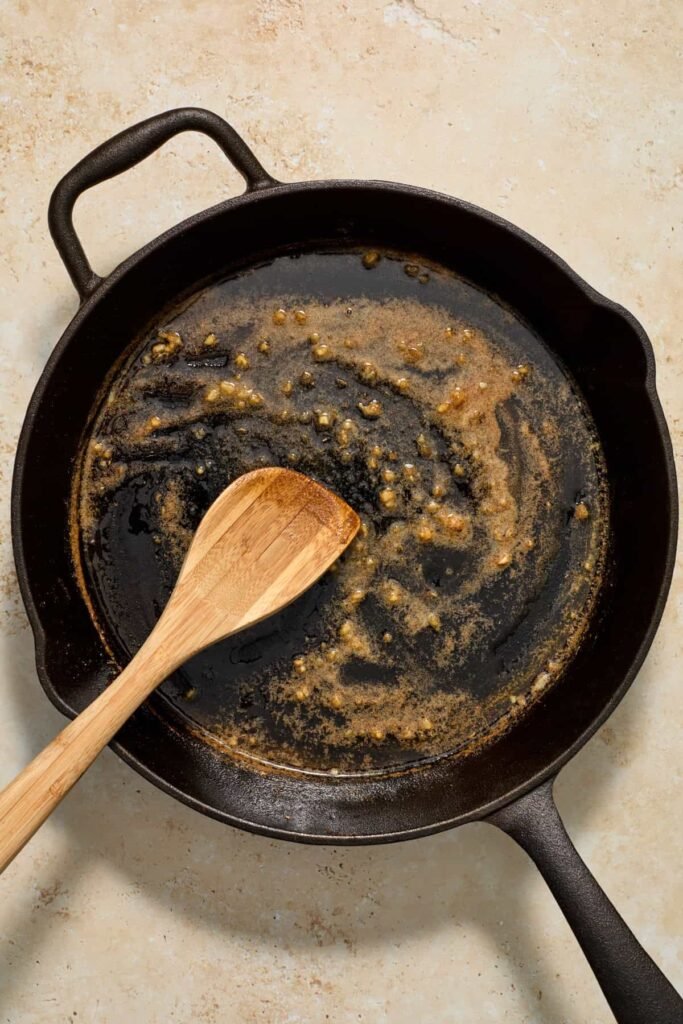
Step 5 — Rest the meat, build the sauce. Move the pork to a cutting board and tent loosely with foil. Return the skillet to the stove over medium heat. Add butter and let it melt, using a wooden spoon to scrape up every last bit of the dark, caramelized fond stuck to the bottom — that’s pure flavor. Add the garlic and cook for about one minute, stirring constantly.
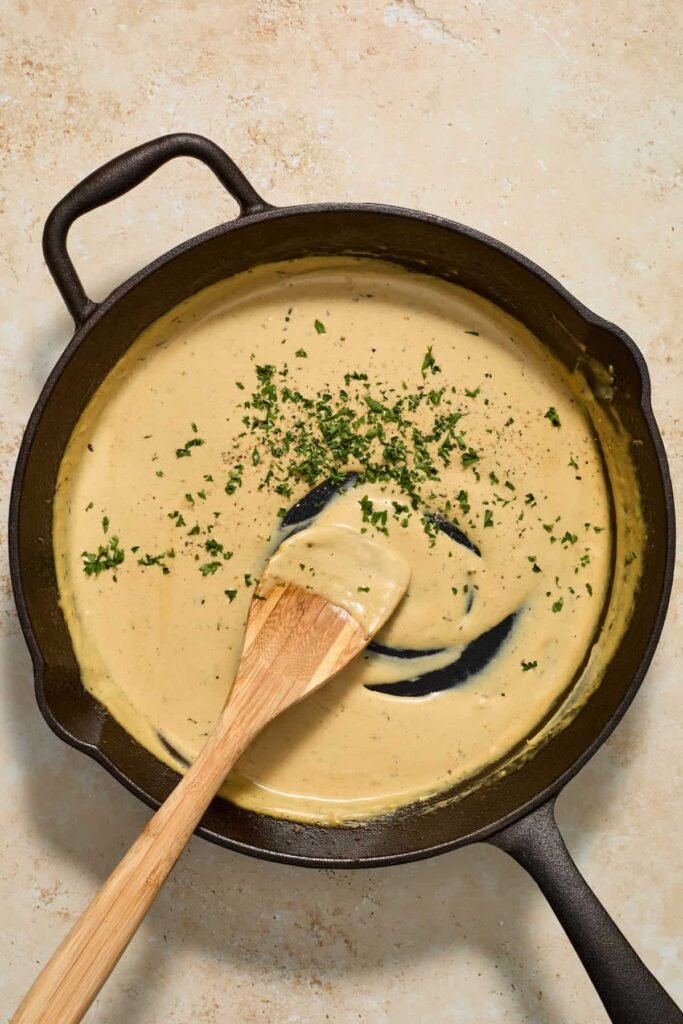
Step 6 — Finish the sauce. Pour in the white wine (or broth) and stir to combine. Add the heavy cream, Dijon mustard, and thyme. Let everything simmer gently for 2–3 minutes until the sauce thickens slightly and coats the back of a spoon. If it tightens up too much, splash in a bit more wine or broth to loosen it. Slice the pork, spoon the sauce over the top, and serve immediately.
Recipe Tips for the Best Results
- Bring it to room temp first. Cold meat straight from the fridge seizes up in the pan and cooks unevenly. Thirty minutes out makes a real difference.
- Use a meat thermometer. There’s no guessing with pork. 145°F is the target — every time, no exceptions.
- Don’t skip the rest. Cutting into pork too soon sends all the juices straight onto your cutting board. A 5-minute rest keeps them locked inside the meat where they belong.
Storage
- Refrigerator: Store leftover pork and sauce together in an airtight container for up to 3–4 days. Keeping the sauce in contact with the meat helps retain moisture when reheating.
- Freezer: Cooked pork tenderloin freezes well for up to 3 months in a freezer-safe container. Thaw fully in the refrigerator overnight before reheating.
Frequently Asked Questions
Can I use pork loin instead of pork tenderloin?
These two cuts are often confused, but they behave very differently in the kitchen. Pork loin is much larger, thicker, and requires significantly longer cook times. Using it in place of tenderloin in this recipe will result in undercooked or dry meat. Stick with tenderloin for best results.
What if I don’t have an oven-safe skillet?
After searing, transfer the tenderloins to a baking dish or rimmed sheet pan to finish in the oven. Just make sure to use the original skillet when building your sauce — the drippings left behind are essential to the flavor.
Can I make the mustard sauce ahead of time?
The sauce is best made fresh, right after cooking the pork, since the pan drippings are the foundation of its flavor. If you need to plan ahead, you can reheat it gently on the stove with a small splash of cream or broth to revive its texture.
How do I know when the pork is done without a thermometer?
While a thermometer is the most reliable method, you can also press the thickest part of the tenderloin — it should feel firm with just a slight give, similar to the base of your thumb when your hand is relaxed. That said, investing in a basic instant-read thermometer is well worth it for cooking any pork or poultry.
Is it okay if there’s a little pink in the center?
Yes — and actually, that’s the goal. The USDA considers pork safe to eat at 145°F, which often means a blush of pale pink remains in the center. This is not undercooked pork; it’s perfectly cooked pork.
What can I serve alongside this dish?
This pairs beautifully with creamy mashed potatoes, roasted root vegetables, steamed green beans, or a simple arugula salad. The mustard sauce also makes a wonderful drizzle over roasted potatoes or rice.
Can I substitute the heavy cream in the sauce?
For a slightly lighter sauce, you can use full-fat coconut cream (it won’t add much flavor) or whole milk with a teaspoon of flour stirred in to help it thicken. Half-and-half will work in a pinch but produces a noticeably thinner sauce.

Pork Tenderloin with Mustard Sauce
Ingredients
- 2 lbs pork tenderloin Two ~1 lb tenderloins, silver skin removed
- 1 tbsp olive oil For searing
Spice Rub
- 1 tsp brown sugar
- 1 tsp ground mustard
- 1 tsp garlic powder
- 1 tsp paprika Regular or smoked
- ½ tsp dried thyme
- ½ tsp dried oregano
- 1 tsp salt
- ½ tsp black pepper
Mustard Pan Sauce
- 2 tbsp unsalted butter
- 3 cloves garlic
- ½ cup dry white wine Or substitute chicken broth
- ¾ cup heavy whipping cream Do not substitute half-and-half
- 2 tbsp Dijon mustard
- ¼ tsp dried thyme
- Fresh parsley Fresh parsley
Instructions
- Step 1 — Make the spice rub & prep the porkIn a small bowl, combine brown sugar, ground mustard, garlic powder, paprika, thyme, oregano, salt, and pepper. Whisk together until well mixed. Trim the silver skin from both tenderloins, then let the meat rest at room temperature for 30 minutes before cooking.Step 2 — Preheat & seasonPreheat your oven to 400°F. Pat the pork completely dry with paper towels. Press the spice rub firmly over all sides of each tenderloin, coating evenly.Step 3 — Sear the porkHeat a large oven-safe skillet over medium-high heat until very hot. Add the olive oil and let it shimmer. Place the tenderloins in the pan and sear undisturbed for 3–5 minutes per side, until each side is deep golden and releases easily from the pan.Step 4 — Roast in the ovenTransfer the skillet directly into the preheated oven. Roast for 10–15 minutes, or until an instant-read thermometer inserted at the thickest part reads 145°F. Remove just before reaching 145°F as the meat will continue cooking while it rests.Step 5 — Rest the meatTransfer the pork to a cutting board and tent loosely with foil. Rest for 5 minutes while you build the sauce.Step 6 — Build the mustard pan sauceReturn the skillet to the stove over medium heat. Add the butter and let it melt, scraping up all the caramelized bits from the bottom of the pan. Add the minced garlic and cook for 1 minute, stirring constantly.Step 7 — Finish the sauce & servePour in the white wine (or broth) and stir to combine. Add the heavy cream, Dijon mustard, and thyme. Let the sauce simmer for 2–3 minutes, stirring occasionally, until slightly thickened and glossy. If too thick, add a splash more wine or broth. Slice the pork, spoon the sauce generously over the top, garnish with fresh parsley, and serve immediately.
Notes
- Silver skin must go. That thin, pearlescent membrane along the side of the tenderloin doesn’t break down during cooking and will cause the meat to curl and toughen. Slide a sharp knife under it and pull it away before seasoning.
- Room temperature matters. Pulling the pork out 30 minutes before cooking helps it sear and roast more evenly. Cold meat in a hot pan leads to an overcooked exterior and undercooked center.
- Don’t rush the sear. A hot, dry pan is what creates that golden crust. If the meat is sticking, it’s not ready to flip — give it another minute.
- Pink is fine. Pork at 145°F is fully safe to eat, even if a pale pink blush remains in the center. That’s actually the perfect doneness for tenderloin.
- Store leftovers with sauce. Keep leftover pork and sauce together in an airtight container in the fridge for up to 4 days. The sauce helps the meat stay moist. Freeze cooked pork for up to 3 months; thaw overnight in the fridge before reheating.
Nutrition
Calories: 355kcal, Carbohydrates: 5g, Protein: 40g, Fat: 18g, Saturated Fat: 9g, Polyunsaturated Fat: 2g, Monounsaturated Fat: 5g, Trans Fat: 0.2g, Cholesterol: 155mg, Sodium: 542mg, Potassium: 818mg, Fiber: 1g, Sugar: 3g, Vitamin A: 827IU, Vitamin C: 2mg, Calcium: 45mg, Iron: 2mg Nutrition information is automatically calculated, so it should only be used as an approximation.Shop This Post
Stainless Steel Pan
Garlic Press
Cast Iron Skillet – 12 inch
Leave a Reply