
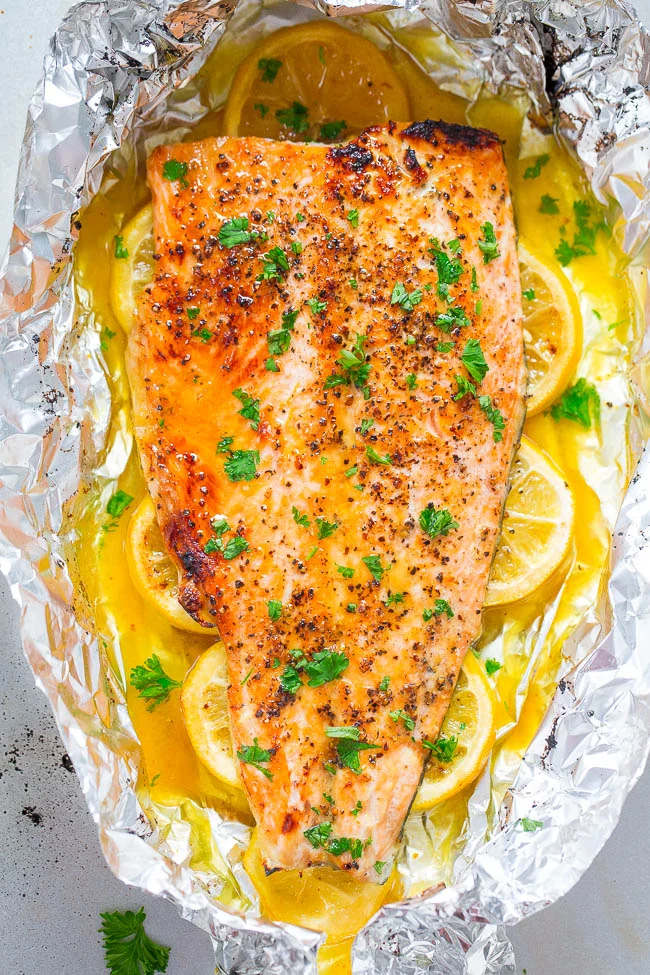
Sheet Pan Honey Lemon Salmon is the kind of dinner that makes a busy weeknight feel a little easier. Tender salmon, fresh lemon, sweet honey, and savory garlic come together in a simple glaze that adds plenty of flavor without requiring a long list of ingredients or complicated cooking steps.
The best part? Everything cooks on one sheet pan, making cleanup much easier. Pair the salmon with asparagus, cherry tomatoes, and baby potatoes for a colorful, satisfying meal that works just as well for a family dinner as it does for a relaxed weekend evening.
If you’re looking for a fresh, flavorful salmon recipe for your weekly dinner rotation, this one deserves a spot on your menu.
Table of Contents
Why You’ll Love Sheet Pan Honey Lemon Salmon
- Quick and Easy Dinner: This recipe uses simple ingredients and straightforward preparation, making it ideal for busy evenings. Once everything is on the pan, the oven takes care of most of the work.
- Sweet, Tangy, and Savory Flavor: Honey balances the bright taste of lemon, while garlic adds a savory depth that complements the salmon. Every bite has a delicious combination of citrus and sweetness.
- A Balanced, Satisfying Meal: Salmon provides protein and beneficial omega-3 fatty acids, while vegetables add color, texture, and variety. Serve it as a complete dinner without needing several separate side dishes.
- Less Cleanup Required: Cooking the salmon and vegetables together means fewer pans and less time spent washing dishes. Line your sheet pan with parchment paper for even easier cleanup.
- Easy to Customize: Use your favorite quick-cooking vegetables or adjust the honey and lemon to suit your taste. This recipe is flexible enough to fit different preferences and seasonal ingredients.
What Makes Homemade Better?
Making Sheet Pan Honey Lemon Salmon at home gives you control over every part of the meal. You can choose fresh salmon, adjust the sweetness of the honey-lemon glaze, and season everything exactly the way you like it.
Homemade cooking also makes it easier to select the vegetables you enjoy and control how much salt, oil, and added sugar go into your dinner. Instead of relying on a prepared sauce, you can make a fresh glaze with lemon juice, honey, garlic, and olive oil in just a few minutes.
Another advantage is flexibility. Prefer a stronger citrus flavor? Add extra lemon zest. Want a little heat? Sprinkle in some red pepper flakes. You can make the recipe your own while keeping the preparation simple.
Ingredients You’ll Need
- Salmon fillets: Choose fresh or thawed salmon fillets of similar thickness so they cook evenly. Skin-on or skinless fillets both work well.
- Fresh lemon: Lemon juice brings brightness to the glaze, while a little zest adds a fragrant citrus flavor. Extra slices also look beautiful on the finished pan.
- Honey: Honey adds gentle sweetness and helps the glaze cling to the salmon. It balances the tartness of the lemon without overpowering the fish.
- Garlic: Fresh minced garlic gives the sauce a savory aroma that pairs naturally with honey, lemon, and salmon.
- Olive oil: Olive oil helps coat the vegetables and keeps the salmon moist. It also helps the seasonings spread evenly across the pan.
- Asparagus: Asparagus cooks quickly and adds a fresh, slightly earthy flavor. Trim the woody ends before arranging the spears around the salmon.
- Cherry tomatoes: These become juicy and slightly sweet in the oven, adding a pop of color and a delicious contrast to the rich salmon.
- Baby potatoes: Baby potatoes make the meal more filling. Halve them or cut them into evenly sized pieces so they roast properly before the salmon is done.
- Salt, black pepper, and herbs: These simple seasonings bring out the natural flavor of the ingredients. Parsley, dill, or thyme are all excellent choices for finishing the dish.
Step-By-Step Direction
Step 1: Preheat the Oven and Prepare the Pan
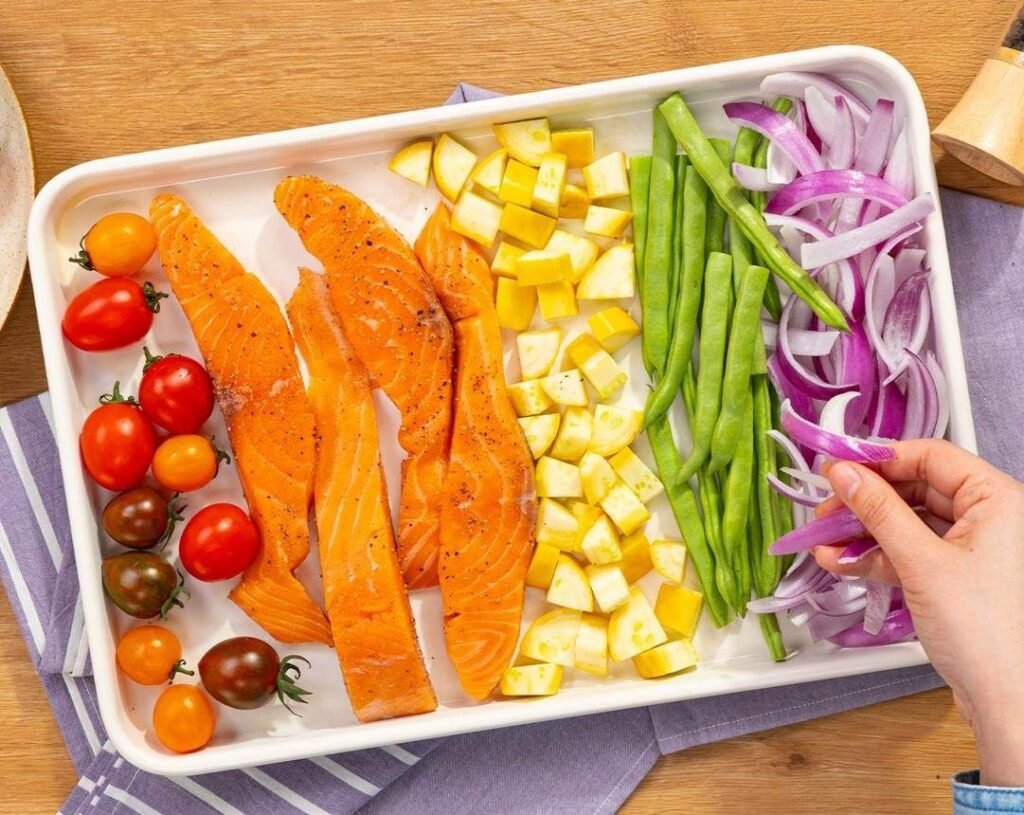
Preheat your oven to 400°F (200°C). Line a large rimmed sheet pan with parchment paper or lightly grease it with olive oil.
Pat the salmon dry with paper towels. Trim the asparagus, halve the cherry tomatoes if desired, and cut the baby potatoes into evenly sized pieces.
Step 2: Roast the Potatoes First
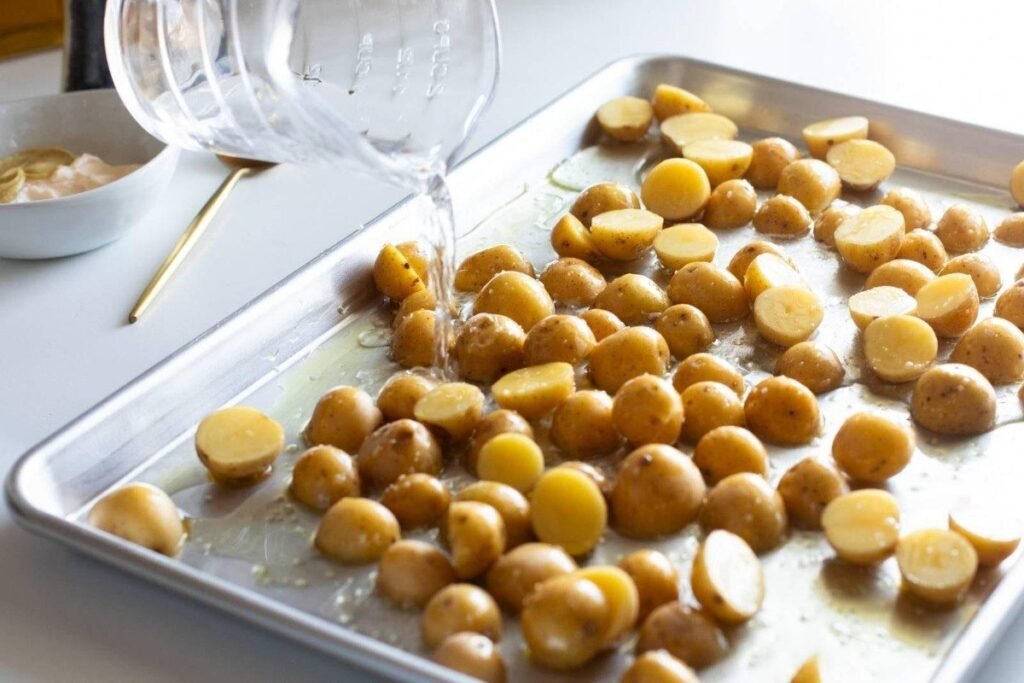
Toss the potatoes with olive oil, salt, and black pepper. Spread them across the sheet pan in a single layer and roast for about 10–15 minutes, or until they begin to soften.
Potatoes take longer to cook than salmon and asparagus, so giving them a head start helps everything finish at approximately the same time.
Step 3: Make the Honey Lemon Sauce
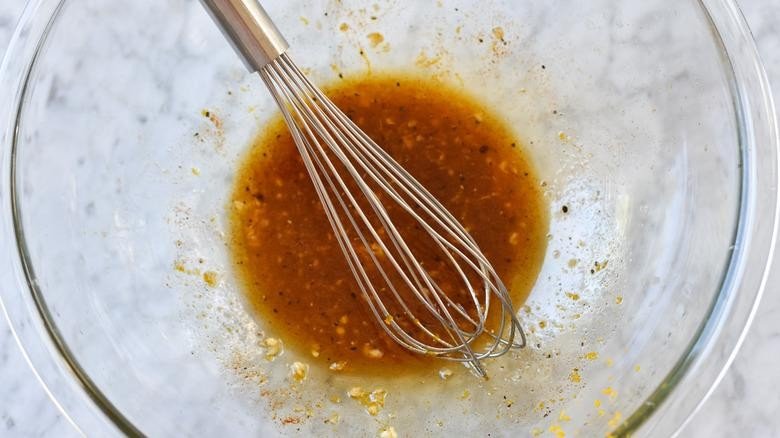
In a small bowl, whisk together the honey, fresh lemon juice, minced garlic, olive oil, and a little lemon zest if you like.
Taste the sauce and adjust the balance to your preference. Add more lemon for extra tang or a touch more honey for sweetness.
Step 4: Arrange the Salmon and Vegetables
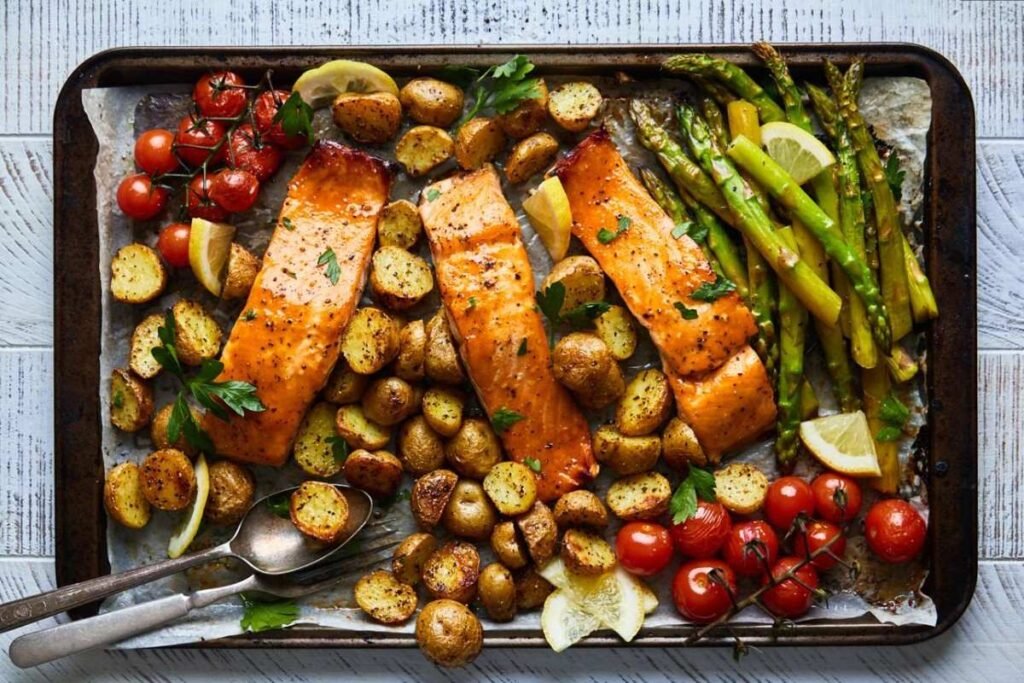
Remove the pan from the oven and arrange the salmon among the potatoes. Add the asparagus and cherry tomatoes, then brush the salmon generously with the honey lemon sauce.
Drizzle a little olive oil over the vegetables and season them lightly. Keep the ingredients in a mostly single layer to help them roast rather than steam.
Step 5: Bake Until Tender and Flaky
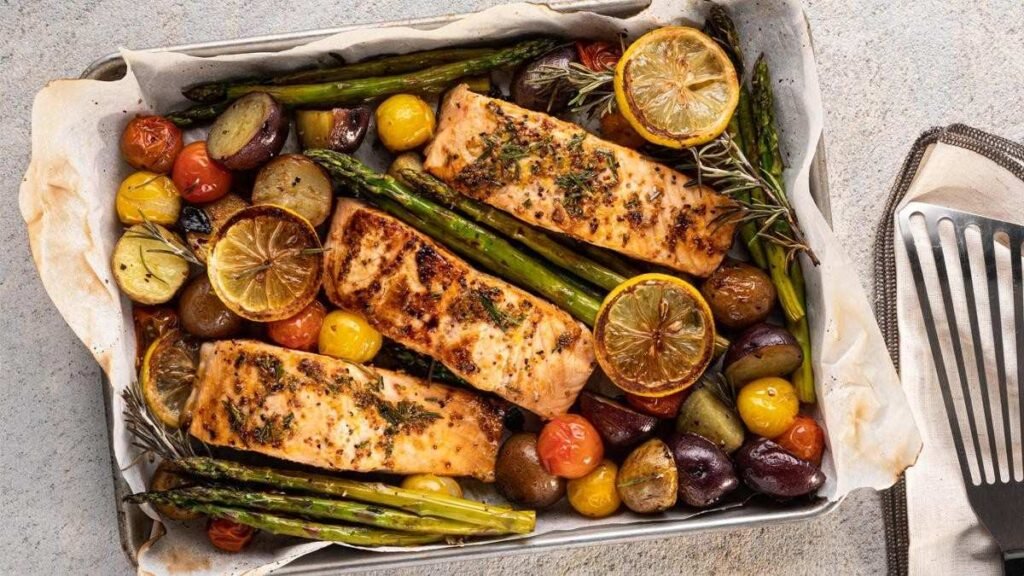
Return the pan to the oven and bake for about 10–15 minutes, depending on the thickness of the fillets and how tender the vegetables are. The salmon should turn opaque and separate easily with a fork.
For food safety, check the thickest part of the salmon with a food thermometer; the USDA recommends an internal temperature of 145°F (63°C). If the vegetables need additional time, transfer the salmon to a plate once cooked and continue roasting the vegetables.
Step 6: Garnish and Serve
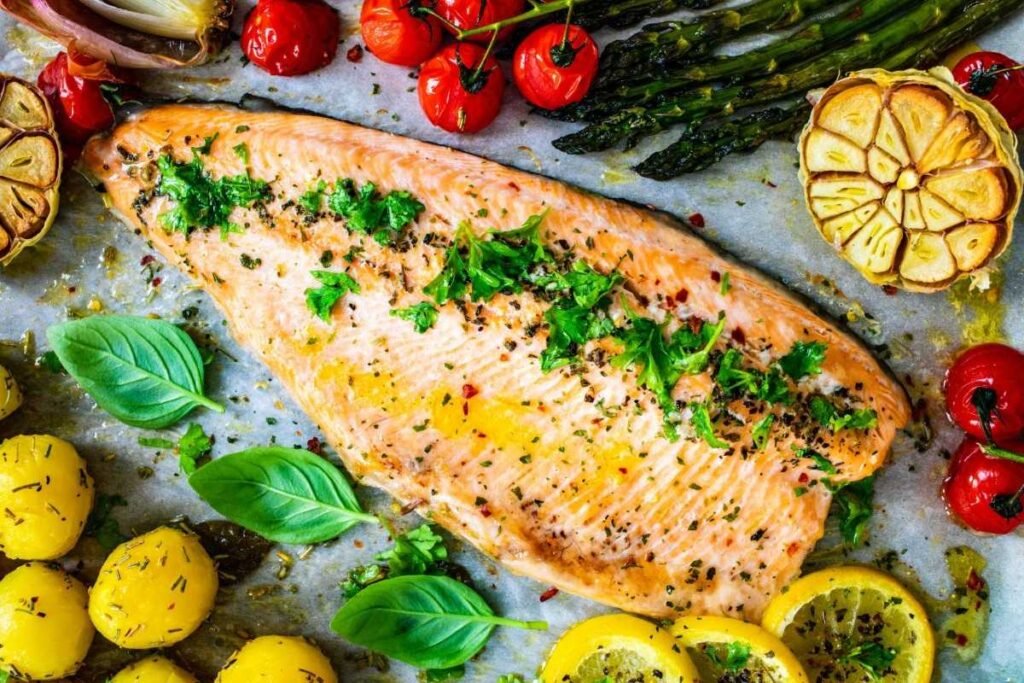
Finish with fresh parsley or dill, a squeeze of lemon juice, and a little extra black pepper. Spoon some of the pan juices over the salmon just before serving.
Serve immediately while the salmon is tender and the vegetables are warm. The sweet, citrusy glaze makes this simple sheet-pan meal feel special without extra work.
Serving Suggestions
- Steamed rice: Serve the salmon over white or brown rice to soak up the honey lemon juices.
- Quinoa: Pair it with quinoa for a hearty side that complements the salmon and roasted vegetables.
- Fresh green salad: A crisp salad with cucumber, leafy greens, and a light vinaigrette balances the richness of the fish.
- Crusty bread: Add warm bread to mop up any leftover sauce on the plate.
- Roasted vegetables: If you skip the potatoes, add broccoli, zucchini, or bell peppers for extra color and variety.
- Light pasta: Toss a small serving of pasta with olive oil, lemon, and herbs for a simple side.
- Extra citrus: Serve with lemon wedges so everyone can brighten their portion to taste.
Tips for the Best Results
- Choose Similar-Sized Fillets: Salmon pieces with similar thickness tend to cook at the same rate. If one fillet is much thinner, check it early to prevent it from drying out.
- Give Potatoes a Head Start: Potatoes need more time in the oven than salmon and most quick-cooking vegetables. Roast them first so everything is ready together.
- Don’t Overcook the Salmon: Salmon can become dry when left in the oven too long. Check the thickest part with a food thermometer and remove it once it reaches 145°F (63°C).
- Balance the Honey and Lemon: Taste the glaze before brushing it over the fish. A little extra lemon brightens the flavor, while a small amount of additional honey softens the tartness.
- Leave Space on the Pan: Crowding traps steam and can prevent vegetables from browning. Use a large sheet pan or divide the ingredients between two pans if needed.
Storage Tips
Refrigerator
Allow leftovers to cool slightly, then transfer them to an airtight container and refrigerate within two hours of cooking. Store for up to 3–4 days. For the best texture, keep the salmon and vegetables in a shallow container.
Freezer
Freeze cooked salmon in a freezer-safe, airtight container for about 2–3 months for best quality. The vegetables may soften after thawing, especially tomatoes and asparagus. Label the container with the date and thaw leftovers in the refrigerator before reheating.
Reheating
For the best texture, reheat the salmon in an oven at 275–300°F (135–150°C) until warmed through. Add a small splash of water or a squeeze of lemon to help keep it moist, and cover loosely if needed. You can also use a microwave in short intervals at reduced power, though the salmon may become less tender. Reheat leftovers to 165°F (74°C).
Final Thoughts
Sheet Pan Honey Lemon Salmon is a fresh, flavorful dinner that combines tender fish, colorful vegetables, and a simple homemade glaze. It’s easy enough for a busy weeknight but tasty enough to serve when you want something a little more special.
With just a few everyday ingredients and one pan, you can put together a satisfying meal without spending the evening in the kitchen. Adjust the vegetables to suit the season, add your favorite herbs, and keep extra lemon wedges on the table for a bright finishing touch.
Once you try this combination of honey, lemon, and garlic, it may become one of your favorite ways to prepare salmon.

Sheet Pan Honey Lemon Salmon
Ingredients
- 4 fillets salmon about 6 oz each
- 2 tablespoons honey
- 2 tablespoons fresh lemon juice
- 2 cloves garlic minced
- 2 tablespoons olive oil
- 1 teaspoon lemon zest optional
- 1 pound baby potatoes halved
- 1 bunch asparagus woody ends trimmed
- 1 cup cherry tomatoes
- ½ teaspoon salt
- ¼ teaspoon black pepper
- 1 tablespoon fresh parsley chopped
- Fresh dill optional, for garnish
- Lemon wedges for serving
Instructions
- Preheat and Prepare: Preheat the oven to 400°F (200°C). Line a large rimmed sheet pan with parchment paper or lightly grease it with olive oil. Pat the salmon dry, trim the asparagus, and cut the baby potatoes into evenly sized pieces.
- Roast the Potatoes: Toss the baby potatoes with a little olive oil, salt, and black pepper. Spread them in a single layer on the prepared sheet pan and roast for 10–15 minutes, until they begin to soften.
- Make the Honey Lemon Glaze: In a small bowl, whisk together the honey, fresh lemon juice, minced garlic, remaining olive oil, and optional lemon zest until combined.
- Add the Salmon and Vegetables: Remove the pan from the oven. Arrange the salmon fillets among the potatoes, then add the asparagus and cherry tomatoes. Brush the salmon with the honey lemon glaze and season the vegetables with salt and pepper.
- Bake Until Cooked: Return the sheet pan to the oven and bake for 10–15 minutes, depending on the thickness of the salmon and the vegetables. Check the thickest part of the salmon with a food thermometer; it should reach 145°F (63°C). If the vegetables need more time, remove the cooked salmon and continue roasting them until tender.
- Garnish and Serve: Sprinkle the salmon and vegetables with chopped fresh parsley or dill. Serve warm with lemon wedges and spoon any flavorful pan juices over the salmon before serving.
Notes
- Choose similar-sized salmon fillets: Fillets of similar thickness cook more evenly.
- Roast the potatoes first: Potatoes take longer than salmon and asparagus, so give them a head start.
- Avoid overcooking: Check the thickest part of the salmon with a food thermometer and cook to 145°F (63°C).
- Adjust the glaze: Add extra lemon juice for a tangier flavor or a little more honey for extra sweetness.
- Don’t overcrowd the pan: Leave space between the ingredients to encourage roasting instead of steaming.
- Storage: Refrigerate leftovers in an airtight container for 3–4 days. Freeze cooked salmon for about 2–3 months for best quality.
- Reheating: Warm leftovers gently in the oven until heated through; reheat leftovers to 165°F (74°C)
Nutrition Facts
- Calories: 520 kcal
- Total Fat: 25 g
- Saturated Fat: 5 g
- Cholesterol: 95 mg
- Sodium: 480 mg
- Total Carbohydrates: 36 g
- Dietary Fiber: 5 g
- Total Sugars: 13 g
- Protein: 39 g
Note: These are estimates and may vary depending on salmon size, ingredient brands, and actual quantities used.

Leave a Reply