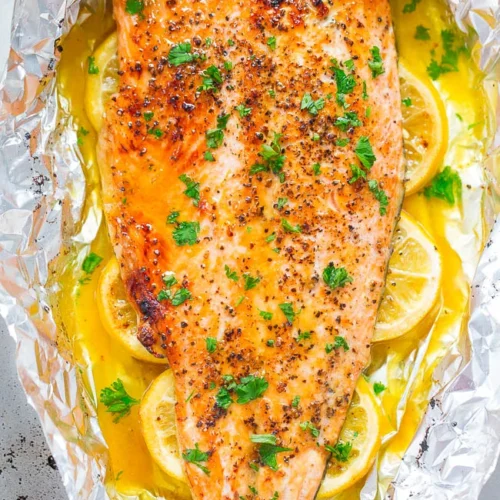
Sheet Pan Honey Lemon Salmon
Sheet Pan Honey Lemon Salmon is an easy weeknight dinner featuring tender salmon fillets coated in a sweet honey lemon garlic glaze, roasted alongside asparagus, cherry tomatoes, and baby potatoes. This flavorful one-pan meal uses simple ingredients and makes cleanup easy
Ingredients
- 4 fillets salmon about 6 oz each
- 2 tablespoons honey
- 2 tablespoons fresh lemon juice
- 2 cloves garlic minced
- 2 tablespoons olive oil
- 1 teaspoon lemon zest optional
- 1 pound baby potatoes halved
- 1 bunch asparagus woody ends trimmed
- 1 cup cherry tomatoes
- ½ teaspoon salt
- ¼ teaspoon black pepper
- 1 tablespoon fresh parsley chopped
- Fresh dill optional, for garnish
- Lemon wedges for serving
Instructions
- Preheat and Prepare: Preheat the oven to 400°F (200°C). Line a large rimmed sheet pan with parchment paper or lightly grease it with olive oil. Pat the salmon dry, trim the asparagus, and cut the baby potatoes into evenly sized pieces.
- Roast the Potatoes: Toss the baby potatoes with a little olive oil, salt, and black pepper. Spread them in a single layer on the prepared sheet pan and roast for 10–15 minutes, until they begin to soften.
- Make the Honey Lemon Glaze: In a small bowl, whisk together the honey, fresh lemon juice, minced garlic, remaining olive oil, and optional lemon zest until combined.
- Add the Salmon and Vegetables: Remove the pan from the oven. Arrange the salmon fillets among the potatoes, then add the asparagus and cherry tomatoes. Brush the salmon with the honey lemon glaze and season the vegetables with salt and pepper.
- Bake Until Cooked: Return the sheet pan to the oven and bake for 10–15 minutes, depending on the thickness of the salmon and the vegetables. Check the thickest part of the salmon with a food thermometer; it should reach 145°F (63°C). If the vegetables need more time, remove the cooked salmon and continue roasting them until tender.
- Garnish and Serve: Sprinkle the salmon and vegetables with chopped fresh parsley or dill. Serve warm with lemon wedges and spoon any flavorful pan juices over the salmon before serving.
Notes
- Choose similar-sized salmon fillets: Fillets of similar thickness cook more evenly.
- Roast the potatoes first: Potatoes take longer than salmon and asparagus, so give them a head start.
- Avoid overcooking: Check the thickest part of the salmon with a food thermometer and cook to 145°F (63°C).
- Adjust the glaze: Add extra lemon juice for a tangier flavor or a little more honey for extra sweetness.
- Don't overcrowd the pan: Leave space between the ingredients to encourage roasting instead of steaming.
- Storage: Refrigerate leftovers in an airtight container for 3–4 days. Freeze cooked salmon for about 2–3 months for best quality.
- Reheating: Warm leftovers gently in the oven until heated through; reheat leftovers to 165°F (74°C)
Nutrition Facts
- Calories: 520 kcal
- Total Fat: 25 g
- Saturated Fat: 5 g
- Cholesterol: 95 mg
- Sodium: 480 mg
- Total Carbohydrates: 36 g
- Dietary Fiber: 5 g
- Total Sugars: 13 g
- Protein: 39 g
Note: These are estimates and may vary depending on salmon size, ingredient brands, and actual quantities used.