
If you’ve got ripe bananas on the counter and blueberries in the fridge, you’re already halfway to the best muffins you’ll bake this week. These Banana Blueberry Muffins take just ten minutes to pull together, use up fruit before it goes to waste, and deliver a soft, tender crumb packed with juicy berries in every bite.
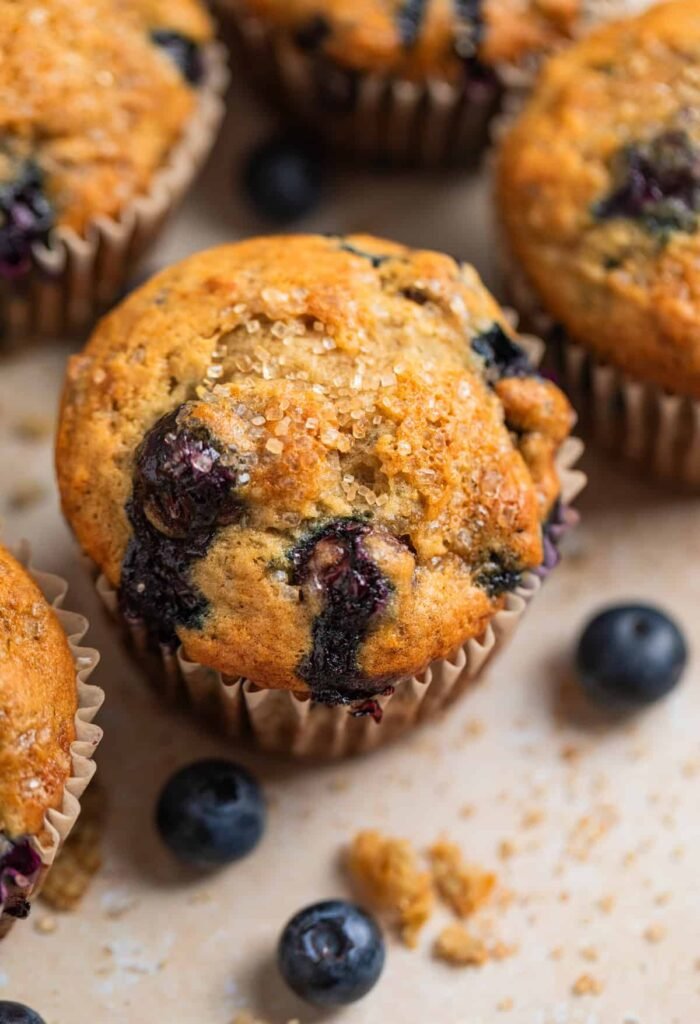
Simple ingredients, big flavor, and no special skills required.
Table of Contents
Why You Will Love These Banana Blueberry Muffins:
- Genuinely soft in the middle: Ripe bananas pull double duty here — natural sweetness and built-in moisture. Add melted butter to the mix and you’ve got a tender crumb that holds together without being dense. The tops bake up with a gentle crunch from a sprinkle of coarse sugar, which is really the best part of any muffin, let’s be real.
- Berry in every bite: These aren’t the muffins where you have to hunt for the fruit. Whether you reach for fresh berries at peak season or pull a bag from the freezer in February, the blueberries are generous and juicy throughout.
- Faster than you’d expect: Ten minutes of actual hands-on work, twenty minutes in the oven, and you’ve got a dozen muffins cooling on the rack. That’s a half-hour total — quicker than a coffee shop run.
Muffin Ingredients:
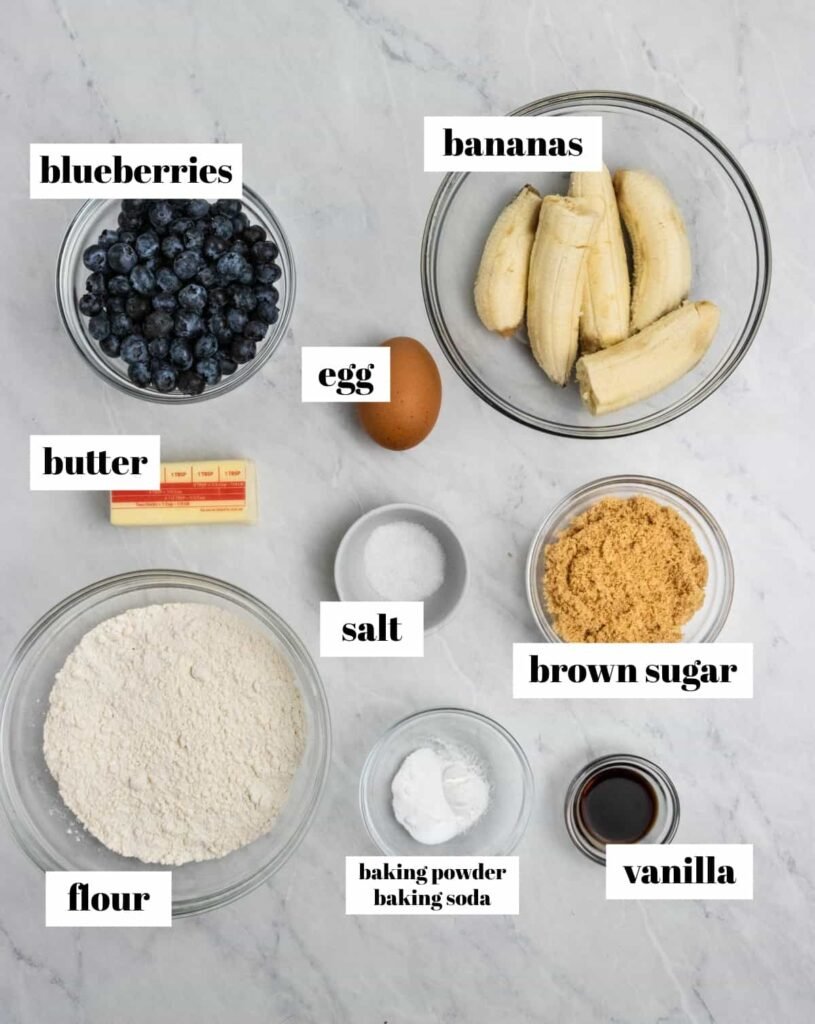
- Blueberries — Fresh or frozen both work. One thing to know: if you use frozen, skip thawing them beforehand. Thawed berries bleed into the batter and turn everything a strange shade of purple. Straight from frozen keeps them intact and the batter clean.
- Bananas — The more spotted and soft, the better. Overripe bananas are sweeter, easier to mash, and give the muffins that distinct banana flavor you’re after. A barely-yellow banana won’t cut it here.
- Unsalted butter — Melted, not softened. It blends into the batter more evenly and gives the muffins a slightly richer flavor. If salted butter is all you have, just leave out the added salt or use just a pinch.
- Egg — One large egg, ideally at room temperature. It incorporates more smoothly and helps the muffins rise evenly.
- All-purpose flour — Don’t scoop the measuring cup straight into the bag. Stir the flour first to loosen it, then spoon it into the cup and level it off. That one habit prevents dense, heavy muffins. For gluten-free needs, a 1:1 swap flour works well here.
- Brown sugar — Light brown sugar is the move. It brings a subtle caramel warmth without making the muffins cloying. The banana already brings plenty of natural sweetness, so there’s no need to pile on white sugar too — though you can if you prefer things sweeter.
- Baking powder + baking soda — Check the expiration dates. Seriously. Old leavening agents are a silent muffin killer. If yours have been sitting in the back of the pantry for two years, it’s time for fresh ones.
- Vanilla extract — Pure extract over imitation, if you have it. The flavor difference is subtle but real. That said, imitation works fine and the muffins will still be great.
- Sea salt — Just a little. It sharpens all the other flavors and keeps the sweetness in check.
Step-By-Step Instructions:
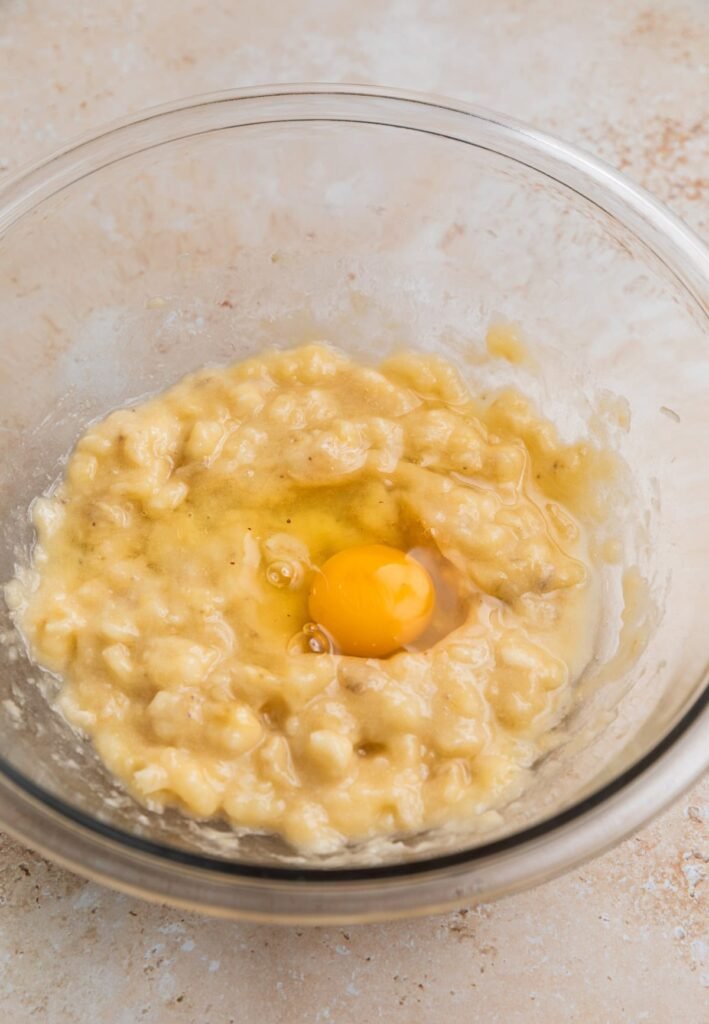
Step 1: Mash the bananas in a large bowl until smooth — small lumps are totally fine, no need to overwork them. Crack the egg and whisk it together until just combined.
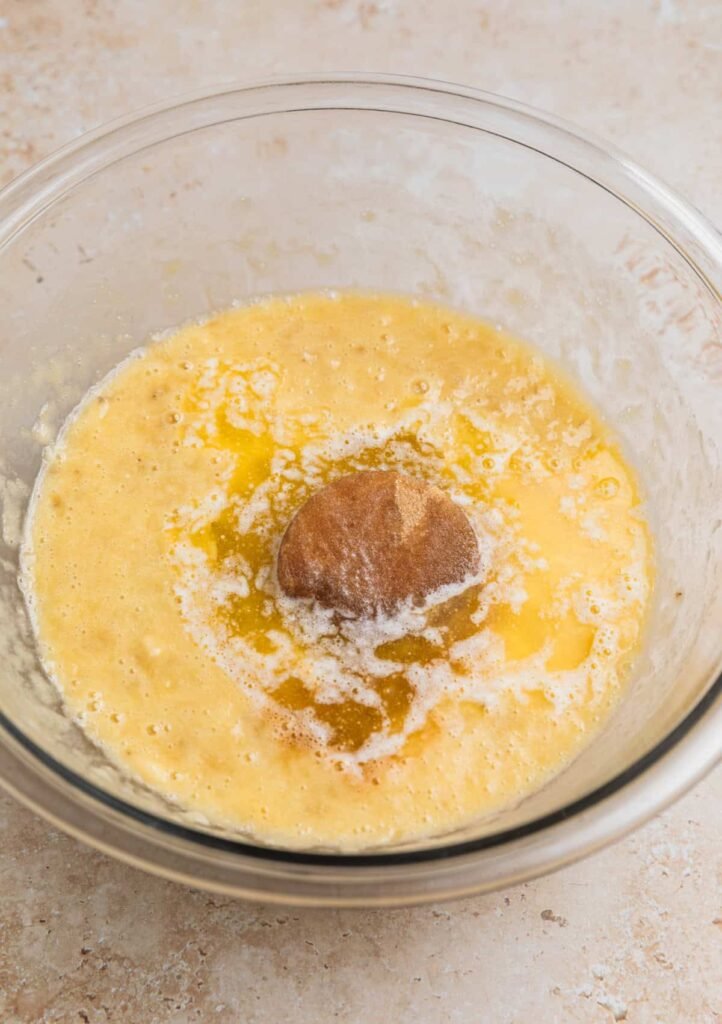
Step 2: Add the wet ingredients: pour in the melted butter, brown sugar, and vanilla. Whisk until everything comes together into a smooth, glossy batter.


Step 3: Mix the dry ingredients in a separate bowl: flour, baking powder, baking soda, and salt. (If you want to add cinnamon, this is where it goes — about 2 teaspoons is a good amount.)
Step 4: Combine wet and dry: add the flour mixture to the banana mixture and stir gently until no dry streaks remain. Stop there. Overmixing makes muffins tough, and nobody wants a chewy muffin.
Step 5: Fold in the blueberries with a spatula, using slow, gentle turns so they stay whole and don’t bleed.
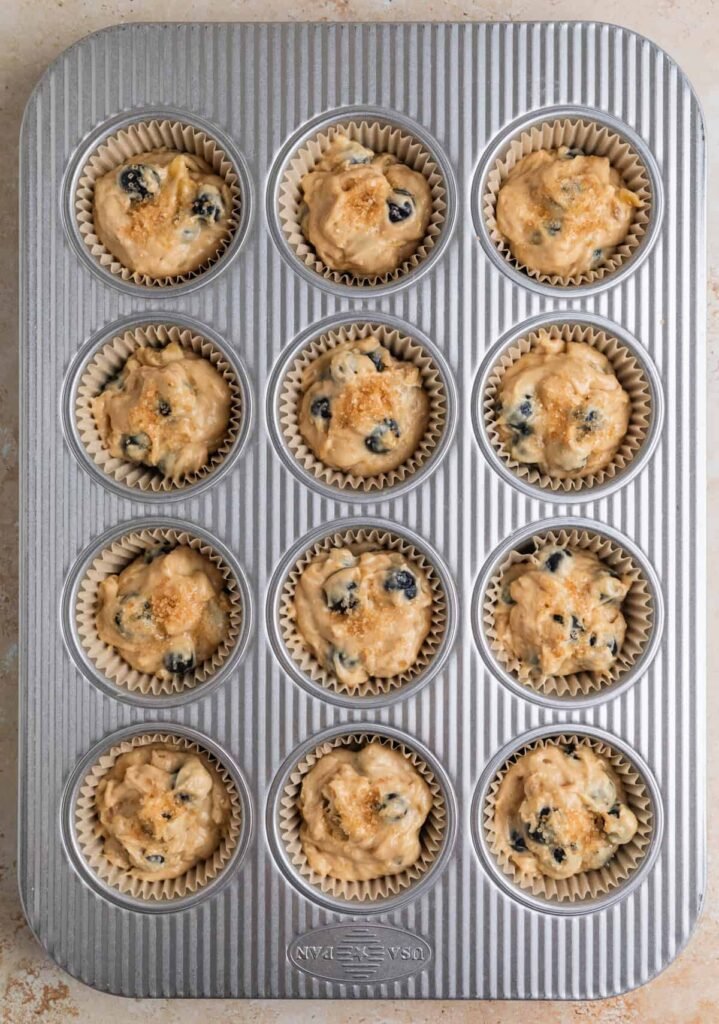
Step 6: Fill the muffin tin: Spoon or scoop the batter into lined cups, filling each about three-quarters full. A cookie scoop makes this tidy and fast. Scatter coarse sugar over the tops if you want that crackly crust.
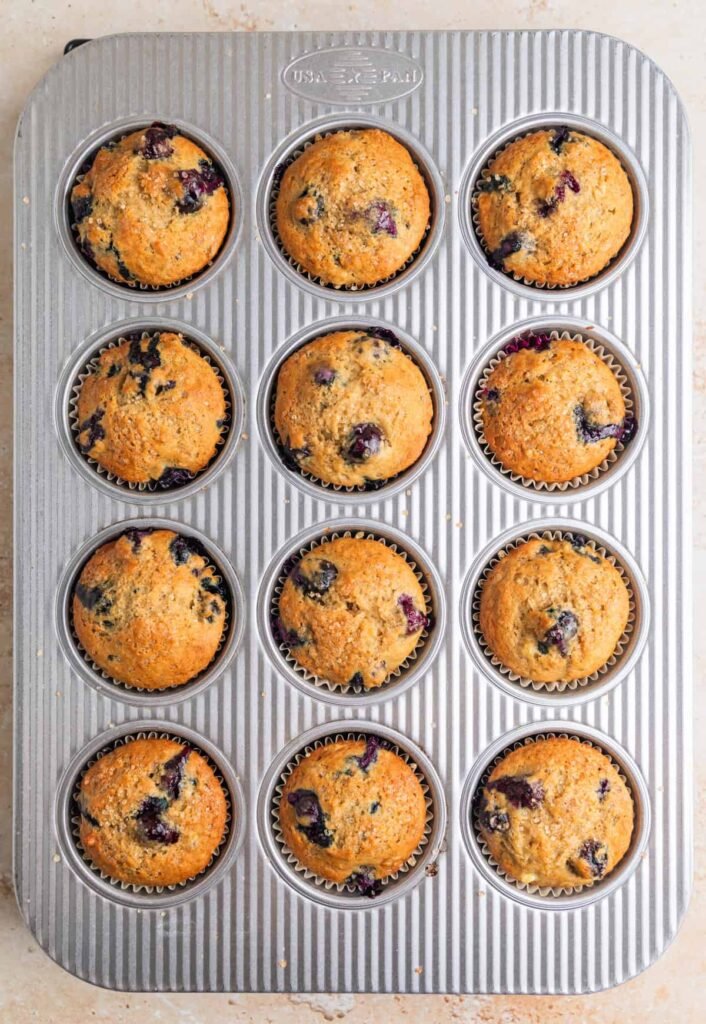
Step 7: Bake at 375°F for 18–22 minutes, until a toothpick inserted in the center comes out clean (or with just a crumb or two clinging on, if you like them extra moist).
Recipe Tips
For a hint of spice, stir about 2 teaspoons of ground cinnamon into the dry ingredients.
Quality parchment-style liners make cleanup easier and help prevent sticking.
Be careful not to overload the batter with blueberries. Adding too many can create overly wet centers and affect the texture.
Check that your baking powder and baking soda are fresh. Expired leavening agents can result in flat, dense muffins.
Measure flour carefully using the spoon-and-level method to avoid adding excess flour, which can make muffins dry.
Mix the batter only until combined. Overmixing develops gluten and can create a tougher texture.
Storage:
Leave them out at room temperature in an airtight container and they’ll stay fresh for up to 3 days. Refrigerate them and you get closer to 5 days, though cold muffins benefit from 15–20 seconds in the microwave before eating.
To freeze: wrap each muffin individually in plastic wrap, then store them together in a zip-top bag or airtight container. They’ll keep for up to 3 months. Thaw overnight on the counter or warm them straight from frozen in a low oven.

Banana Blueberry Muffins
Ingredients
- 3 very ripe small bananas mashed, approx. 1 cup
- 1 large egg
- 5 tbsp butter melted and then cooled
- 1 tsp vanilla extract
- ⅓ cup brown sugar
- 1 ½ cup flour
- 1 tsp baking soda
- ½ tsp baking powder
- ¼ tsp sea salt
- 1 cup blueberries
- 2-3 tbsp coarse sugar for topping optional
Notes
- For a hint of spice, stir about 2 teaspoons of ground cinnamon into the dry ingredients.
- Quality parchment-style liners make cleanup easier and help prevent sticking.
- Be careful not to overload the batter with blueberries. Adding too many can create overly wet centers and affect the texture.
- Check that your baking powder and baking soda are fresh. Expired leavening agents can result in flat, dense muffins.
- Measure flour carefully using the spoon-and-level method to avoid adding excess flour, which can make muffins dry.
- Mix the batter only until combined. Overmixing develops gluten and can create a tougher texture.
Leave a Reply