
Let’s be honest — “high fiber” has a branding problem. Say those two words and most people picture sad bran flakes or a bowl of plain oats eaten out of obligation. But fiber doesn’t have to be a chore. Some of the most flavorful, satisfying foods on earth — black beans, roasted chickpeas, dark leafy greens, berries, lentils — happen to be fiber powerhouses. You just have to know how to cook them.
I started paying closer attention to fiber a while back, mostly because I kept crashing at 3 pm and wondering why. Turns out, fiber is the quiet hero of “staying full” and “not wanting to nap under my desk.” So I went looking for recipes that felt like actual food — not diet food — and pulled together the ones that earned a permanent spot in my rotation.
Here are five of them, with fiber estimates, the “why” behind each one, and simple steps to make them yourself.
Table of Contents
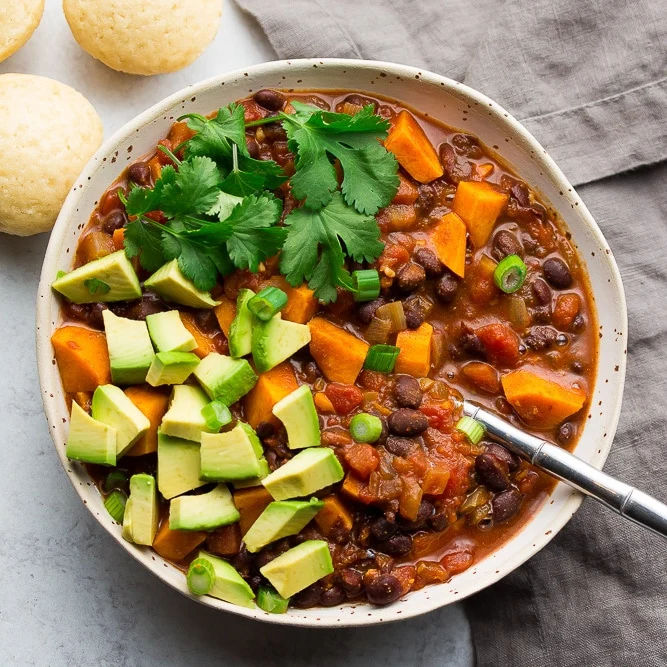
1. Black Bean and Sweet Potato Chili
Fiber Estimate: ~14-16g per serving (based on a 6-serving pot)
Why it works: Black beans are one of the highest-fiber foods around — about 15g per cup — and sweet potatoes add another 4g, plus natural sweetness to balance the smoky spices. Together they make a thick, hearty chili that doesn’t need meat. You also get both fiber types: soluble (keeps you full) and insoluble (keeps things moving).
How to make it:
- Sauté a diced onion and 3 minced garlic cloves in olive oil until soft.
- Add 2 diced sweet potatoes, 2 tablespoons chili powder, 1 tablespoon of cumin, and a pinch of cinnamon. Stir until fragrant.
- Pour in 2 cans black beans (drained), 1 can diced tomatoes, and 2 cups of vegetable broth.
- Simmer uncovered for 30-35 minutes, until the sweet potatoes are tender and the chili has thickened.
- Top with avocado, cilantro, or a squeeze of lime. The fat from the avocado also helps your body absorb the fat-soluble nutrients in the sweet potato.
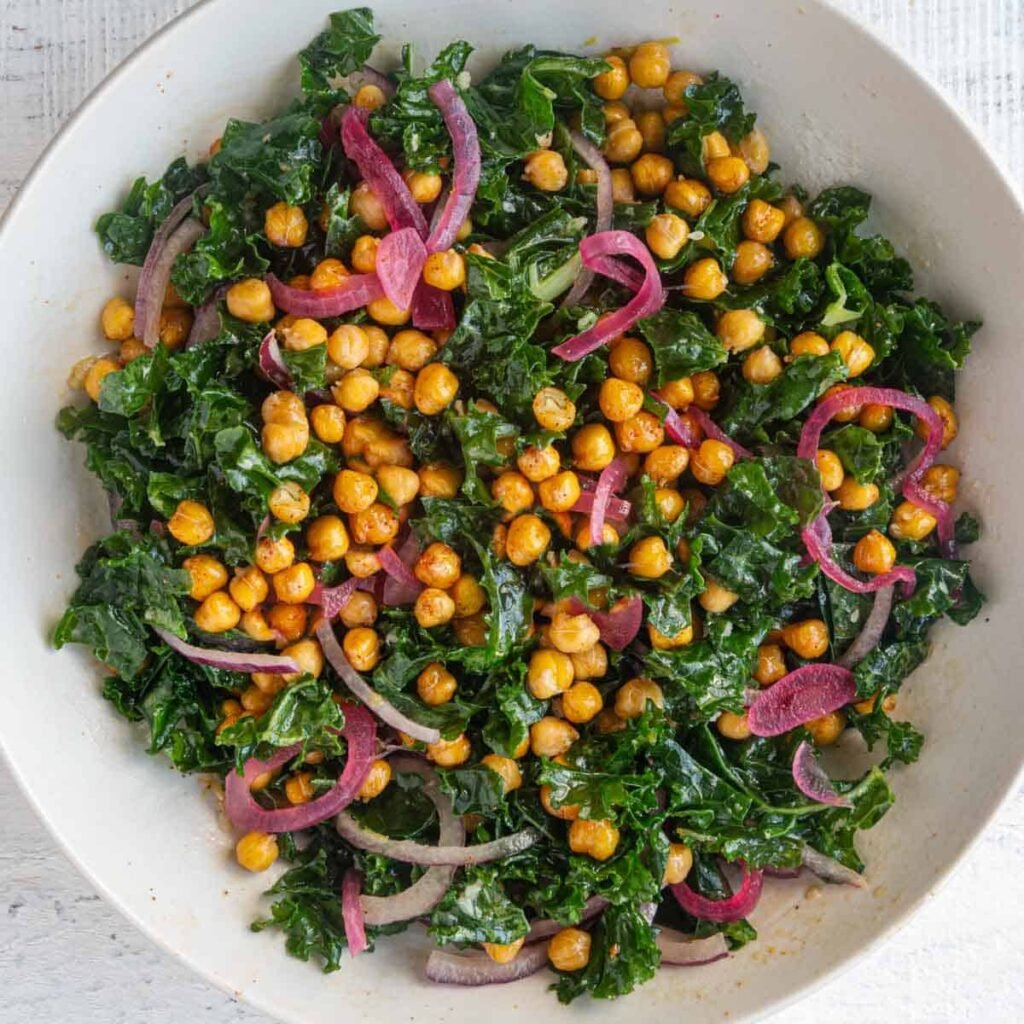
2. Crispy Roasted Chickpea and Kale Salad
Fiber Estimate: ~11g per serving
Why it works: Roasted chickpeas turn crackly-crisp and carry about 8g of fiber per cup. Kale adds another 2-3g plus vitamin K. Massaging the kale breaks down its tough cell walls just enough to make it tender without cooking — keeping the fiber intact.
How to make it:
- Toss 1 can of drained, dried chickpeas with olive oil, smoked paprika, and salt. Roast at 425°F for 25-30 minutes, shaking the pan halfway, until crisp.
- While those roast, strip 4 cups of kale from the stems, chop, and massage with a bit of olive oil and lemon juice for about a minute — you’ll feel it soften.
- Whisk together tahini, lemon juice, a splash of maple syrup, and water to thin.
- Toss the kale with the dressing, top with warm chickpeas, and add sliced red onion or pomegranate seeds for crunch.
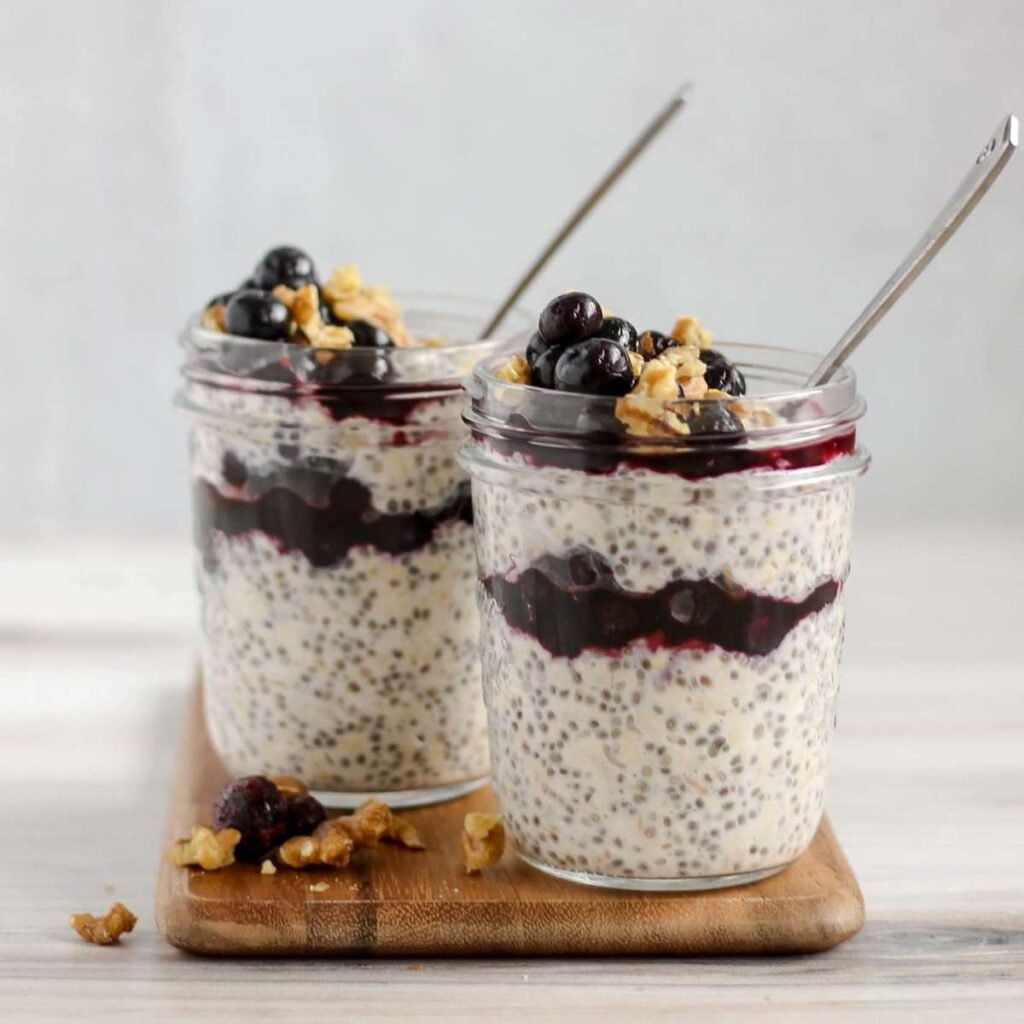
3. Overnight Chia and Berry Oats
Fiber Estimate: ~13g per serving
Why it works: This recipe stacks the deck on fiber. Oats bring about 4g per half cup, chia seeds add another 10g per two tablespoons, and berries layer in a few more grams plus antioxidants. Overnight soaking softens everything into a pudding-like texture.
How to make it:
- In a jar, combine ½ cup rolled oats, 2 tablespoons chia seeds, ¾ cup milk of choice, and a spoonful of yogurt.
- Stir well — chia seeds clump if you don’t mix immediately — and refrigerate overnight.
- In the morning, top with a handful of raspberries, blackberries, and a drizzle of honey or nut butter.
- Add a splash more milk if it’s thicker than you like.
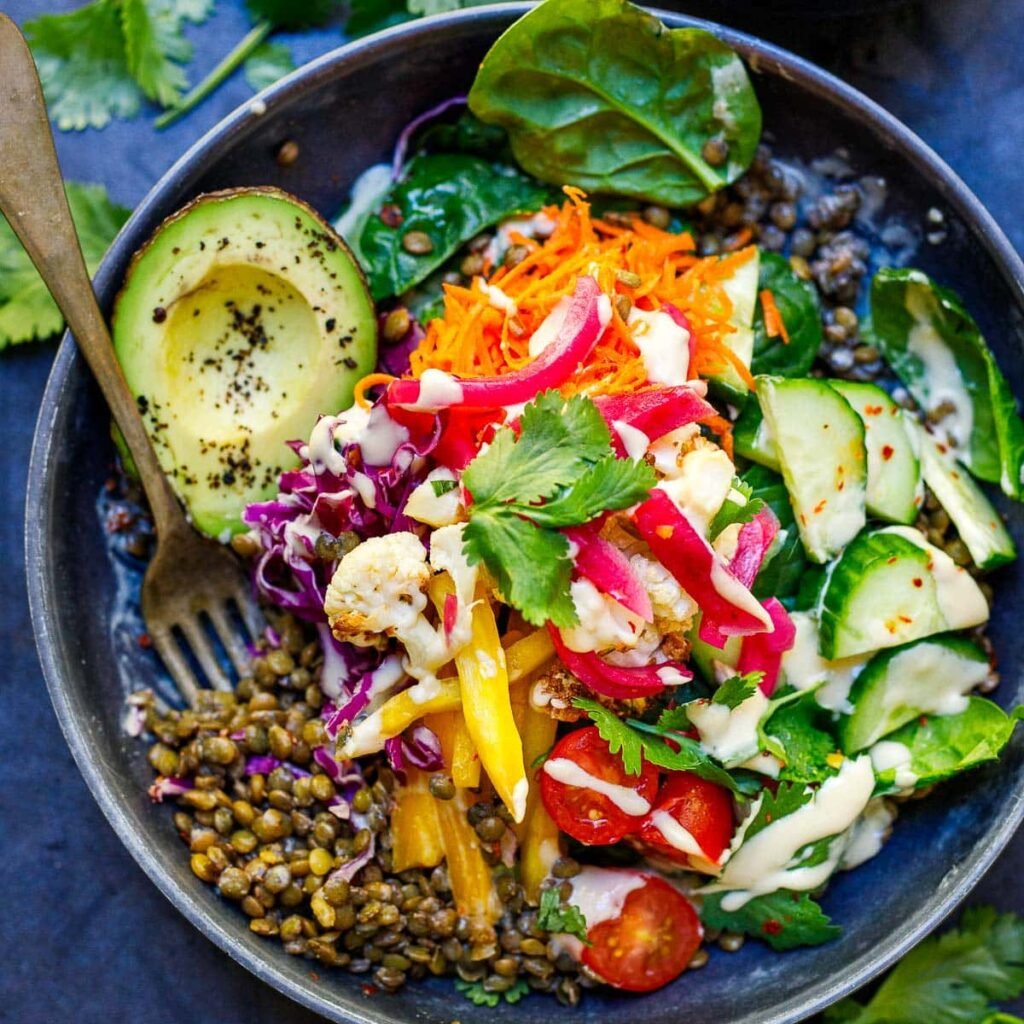
4. Lentil and Roasted Vegetable Grain Bowl
Fiber Estimate: ~15g per serving
Why it works: Lentils cook fast and pack roughly 8g of fiber per half cup cooked — more than most beans, with no soaking needed. Paired with roasted vegetables and a whole grain like farro, every component in this bowl pulls fiber weight, not just texture.
How to make it:
- Cook 1 cup green or brown lentils in broth for about 20 minutes, until tender but not mushy.
- Toss chopped broccoli and carrots in olive oil, salt, and pepper, and roast at 400°F for 20 minutes.
- Cook farro or brown rice according to package directions.
- Layer grain, lentils, and roasted vegetables in a bowl. Finish with a lemon-tahini dressing and crumbled feta if you like.
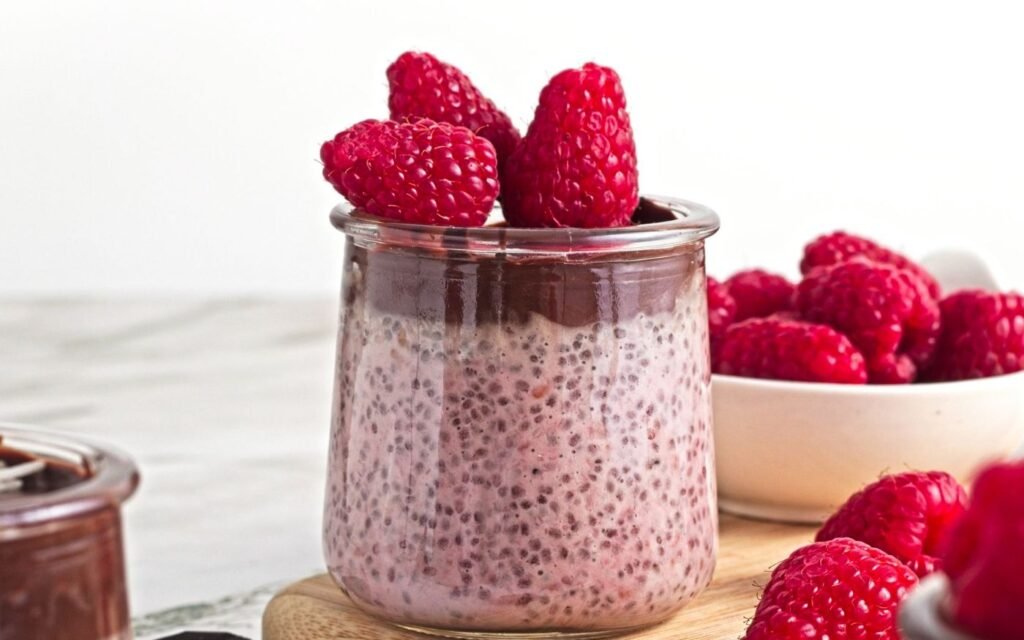
5. Dark Chocolate and Raspberry Chia Pudding
Fiber Estimate: ~12g per serving
Why it works: Dessert can carry fiber too. Chia seeds form the base, while cocoa and dark chocolate (70%+, ~3g fiber per ounce) add flavor and fiber. Raspberries — one of the highest-fiber fruits at ~8g per cup — round it out deliciously.
How to make it:
- Whisk 3 tablespoons chia seeds, 2 tablespoons cocoa powder, 1 tablespoon maple syrup, and 1 cup milk of choice in a jar.
- Refrigerate for at least 4 hours, or overnight, stirring once after the first 15 minutes to prevent clumping.
- Top with fresh raspberries and a few shavings of dark chocolate before serving.
A Few Notes on Getting More Fiber Without Overthinking It
You don’t need to hit a specific number every day to benefit — just leaning toward beans, whole grains, and fruit with the skin on will get you most of the way there. If you’re increasing fiber quickly after eating mostly low-fiber foods, add water and increase gradually; your gut appreciates a slow introduction, not a flood.
Mostly, though, the goal is recipes you’ll actually want to make again. Fiber is just a nice side effect of eating food that’s genuinely good.

Leave a Reply